
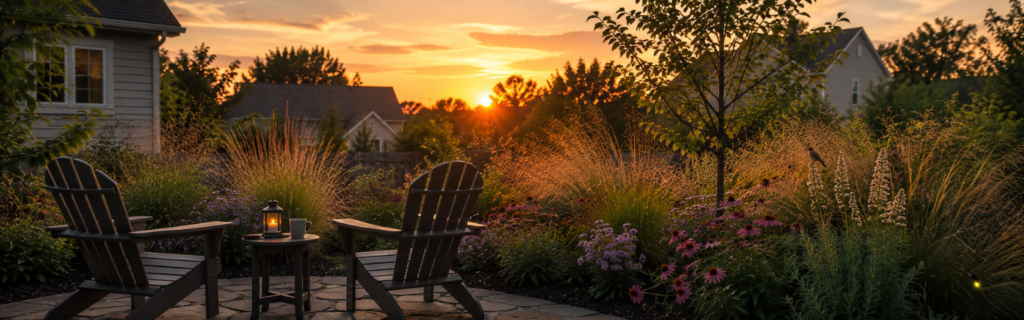
Watch the Amazing Beauty Come Alive in Your Garden at Dusk
There is a magical moment each evening when the garden begins to change.
The last rays of sunlight soften across the landscape. Daytime birds grow quieter. Shadows stretch a little farther with each passing minute.
Then, almost without notice, another shift begins.
A firefly glows in the distance.
A moth drifts silently between flowers.
A bat appears overhead, darting effortlessly through the evening sky.
The garden you admired all afternoon is still there—but it has become something entirely different.
If you’ve never taken a slow walk through your garden at dusk, you may be missing one of the most rewarding parts of gardening with native plants.
If you’re just beginning your native gardening journey, our article How to Design a Four-Season Michigan Garden explains how thoughtful plant selection creates beauty and interest long after the daytime flowers have faded.
A Garden with Two Lives
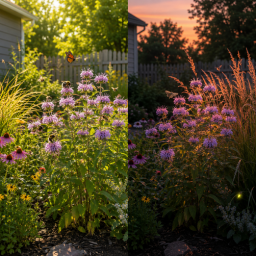
Most of us spend time in our gardens during the brightest hours of the day.
We notice colorful blooms, busy bees, butterflies floating from flower to flower, and birds gathering seeds.
But as daylight fades, an entirely new community begins to emerge.
Many insects become active only during the evening.
Bats begin feeding on flying insects overhead.
Tree frogs and toads become easier to hear than to see.
The air cools.
The wind settles.
Even familiar flowers seem to take on a different beauty in the softer evening light.
A native garden doesn’t stop living when the sun goes down.
In many ways, it’s just getting started.
To learn more about Michigan’s nighttime wildlife and the important role these species play in healthy ecosystems, the Michigan Department of Natural Resources offers excellent educational resources on native wildlife and habitat conservation.
Slow Down Long Enough to Notice
One of the greatest gifts a native garden offers isn’t found in a flower.
It’s found in the experience.
Instead of rushing back indoors after dinner, consider spending ten quiet minutes outside.
Sit on the porch.
Walk slowly along a garden path.
Listen before you look.
You’ll begin noticing things that are easy to miss during the busyness of the day.
The gentle hum of insects.
Leaves moving in the evening breeze.
Birds calling one final time before settling in for the night.
The quiet is part of the beauty.
It’s a reminder that nature doesn’t perform on our schedule.
It simply invites us to pay attention.
Evening Visitors
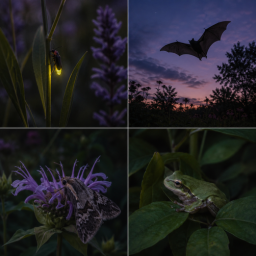
Many homeowners are surprised to discover how much wildlife depends on healthy evening habitats.
Native moths, often overlooked, pollinate many flowering plants after sunset.
Bats provide natural insect control, consuming thousands of insects each night.
Fireflies use their remarkable flashes to communicate during the summer months, creating one of Michigan’s most memorable nighttime displays.
These visitors aren’t attracted by bright landscape lighting.
They’re drawn to healthy habitats with native plants, shelter, and darkness.
Sometimes the most helpful thing we can do is simply allow nature to be nature.
The Garden Feels Different at Dusk
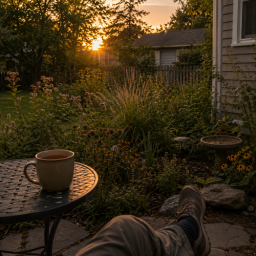
A garden designed with native plants often feels more peaceful in the evening than during the middle of the day.
Warm sunlight catches the seedheads of Little Bluestem.
The silhouettes of native grasses sway gently against the fading sky.
A goldfinch settles quietly for the evening.
The colors become softer.
The sounds become fewer.
The pace slows.
It’s no longer about individual flowers.
It’s about the feeling the garden creates.
And perhaps that’s the greatest reward of all.
When we design landscapes that belong in Michigan, they begin to invite us into the rhythms of the natural world.
Beauty Doesn’t End When the Flowers Do
Many gardeners assume that once the blooms begin to fade, the garden has reached the end of its season.
Native gardens tell a different story.
As evening settles in, seedheads catch the last rays of sunlight, ornamental grasses glow with warm golden tones, and shrubs begin to fade into soft silhouettes against the evening sky.
These quieter moments often become some of the most memorable.
Instead of asking, “What’s blooming?” you may find yourself asking, “What will I notice tonight?”
It’s a wonderful shift in perspective.
A Different Kind of Pollinator Takes Flight
Butterflies may settle in for the evening, but another group of important pollinators is just beginning its work.
Native moths quietly visit flowers under the cover of darkness, carrying pollen from one bloom to the next while serving as an important food source for birds and bats.
Unlike butterflies, moths rarely demand our attention.
Most go unnoticed.
Yet they play an essential role in maintaining healthy ecosystems.
Their nighttime work reminds us that some of nature’s most important contributions happen when few people are watching.
The Xerces Society for Invertebrate Conservation offers fascinating information about native pollinators, including the often-overlooked role moths play in healthy ecosystems.
Your Garden Sounds Different, Too
Close your eyes for a moment.
What do you hear?
Perhaps it’s the gentle rustle of Little Bluestem moving in the breeze.
A cricket begins its evening song.
The distant call of a tree frog.
A bird giving one final chirp before settling into the branches for the night.
These sounds are easy to miss if we’re always focused on what we can see.
Native gardens invite us to experience nature with all of our senses.
Sometimes the soundtrack of an evening garden becomes just as memorable as its flowers.
Evening Is a Wonderful Time to Observe Wildlife
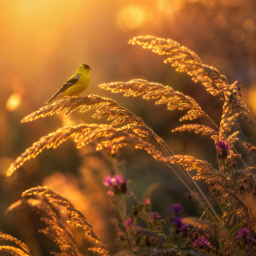
If you’ve ever wished you could see more birds, butterflies, or other wildlife in your garden, try visiting it at different times of the day.
Morning and evening often reveal entirely different visitors.
As daylight fades, goldfinches settle onto seedheads for the night.
Dragonflies make their final patrols over the garden.
Fireflies begin their familiar summer display.
Even the occasional deer may quietly pass by the edge of the landscape.
None of these moments can be scheduled.
That’s part of what makes them so special.
They’re small gifts waiting for anyone willing to slow down long enough to notice.
If you’d like to attract even more seasonal beauty to your landscape, explore our article, The Best Native Plants That Bloom All Summer, where you’ll discover plants that continue supporting pollinators well into the growing season.
Leave a Little Wildness
One of the greatest temptations in gardening is to tidy everything before the day is done.
Cut back every stem.
Sweep away every leaf.
Remove every seedhead.
But nature often prefers a little untidiness.
Those standing stems become overnight shelter for beneficial insects.
Seedheads provide food for birds.
Native grasses offer cover for wildlife moving through the garden after sunset.
Leaving just a bit of “organized wildness” allows your garden to support life long after you’ve gone inside.
It’s another reminder that a healthy garden doesn’t have to look perfect.
Sometimes its greatest beauty comes from simply allowing nature to finish the day’s work.
You Don’t Need a Bigger Garden
One of the wonderful things about an evening garden is that it doesn’t require a large landscape.
A single planting bed beside your front porch can become a gathering place for native bees during the day and fireflies after sunset.
A small patio bordered by native flowers may attract birds in the evening while ornamental grasses gently sway in the cooling breeze.
Even a quiet corner of your backyard can become a place where you slow down, notice the changing light, and reconnect with nature.
The magic isn’t measured by the size of your garden.
It’s measured by your willingness to experience it.
Make an Evening Walk Part of Your Routine
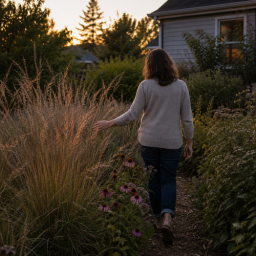
Tomorrow evening, step outside just ten minutes before sunset.
Leave your phone inside.
Walk slowly.
Pause often.
Notice which flowers still seem to glow in the fading light.
Listen for sounds that weren’t there an hour earlier.
Watch for birds settling into nearby shrubs or grasses.
You may discover that your garden has been offering these quiet moments all along.
You simply hadn’t stopped long enough to notice.
The more often you take these evening walks, the more familiar your garden becomes.
You’ll begin anticipating the first fireflies of summer, recognizing where goldfinches prefer to perch, and noticing subtle changes that mark the passing of each season.
These small rituals often become some of the greatest rewards of gardening.
Creating a landscape with year-round interest makes these quiet observations even more rewarding. Learn how in our article, How To Design a Four-Season Michigan Garden.
A Different Way to Measure Success
Many people judge a garden by how many flowers are blooming.
Native gardens invite us to measure success differently.
Did you hear crickets begin their evening chorus?
Did a bat quietly pass overhead?
Did you notice birds settling into nearby shrubs?
Did you pause long enough to enjoy the last golden light across the seedheads?
These moments don’t appear on a plant label.
They can’t be purchased at a garden center.
They grow naturally from creating a landscape that welcomes life.
And once you begin noticing them, you’ll realize that your garden has become far more than a collection of beautiful plants.
It has become a place where you experience Michigan’s natural rhythms every single day.
If you’d like to learn more about creating landscapes that support birds, pollinators, and other wildlife throughout the year, the National Wildlife Federation’s Garden for Wildlife® program offers practical ideas for building healthy backyard habitats.
Happy Gardening!
Some of the most memorable moments in a garden happen so quietly that they’re easy to overlook.
The soft glow of evening sunlight.
A firefly drifting through the flowers.
The gentle movement of native grasses.
The peaceful stillness that settles over the landscape as another day comes to a close.
Perhaps that’s the greatest gift a native garden offers.
Not simply something beautiful to look at…
But a reason to slow down, step outside, and experience the natural world with fresh eyes.
Happy gardening,
Barbara 🌿
Michigan Garden Design
🌿 Continue Growing
Coming Next:
How To Create An Amazing Habitat with Native Trees
Trees are the foundation of every thriving habitat. In our next article, we’ll explore how choosing the right native trees can provide food, shelter, nesting sites, and year-round beauty while supporting hundreds of species of birds, butterflies, and other wildlife throughout Michigan.
Continue Exploring
If you enjoyed this article, you may also like: