
Why Native Bees Are the Garden’s Most Important Pollinators
🌿 Previously in Nature Notes
Issue No. 3 – How to Create a Pollinator Habitat in Michigan
In our last Nature Notes, we explored how even a modest garden can become a welcoming habitat for butterflies, birds, and beneficial insects. This month, we’re slowing down for a closer look at one of the smallest, and most essential, residents of that habitat: Michigan’s native bees.
Every garden has a story. Nature Notes helps you discover it.
There is a quiet little moment that happens in almost every healthy garden.
Most people may never notice it.
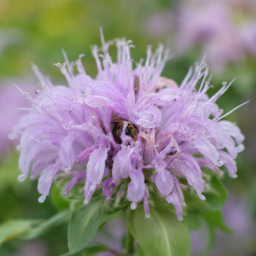
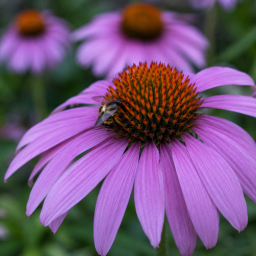
They’re admiring the Purple Coneflowers or breathing in the sweet fragrance of Wild Bergamot when, out of the corner of their eye, something tiny lands on a blossom.
It’s gone almost as quickly as it arrived.
Not a butterfly.
Not a honey bee.
Just a small, unassuming native bee going about its day.
For years, I probably overlooked them too.
Like many gardeners, I assumed the bees I noticed were honey bees. It wasn’t until I began paying closer attention that I realized my garden was buzzing with dozens of different visitors, each one carrying out a job that had been taking place long before our neighborhoods, roads, and even our country existed.
Michigan’s native bees have been here for thousands of years.
Long before people planted flower beds or mowed lawns, these remarkable insects were visiting wild lupines, woodland wildflowers, prairie grasses, and spring ephemerals. Together, native plants and native bees gradually shaped one another, season after season, creating partnerships that continue today.
Once you know they’re there, you begin to notice them everywhere.
Some are no larger than a grain of rice.
Some shimmer with a metallic green that catches the morning sun.
Others are fuzzy enough to resemble tiny flying teddy bears.
No two seem quite alike.
And yet almost every one of them is quietly helping a flower produce seeds, berries, or fruit that will eventually feed birds, mammals, and countless other creatures.
It’s easy to think of pollination as something that simply happens.
But when you pause long enough to watch a native bee disappear deep into the center of a blossom, you realize you’re witnessing one of nature’s oldest partnerships.
One tiny bee.
One flower.
A relationship that has endured for thousands of years.
The Xerces Society for Invertebrate Conservation has documented the remarkable diversity of North America’s native bees and explains how each species contributes to healthy ecosystems.
One of the most surprising things I learned is that the bee most people recognize—the honey bee—is actually not native to North America.
Honey bees arrived with European settlers hundreds of years ago and have become incredibly important to agriculture.
Our native bees tell a different story.
They belong here.
Many evolved alongside Michigan’s native wildflowers, learning exactly when certain flowers bloom, where they grow, and even how to gather their pollen.
Some flowers are so perfectly suited to native bees that it’s hard to imagine one without the other.
The more I learn about native bees, the more I appreciate how much life is happening all around us without asking for recognition.
They’re not trying to impress us.
They aren’t looking for applause.
They’re simply doing the work they’ve always done.
Quietly.
Faithfully.
One flower at a time.
One summer morning, I found myself standing in front of a patch of Wild Bergamot far longer than I had planned.
At first, all I noticed was movement.
Tiny visitors darted from flower to flower so quickly that they seemed almost impossible to follow.
Then I began to slow down.
One bee was covered in golden pollen, as though it had rolled through a field of sunshine.
Another shimmered with an emerald green that flashed whenever it caught the light.
A third disappeared completely inside a blossom before backing out a few moments later, dusted from head to toe.
I realized I wasn’t watching one kind of bee.
I was watching an entire community.
The more closely you look, the more remarkable they become.
Some native bees are active only for a few short weeks each year, timing their lives perfectly with the flowers they depend on.
Others begin flying in the cool days of early spring, visiting woodland wildflowers before the trees have even leafed out.
Still others remain active well into autumn, helping late-season flowers complete their life cycle before winter arrives.
It’s a quiet rhythm that repeats itself every year, whether we’re paying attention or not.
Perhaps the greatest surprise is where many native bees call home.
Most people imagine bees living together in large hives.
In reality, nearly three-quarters of Michigan’s native bee species nest alone.
Many spend their lives in small tunnels beneath bare patches of soil.
Others tuck themselves into hollow stems left standing through the winter or tiny holes in weathered wood.
They’re not looking for large spaces.
They’re simply looking for places that feel undisturbed.
When we leave a little corner of the garden slightly less tidy, we may be providing a home without ever realizing it.
One of my favorite things about native bees is that they completely change the way you experience a garden.
Instead of simply admiring the flowers, you begin noticing the visitors.
Instead of asking, “What’s blooming today?”
you find yourself asking,
“Who’s visiting today?”
It’s a small shift in perspective.
But once it happens, your garden begins to feel less like a collection of plants and more like a living community.
And somehow, every walk through the garden becomes just a little more interesting.
As I spend more time in my own garden, I’ve noticed something unexpected.
The flowers still catch my eye.
But they no longer hold my attention for very long.
Instead, I find myself waiting to see who will arrive next.
A tiny sweat bee weaving through the blossoms of Wild Bergamot.
A fuzzy bumble bee disappearing into a Purple Coneflower.
A leafcutter bee carrying a bit of pollen before vanishing just as quietly as it appeared.
The garden has become more than a collection of beautiful plants.
It has become a place of countless small encounters—most lasting only a few seconds, yet each one quietly helping life continue.
Perhaps that’s one of the greatest gifts native gardening offers.
It teaches us to slow down.
Not because the garden demands it…
but because the smallest moments are often the easiest to miss.
We live in a world that encourages us to move quickly.
To check things off our lists.
To admire the flowers and continue on with our day.
Native bees invite us to do something different.
They invite us to linger.
To kneel beside a blossom.
To notice the fine dusting of golden pollen clinging to tiny legs.
To marvel at how such a small creature can play such an enormous role in the life of a garden.
The more closely you look, the more extraordinary the ordinary becomes.
Sometimes people ask me what the most important plant is for supporting pollinators.
It’s a thoughtful question.
But over the years, I’ve come to believe there’s an even better one.
Instead of asking,
“What’s the best plant?”
perhaps we should ask,
“How can I make my garden feel more welcoming?”
A welcoming garden offers flowers throughout the seasons.
It leaves a few stems standing through winter.
It allows a small patch of soil to remain undisturbed.
It doesn’t have to be perfect.
In fact, perfection isn’t what nature is looking for.
It simply needs a place where life is welcome.
The next time you step into your garden, pause for just a moment.
Choose one flower.
Watch it quietly for sixty seconds.
You may see nothing at all.
Or…
you may discover that an entire world has been unfolding there all along.
And once you see it—
it’s very hard to stop looking.
If you’d like to attract more native bees, you can find additional Michigan-specific planting recommendations through Michigan State University Extension.
Until Next Time…
The next time a tiny bee lands on a flower, don’t rush past.
Take a closer look.
You’re watching one of Michigan’s oldest partnerships continue, just as it has for thousands of years.
Nature always has another story to tell.
— Barbara
🌿 Continue Exploring
Coming Next in Nature Notes
Watch the Amazing Beauty Come Alive in Your Garden at Dusk
As the sun begins to set, a different shift begins in the garden. Moths replace butterflies, fireflies rise from the grass, bats silently patrol the evening sky, and the last pollinators finish their work. In our next Nature Notes, we’ll slow down once again to discover the quiet magic that unfolds when most people have already gone inside.
From the Michigan Garden Series
If today’s story inspired you to create even more habitat for native pollinators, you may enjoy these articles: