
The Best Native Grasses for Michigan Gardens
Beautiful, Low-Maintenance Choices That Add Movement, Texture, and Year-Round Interest
When most people imagine a beautiful garden, they think first about flowers.
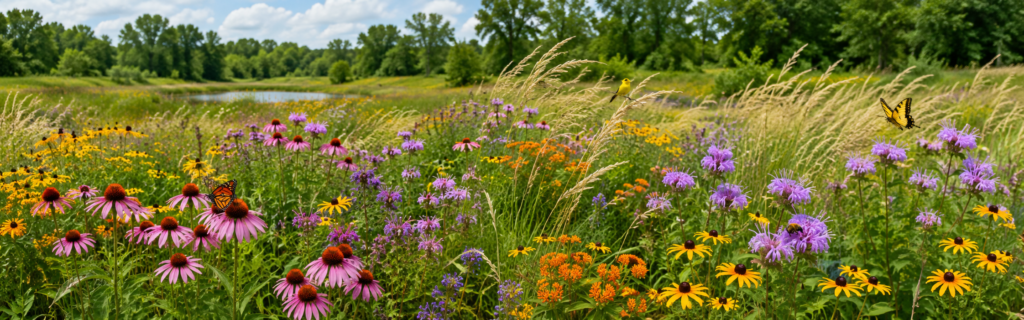
Purple Coneflowers.
Black-eyed Susans.
Bee Balm.
Butterfly Weed.
But one of the secrets to creating a truly beautiful, natural-looking Michigan garden isn’t another flower.
It’s grass.
Native grasses quietly provide many of the things flowers cannot.
They add graceful movement on a breezy summer afternoon.
They soften the edges between colorful blooms.
They provide shelter for birds and beneficial insects.
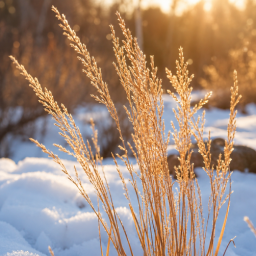
Many remain beautiful well into winter, catching fresh snow and glowing in the morning light long after most flowers have faded.
Perhaps best of all, they’re remarkably easy to care for once established.
If you’ve admired the effortless beauty of a natural prairie or meadow, you’ve already seen the important role native grasses play.
Many of these grasses have been part of Michigan’s natural landscapes for thousands of years. The Michigan Natural Features Inventory provides excellent information about the native plant communities and ecosystems that make our state so unique.
The good news?
You don’t need acres of land to enjoy them.
Even a small backyard garden can be transformed by thoughtfully placing just one or two native grasses among your flowering perennials.
Let’s take a look at some of Michigan’s finest choices.
Why Native Grasses Belong in Every Michigan Garden
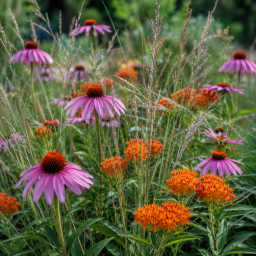
Native grasses do much more than fill empty spaces.
They help create gardens that feel balanced, natural, and alive.
They provide:
- Gentle movement in the breeze.
- Texture that contrasts beautifully with flowering plants.
- Nesting material and shelter for birds.
- Habitat for butterflies and beneficial insects.
- Winter interest long after flowers have faded.
- Deep roots that help improve soil health and tolerate drought.
Many gardeners are surprised to learn that native grasses are just as valuable to pollinators and wildlife as many flowering plants.
Some butterfly and moth caterpillars depend on grasses as host plants, while birds gather seeds and nesting material throughout the year.
As the seasons change, grasses become one of the quiet foundations that keep a native garden functioning as a healthy ecosystem.
🌿 Garden Tip
When designing a native garden, think of grasses as the “glue” that holds everything together.
Flowers may provide the color…
but grasses provide the structure, movement, and year-round beauty that make a garden feel complete.
My Favorite Native Grasses for Michigan Gardens
While Michigan is home to many wonderful native grasses, a few consistently stand out for their beauty, adaptability, and wildlife value.
Little Bluestem (Schizachyrium scoparium)
If I could recommend just one native grass for most Michigan gardens, this would probably be it.
Little Bluestem begins the growing season with soft blue-green foliage before gradually transforming into beautiful shades of copper, bronze, and reddish-orange in autumn.
Even throughout winter, its upright stems continue adding texture and movement to the landscape.
Why I love it:
- Beautiful in every season
- Excellent drought tolerance
- Outstanding fall color
- Valuable habitat for butterflies and birds
- Perfect for sunny gardens
Little Bluestem pairs beautifully with:
- Purple Coneflower
- Butterfly Weed
- Black-eyed Susan
- Wild Bergamot
- Prairie Blazing Star
Its fine texture allows colorful flowers to shine while gently tying an entire planting together.
Prairie Dropseed (Sporobolus heterolepis)
If Little Bluestem is graceful…
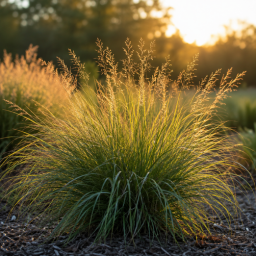
Prairie Dropseed is elegant.
Its fountain-like shape creates one of the softest textures you’ll find in any native garden.
By late summer, delicate flowering stems rise above the foliage, adding an airy appearance that moves beautifully with even the slightest breeze.
Perhaps my favorite feature is its remarkable fragrance.
Many gardeners notice hints of coriander, popcorn, or toasted nuts when Prairie Dropseed is in bloom—a delightful surprise that often catches people off guard.
Why I recommend it:
- Beautiful mounded form
- Exceptional drought tolerance
- Wonderful fragrance
- Long-lived and low maintenance
- Excellent edging or specimen plant
Prairie Dropseed is especially beautiful bordering walkways, where its graceful form can be appreciated up close.
If you’d like to explore additional information about Prairie Dropseed and other native grasses, the Lady Bird Johnson Wildflower Center’s Native Plant Database offers detailed plant profiles, bloom information, and growing requirements.
More Native Grasses Worth Discovering
While Little Bluestem and Prairie Dropseed are often my first recommendations, Michigan offers many other outstanding native grasses, each with its own personality and purpose.
Choosing the right one depends on your growing conditions, available space, and the look you’re hoping to create.
Switchgrass (Panicum virgatum)
If you’re looking for height and structure, Switchgrass is one of Michigan’s finest native grasses.
Growing four to six feet tall, it forms upright clumps that remain attractive throughout every season.
By late summer, airy flower panicles rise above the foliage, creating a soft, cloud-like appearance. As autumn arrives, many varieties develop beautiful shades of gold before remaining standing through winter.
Why I recommend it:
- Excellent vertical accent
- Outstanding wildlife habitat
- Deep root system for drought tolerance
- Beautiful winter interest
- Ideal as a natural privacy screen
Switchgrass pairs beautifully with:
- New England Aster
- Joe-Pye Weed
- Cup Plant
- Ironweed
Indian Grass (Sorghastrum nutans)
If Little Bluestem brings warm bronze tones to autumn, Indian Grass contributes brilliant golden color.
Its tall flowering stems seem to glow in late afternoon sunlight, making it one of the most striking native grasses in larger landscapes.
Because of its height, Indian Grass works best toward the back of perennial borders or in naturalized prairie plantings.
Best features:
- Golden autumn color
- Excellent bird habitat
- Strong vertical interest
- Beautiful seed heads
- Wonderful movement in the wind
Bottlebrush Grass (Elymus hystrix)
Not every native grass needs full sun.
Bottlebrush Grass is one of my favorite choices for woodland gardens and partial shade.
Its distinctive bottlebrush-shaped seed heads add unexpected texture beneath trees and along shaded garden paths.
If you’re trying to create a layered woodland planting, this grass blends beautifully with:
- Foamflower
- Wild Geranium
- Jacob’s Ladder
- Bishop’s Cap
It helps create the feeling that the garden simply belongs there.
Canada Wild Rye (Elymus canadensis)
Canada Wild Rye is one of those plants that often catches people’s attention without them realizing it’s a native grass.
Its graceful, arching seed heads create movement unlike almost any other species.
Because it establishes quickly, it’s especially valuable in new native gardens where you’re looking for early structure while slower-growing plants mature.
It’s also an excellent choice for supporting wildlife and stabilizing soil.
River Oats (Chasmanthium latifolium)
River Oats is undeniably beautiful.
Its flat, dangling seed heads shimmer as they catch the light and continue providing interest well into winter.
However, this is one native grass I recommend planting thoughtfully.
In favorable conditions, River Oats can spread enthusiastically.
That isn’t necessarily a disadvantage—but it does mean you’ll want to place it where it has room to naturalize or where occasional thinning is easy.
For gardeners who appreciate a more relaxed, naturalistic style, River Oats can become one of the most graceful plants in the garden.
🌿 Garden Tip
A garden filled entirely with flowers can sometimes feel busy.
Adding grasses creates places for the eye to rest.
That balance is one of the secrets to gardens that feel peaceful and inviting.
Choosing the Right Grass for Your Garden
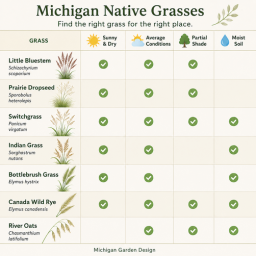
One of the questions I hear most often is:
“Which native grass should I choose?”
The answer depends less on the grass itself and more on the conditions in your garden.
For Sunny, Dry Locations
Choose:
- Little Bluestem
- Prairie Dropseed
- Indian Grass
These species thrive in well-drained soil and handle Michigan’s summer heat beautifully once established.
For Average Garden Conditions
Choose:
- Switchgrass
- Canada Wild Rye
These adaptable grasses fit comfortably into many traditional garden settings while still providing excellent habitat value.
For Partial Shade and Woodland Gardens
Choose:
- Bottlebrush Grass
- River Oats
Both add texture and movement where many sun-loving prairie grasses would struggle.
For Rain Gardens and Moist Soil
Switchgrass is often an excellent choice because of its adaptability to changing moisture levels.
Its deep root system also helps stabilize soil while providing outstanding wildlife habitat.
Designing with Native Grasses
One of the most common mistakes I see is planting grasses in large blocks separate from flowering plants.
Nature rarely works that way.
Instead, try weaving grasses throughout your garden.
Allow them to soften the spaces between flowering perennials.
Repeat the same grass in several locations rather than planting one large mass.
The repetition creates rhythm, while the movement adds life to the entire landscape.
Some of my favorite combinations include:
- Little Bluestem with Butterfly Weed and Purple Coneflower
- Prairie Dropseed surrounding Black-eyed Susan
- Bottlebrush Grass beneath woodland perennials
- Switchgrass behind Joe-Pye Weed and Ironweed
When grasses and flowers are thoughtfully combined, each makes the other look even better.
Common Mistakes to Avoid
Native grasses are wonderfully forgiving, but a few simple mistakes can keep them from reaching their full potential.
Fortunately, they’re all easy to avoid.
Planting Too Many Different Grasses
Just because there are many beautiful native grasses doesn’t mean every garden needs all of them.
In fact, repeating one or two species throughout a landscape often creates a much stronger design than using five or six different grasses.
Repetition brings unity.
Your eye naturally recognizes familiar shapes, helping the garden feel intentional rather than busy.
Treating Grasses Like Shrubs
Many gardeners instinctively prune grasses throughout the growing season.
Most native grasses don’t need that kind of attention.
Allow them to grow naturally through summer, enjoy their beautiful seed heads in autumn, and leave them standing through winter whenever possible.
Not only do they provide winter beauty, but many birds use the seeds for food while beneficial insects find shelter in the hollow stems.
Cut them back in early spring, just before new growth begins.
Gardening experts at Michigan State University Extension also encourage leaving stems and seed heads standing through winter whenever possible, where they continue providing habitat and food for wildlife.
Forgetting About Winter
Some of the greatest beauty native grasses offer happens after the flowers are gone.
Frost clings to seed heads.
Snow collects on graceful stems.
Golden afternoon light turns entire plantings into works of art.
By leaving grasses standing through winter, your garden continues providing beauty long after many landscapes have gone dormant.
🌿 Garden Tip
One of the easiest ways to create a four-season garden is to resist cleaning everything up in autumn.
Nature isn’t finished with your garden just because summer has ended.
Why Native Grasses Are Worth the Investment
Every plant in your garden has a job to do.
Some provide brilliant color.
Others attract pollinators.
Some create shade or privacy.
Native grasses quietly do a little bit of everything.
They soften bold flower displays.
They provide movement that changes with every breeze.
They shelter wildlife.
They protect the soil.
They remain beautiful through every season.
And perhaps most importantly…
They help gardens feel as though they’ve always belonged there.
That’s something no amount of decoration can achieve.
It’s simply what happens when we garden with plants that evolved right here in Michigan.
🌿 Continue Growing
If you enjoyed learning about native grasses, you might also enjoy these Michigan Garden articles:
• The Best Native Michigan Plants That Bloom All Summer
• Beautiful Ground Covers That Thrive in Michigan
• How to Create a Pollinator Friendly Garden in Michigan
• How to Keep Native Plants Healthy During Summer Heat
• Best Native Michigan Plants for Pollinators
🌿 A Final Thought
When people first begin gardening with native plants, flowers naturally receive most of the attention.
I understand why.
They’re colorful.
They’re exciting.
They’re often the first thing we notice.
But over time, I think you’ll discover that native grasses quietly become some of the most important plants in your garden.
They bring balance.
Movement.
Texture.
Habitat.
And a sense of peace that flowers alone simply can’t provide.
The next time you visit a prairie, a nature preserve, or even a roadside filled with native plants, take a moment to look beyond the flowers.
Watch how the grasses catch the light.
Notice how they move with the breeze.
Listen to the quiet rustle they create on a summer afternoon.
You may discover that the true beauty of a native garden isn’t found in any single plant.
It’s found in the way every plant works together.
Happy gardening,
Barbara 🌿
Michigan Garden Design