
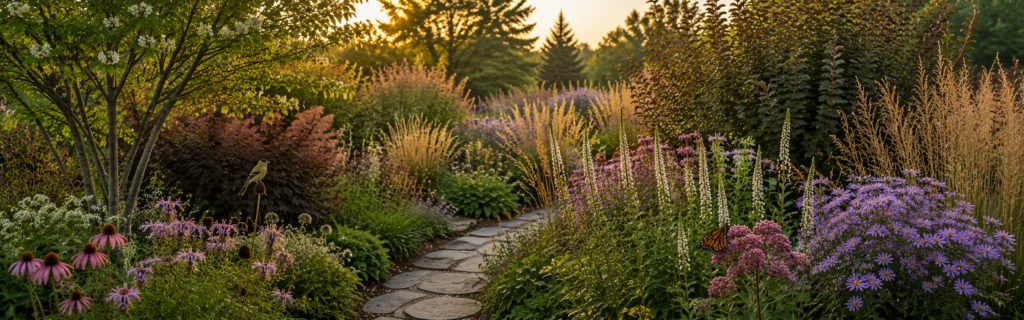
How to Design a Four-Season Michigan Garden
One of the greatest compliments a garden can receive is this:
“There’s always something beautiful to see.”
Many gardens burst into color for a few short weeks in spring or summer, only to become quiet and unremarkable during the rest of the year. But a thoughtfully designed native Michigan garden tells a different story.
It welcomes the first spring blossoms. It hums with bees and butterflies throughout summer. It glows with brilliant foliage and seedheads in autumn. Even in winter, graceful grasses, colorful bark, and berries provide beauty while supporting birds and other wildlife.
That’s the magic of designing for all four seasons.
Instead of asking, “What should be blooming right now?” try asking a different question:
“What will my garden offer in every season?”
That simple shift in perspective transforms the way you plan your landscape.
Rather than creating isolated moments of color, you’ll create a garden that continues rewarding you—and the wildlife that depends on it—all year long.
Start with the Structure
Every beautiful garden begins with structure.
Flowers may capture our attention, but it’s the trees, shrubs, and ornamental grasses that give a garden its shape and character throughout the year.
Think of these plants as the framework of your landscape.
A serviceberry welcomes spring with delicate white blossoms, provides berries for birds in early summer, displays brilliant orange and red foliage in autumn, and adds graceful branching throughout winter.
Ninebark contributes spring flowers, colorful foliage, and striking exfoliating bark that becomes especially beautiful after leaves have fallen.
Little Bluestem stands tall long after its summer blooms have faded, turning warm shades of copper and bronze that catch the golden light of autumn before remaining upright through much of the winter.
When these structural plants are thoughtfully placed first, the rest of the garden begins to fall naturally into place.
Layer Your Plantings
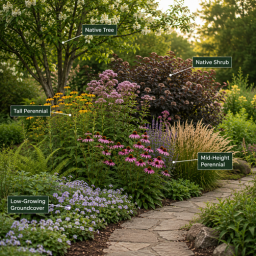
Nature rarely grows plants in neat rows.
Instead, forests, prairies, and meadows develop in layers, with each plant contributing something unique to the landscape.
You can recreate that same feeling in your own garden.
Begin with taller trees or large shrubs that provide height and shelter.
Add medium-sized shrubs and flowering perennials that create the heart of the planting.
Finally, soften the edges with lower-growing flowers, native sedges, grasses, or ground covers.
These layers create depth, visual interest, and valuable habitat for birds, butterflies, native bees, and countless other beneficial creatures.
They also make gardens feel peaceful and natural rather than overly formal.
If you’ve already read our article, How to Design a Simple Native Garden in Michigan (Step-by-Step), you’ve seen how thoughtful layering helps transform individual plants into a cohesive landscape.
Designing for four seasons simply expands that idea by considering how each layer changes throughout the year.
Think Beyond Flowers
It’s easy to focus entirely on bloom time when choosing plants.
Flowers are certainly important, but they’re only one chapter of the story.
Seedheads become food for goldfinches and other songbirds.
Native grasses sway gracefully in autumn winds.
Colorful berries brighten winter landscapes while feeding wildlife.
Interesting bark adds texture after leaves have fallen.
Even the changing shapes of branches become part of your garden’s beauty once snow begins to blanket the landscape.
When you begin appreciating these quieter details, you’ll discover that some of the most beautiful moments in a native garden happen long after the flowers have faded.
Create a Garden That Changes with the Seasons
A successful four-season garden isn’t one that looks the same every month.
It’s one that gives you something new to discover as the seasons unfold.
Spring brings anticipation.
Summer brings abundance.
Autumn brings warmth and movement.
Winter reveals the quiet beauty of structure and texture.
Each season prepares the garden for the next.
When you begin designing with that rhythm in mind, your landscape becomes more than a collection of plants.
It becomes a living reflection of Michigan itself.
Plan for Every Season
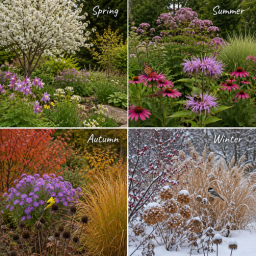
One of the easiest ways to create a four-season garden is to think about each season individually while you’re selecting plants.
Ask yourself:
What will catch my eye in spring?
Perhaps it’s the delicate white blossoms of Serviceberry, the cheerful flowers of Wild Columbine, or the elegant blooms of Blue Flag Iris.
What will carry the garden through summer?
This is when native perennials take center stage. Swamp Milkweed, Wild Bergamot, Purple Coneflower, Culver’s Root, and Joe-Pye Weed provide weeks of color while supporting bees, butterflies, and hummingbirds.
What happens when autumn arrives?
Many native plants are just reaching their peak.
New England Aster and Sneezeweed continue feeding late-season pollinators, while Little Bluestem transforms into warm shades of copper and bronze. Seedheads begin attracting goldfinches, and shrubs produce colorful berries that sustain migrating birds.
And winter?
This is the season many gardens overlook.
The graceful forms of native grasses remain standing, tree bark becomes more noticeable, berries brighten snowy landscapes, and dried seedheads continue feeding wildlife long after the flowers have faded.
Every season has something valuable to offer when you plan for it intentionally.
If you’re selecting new plants, the Lady Bird Johnson Wildflower Center Native Plant Database is an excellent resource for researching bloom times, mature sizes, and growing conditions.
Repeat Plants Throughout the Garden
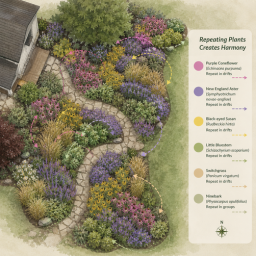
One of the simplest ways to make a garden feel professionally designed is through repetition.
Instead of planting one of everything, repeat your favorite plants in several locations throughout the landscape.
For example, a drift of Little Bluestem may appear near the front walk and again farther into the garden.
Purple Coneflowers might be repeated in two or three planting beds.
A grouping of Ninebark shrubs can create continuity between different parts of the landscape.
These repeated elements naturally guide the eye through the garden while creating a sense of harmony.
Nature uses repetition remarkably well.
So can we.
Leave Room for Growth
When native plants are first installed, they often look smaller than many gardeners expect.
It’s tempting to fill every empty space immediately.
Resist the urge.
Native perennials spend much of their first season establishing deep root systems before putting on significant top growth.
By the second and third years, many plants begin reaching their mature size and naturally filling the spaces between them.
Allowing room for this growth improves air circulation, reduces competition, and gives each plant the opportunity to develop into its full natural form.
Patience is one of the greatest design tools you’ll ever use.
Design for Wildlife, Not Just People
A truly successful four-season garden is beautiful because it’s alive.
As you design, think about the needs of the wildlife that will share your landscape.
Trees provide nesting sites.
Shrubs offer berries and protective cover.
Flowers supply nectar throughout the growing season.
Native grasses create shelter during winter.
Even leaving a few seedheads standing through the colder months provides food when birds need it most.
The remarkable part is that designing for wildlife almost always results in a more beautiful garden for people, too.
Movement, birdsong, butterflies, and seasonal change become part of the landscape itself.
That’s something no manufactured garden ornament can ever replace.
The National Wildlife Federation’s Garden for Wildlife® program also offers practical ideas for creating landscapes that provide food, water, cover, and places for wildlife to raise their young.
Beauty Grows with Time
One of the greatest joys of a native garden is watching it mature.
Each year brings new discoveries.
Plants grow into one another naturally.
Pollinators return in greater numbers.
Birds begin recognizing your garden as a reliable source of food and shelter.
The landscape becomes less about individual plants and more about the relationships forming between them.
That transformation doesn’t happen overnight.
But it does happen.
And it’s one of the most rewarding parts of gardening with Michigan’s native plants.
Your Garden Will Never Be Finished
One of the most freeing ideas in gardening is realizing that your landscape doesn’t have to be completed in a single season.
In fact, the best gardens rarely are.
Every year you’ll notice something new.
Perhaps a shrub would look better a few feet to the left. Maybe a favorite perennial deserves to be repeated elsewhere in the garden. You may discover that birds visit one planting more often than another, or that a particular combination of flowers blooms beautifully together.
That’s all part of the process.
A four-season garden is never truly finished—it simply continues to evolve.
Rather than striving for perfection, allow your garden to become a reflection of your own observations and experiences.
Nature is always changing.
Your garden should be free to do the same.
Begin with One Area
Designing an entire landscape can feel overwhelming.
The good news is that you don’t have to transform your entire property all at once.
Instead, begin with one garden bed.
One corner.
One pathway.
One place where you spend time enjoying the outdoors.
As you gain confidence, you’ll naturally begin connecting one area to the next.
Before long, your landscape will feel less like a collection of separate flower beds and more like one thoughtfully connected garden.
That’s exactly how many of the most memorable gardens are created—one successful space at a time.
Observe Before You Change
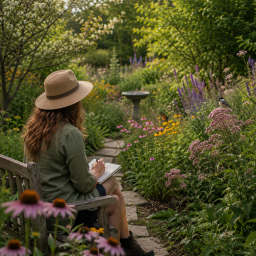
One of the greatest gifts you can give yourself as a gardener is time.
Spend a season watching your landscape.
Notice where the morning sun falls.
Watch how shadows move across the garden throughout the day.
Pay attention to where butterflies gather, where birds prefer to perch, and which flowers native bees visit most often.
These observations often become your best design tools.
Rather than forcing a landscape to follow a plan, you’ll begin making decisions based on what your garden is already telling you.
The result feels natural because it is.
If you’re looking for additional Michigan-specific gardening guidance as you observe and plan your landscape, Michigan State University Extension offers excellent educational resources on plant selection, landscape design, and sustainable gardening practices.
A Garden That Belongs in Michigan
Michigan’s native landscapes have inspired gardeners for generations.
Prairies filled with waving grasses.
Woodlands carpeted with spring wildflowers.
Wetlands alive with birds and dragonflies.
Dunes covered with plants uniquely adapted to shifting sands.
When we borrow ideas from these natural communities, we create gardens that feel like they truly belong here.
They’re not only beautiful.
They’re resilient.
They support wildlife.
They require less maintenance over time.
And perhaps most importantly, they connect us more deeply with the place we call home.
Happy Gardening!
A four-season garden isn’t measured by how many flowers bloom on a single summer day.
It’s measured by the quiet joy it brings throughout the entire year.
The first blossoms of spring.
The busy hum of pollinators in midsummer.
The warm colors of autumn.
The graceful silhouettes of grasses standing against fresh snow.
Every season has something worth noticing.
When you design with all four seasons in mind, your garden becomes more than a landscape.
It becomes a place you’ll look forward to visiting every day of the year.
Happy gardening,
Barbara 🌿
Michigan Garden Design
🌿 Continue Growing
Coming Next:
✨ Watch the Amazing Beauty Come Alive in Your Garden at Dusk
As the sun begins to set, your native garden enters one of its most magical times of day. In our next article, we’ll explore the sights, sounds, and remarkable wildlife that emerge at dusk—and why an evening walk through your garden may become one of your favorite daily rituals.
Continue Exploring
If you enjoyed this article, you may also like: