
Nature’s Winter Pantry: Feeding Birds Naturally
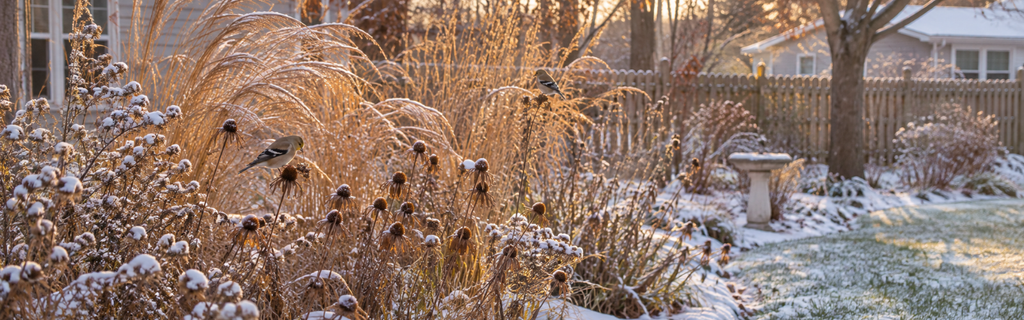
There is a certain stillness that settles over a Michigan garden as winter approaches. The bright flowers of summer have disappeared, grasses have turned shades of gold and copper, and the branches of shrubs and trees stand more clearly against the sky.
At first glance, the garden may appear empty.
But look a little closer.
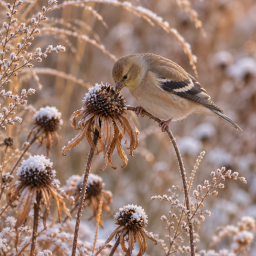
A goldfinch balances on a dried seed head, carefully searching for something to eat. A chickadee moves between branches, investigating tiny crevices where insects may be hiding. Nearby, a cluster of berries remains tucked among bare twigs, waiting to be discovered.
What looks like the end of the growing season is actually the beginning of another important chapter.
The winter garden is not empty. It is a pantry, quietly stocked by the seasons that came before it.
The Food We Leave Behind
Throughout spring and summer, we admire native plants for their flowers, fragrance, movement, and the pollinators they attract. Yet some of their most valuable contributions appear long after their blossoms have faded.
Those dried flower heads contain seeds. Shrubs and trees may hold fruits that persist into colder months. Beneath loose bark and among plant stems, insects and other small creatures may spend the winter sheltered from the elements.
For birds that remain in Michigan through the colder months, these natural resources can become important parts of their winter diet.
American goldfinches, for example, feed on seeds from plants such as asters and coneflowers. Chickadees search for insects and their eggs while also eating seeds. Other birds depend on fruits, nuts, or combinations of available foods.
Not every plant feeds every bird, and not every food source lasts throughout the winter. That variety is part of what makes a diverse native garden so valuable.
In our earlier Michigan Garden article, The Best Native Plants That Feed Goldfinches, we explored how flowers can become a food source after their colorful season has ended.
Winter invites us to see those same plants differently. Rather than looking at dried stems as something left behind, we can begin to recognize them as something still being offered.
A Garden That Feeds Without a Feeder
Bird feeders can bring wonderful activity close to our windows, especially during Michigan’s snowy months. Watching a cardinal settle onto a branch or a chickadee carry away a sunflower seed can brighten even the grayest winter morning.
But a bird-friendly garden can offer something beyond the feeder.
Native plants provide food in the places where birds naturally search for it. Seeds remain attached to standing stems. Fruits may linger on shrubs and trees. Fallen leaves, woody growth, and sheltered spaces provide places where some insects overwinter.
These resources allow birds to forage throughout the landscape, following the opportunities each season provides.
Audubon Great Lakes encourages the use of native plants alongside responsible bird feeding to support birds during the winter months.
There is something especially satisfying about watching a bird discover food that the garden has produced on its own.
No filling or refilling is necessary. No special equipment is required.
Just a plant that was allowed to complete its seasonal cycle.
The Beauty of Leaving Something Standing
For many gardeners, autumn has traditionally meant cutting back perennials, clearing fallen leaves, and preparing beds to look tidy for winter.
There is certainly room for thoughtful maintenance. Pathways still need to remain accessible, diseased plant material may need attention, and each garden has its own practical considerations.
But a garden does not need to be completely cleared to be cared for.
Leaving selected native flower heads standing can extend their usefulness well beyond the growing season. Their silhouettes also bring texture and structure to a landscape that might otherwise appear bare.
This is closely connected to the idea we explored in Learning How to Trust Your Native Garden. Sometimes the most beneficial thing we can do is allow natural processes a little more room.
A dried coneflower standing against fresh snow may offer more than winter beauty. It may still hold seeds for a passing bird. A cluster of native grasses may provide cover along with movement and texture.
And in those quiet moments, we begin to understand that the garden’s value is not limited to the months when it is green and blooming.
A Different Way to See Winter
Perhaps the most meaningful change begins with how we look at our gardens.
Instead of asking what needs to be removed before winter, we might begin asking what is still useful.
Which seed heads are attracting visitors? Where do birds pause before moving into the open? Are there berries remaining on the shrubs? Which sheltered corners seem to receive the most activity?
These are small observations, but they reveal relationships that are easy to overlook during the busier growing season.
A winter garden does not have to be filled with color to be filled with life.
Sometimes all it takes is a few quiet minutes beside a window to discover just how much is still happening.
When we begin looking at a winter garden through the eyes of a bird, familiar plants take on new meaning.
The flowers we enjoyed in August may now be holding seeds. Shrubs that offered shelter during summer may carry berries into December. Even the dry grasses moving gently above the snow can provide places for birds to forage and find cover.
What makes nature’s winter pantry so interesting is that it doesn’t depend on one particular plant. It is built from many different contributions, each becoming useful at different times.
And for Michigan gardeners, some of the most meaningful contributions come from plants we may already be growing.
Seed Heads: Small Treasures Above the Snow
One of the simplest ways to provide natural food is to leave selected native perennials standing after they finish blooming.
New England aster (Symphyotrichum novae-angliae), with its beautiful purple autumn flowers, eventually produces seeds that may attract birds long after the petals disappear.
Black-eyed Susan (Rudbeckia hirta) is another familiar Michigan native whose dark seed heads can remain standing into the colder months. American goldfinches and other seed-eating birds may visit these plants as they search for food.
The Cornell Lab of Ornithology identifies asters and other seed-bearing flowers as valuable food sources for American goldfinches.
There is a special pleasure in watching one of these small birds cling to a slender stem, moving carefully around a dried flower head to reach the seeds.
What might have appeared untidy in November suddenly becomes one of the most interesting places in the garden.
Berries: Color and Nourishment in the Cold
Not all winter food comes from flowers.
Native shrubs and trees can offer fruits that attract different birds throughout autumn and winter.
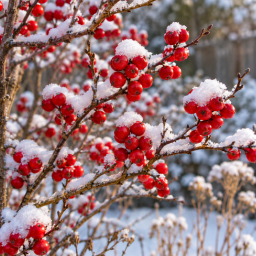
One particularly beautiful example is common winterberry (Ilex verticillata), sometimes called Michigan holly.
Unlike the evergreen hollies we often associate with Christmas, winterberry loses its leaves in autumn, leaving bright red berries visible against bare branches.
Those fruits may remain into winter, offering food to visiting birds when other resources become less available. Winterberry is native to Michigan and generally prefers moist to wet soil. Only female plants produce berries, and a compatible male plant is needed for pollination.
The contrast of red berries against fresh snow is striking, but the beauty is only part of the story.
A shrub can be both a winter ornament and a source of nourishment.
And when several kinds of native shrubs and trees grow together, their different fruiting seasons can help extend the availability of natural foods.
Grasses: More Than Winter Movement
Native grasses bring another dimension to the winter garden.
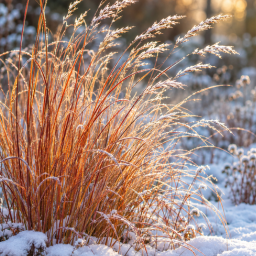
Little bluestem (Schizachyrium scoparium) is especially appealing as its fine foliage turns warm shades of copper and bronze. Its upright stems and delicate seed heads can remain attractive well into winter.
Native grasses offer seeds for some birds, while their stems and surrounding vegetation can provide cover near the ground.
They also create a different kind of winter beauty.
On a frosty morning, the smallest details become visible. A curved blade of grass catches the light. Snow settles along a seed head. A slight breeze sets the entire planting in motion.
As we explored in How to Use Native Grasses in Your Michigan Garden, grasses contribute much more than a backdrop for flowering plants.
Their usefulness continues even after the growing season has ended.
The Pantry Includes Places to Hide
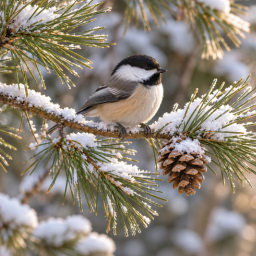
Food is important, but birds also need places where they feel protected.
Evergreen branches, dense shrubs, and sheltered planting areas can provide refuge from cold winds and places to retreat when danger approaches.
Even a small residential garden can offer a variety of these spaces.
A cluster of shrubs near taller perennials, a native grass planting beside an evergreen, or a sheltered corner where leaves and stems remain undisturbed can add another layer of habitat.
Michigan State University Extension encourages leaving seeds and stems standing through winter because they can support birds along with overwintering insects and other wildlife.
This connects naturally with our earlier article, How to Create Spaces Where Wildlife Feels Safe.
A garden that offers food is valuable. A garden that offers food alongside shelter becomes even more welcoming.
Begin With What Is Already Growing
Creating a winter pantry doesn’t necessarily mean purchasing more plants.
It may begin by recognizing the value of what is already there.
Perhaps a patch of asters can remain standing until spring. Maybe a few black-eyed Susans can be left undisturbed. Or a shrub that produces berries deserves a place in a future garden plan.
The goal isn’t to leave every plant untouched or to turn the entire yard into an unmanaged space.
It is to make thoughtful choices that allow part of the garden’s natural abundance to remain available.
And once we begin noticing how birds use these spaces, winter gardening becomes less about what has disappeared and more about what remains.
There is something reassuring about knowing that a garden can continue giving long after its growing season has ended.
The flowers may be gone, but their seeds remain. Shrubs hold the last of their berries, while branches and grasses create places for birds to rest, forage, and find protection from winter’s changing weather.
And although Michigan winters can be long, a garden that offers food and shelter gives us another reason to appreciate the season.
We don’t need to provide everything that birds require. A backyard is only one small part of the larger landscape they depend upon.
But every thoughtful planting, every seed head left standing, and every sheltered corner contributes something.
Perhaps the greatest lesson of nature’s winter pantry is that supporting wildlife doesn’t always require us to do more.
Sometimes it simply asks us to recognize the value of what we already have, and allow it to remain.
Barbara’s Observation
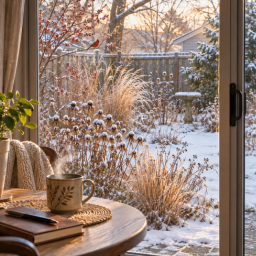
I’ve always found it interesting how differently we see a garden depending on the season.
In summer, our attention naturally goes to the flowers, the colors, and all the activity surrounding them. But winter encourages us to notice things we might otherwise overlook.
A small bird balancing on a dried stem. The movement of grasses against fresh snow. A cluster of berries that somehow escaped our attention during autumn.
These quiet discoveries remind me that a garden doesn’t stop being useful when it stops blooming.
Sometimes its most meaningful contributions are the ones we almost miss.
The Michigan Native Garden Journal
Winter offers a wonderful opportunity to observe the birds visiting your garden.
Which birds arrive most often? Are they searching among the seed heads, exploring shrubs, or spending time near sheltered areas? Do their favorite places change after a snowfall?
Recording these small details can help you recognize which plants and spaces are providing natural resources throughout the season.
The Michigan Native Garden Journal offers a place to capture those observations, helping you build a more meaningful understanding of your garden from one season to the next.
COMPLIMENTARY FIRST MONTH
The Michigan Native Garden Journal
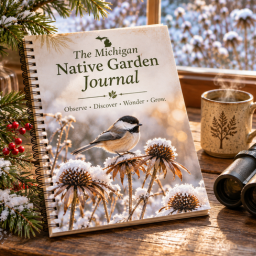
Observe • Discover • Wonder • Grow
Keep Exploring
Continue discovering how Michigan native plants support birds and other wildlife throughout the changing seasons.
- The Best Native Plants That Feed Goldfinches — Discover how seed-producing flowers invite these lively visitors into your garden.
- How to Use Native Grasses in Your Michigan Garden — Explore the beauty, movement, and ecological value of native grasses.
- How to Create Spaces Where Wildlife Feels Safe — Learn why shelter is just as important as food in a wildlife-friendly garden.
- — Consider how your garden can offer resources through every season.
For additional information about Michigan’s winter birds, explore the Cornell Lab of Ornithology’s All About Birds resource.
What’s Next
On a quiet winter morning, spend a few minutes watching your garden from a window or sheltered outdoor spot.
Look for the places birds visit naturally. Notice whether they are searching for seeds, exploring branches, or resting among shrubs.
Choose one area to observe throughout the winter. You may discover that the plants you thought had finished their work are still providing something valuable.
And when spring arrives, those observations may help you decide what to leave standing, what to add, and what deserves a little more room to grow.
Coming Next in Nature Notes
The Quiet Beauty of Michigan’s Winter Garden
When snow settles over the landscape and the garden becomes still, a different kind of beauty begins to emerge.
In our next Nature Notes article, we’ll explore the gentle patterns, textures, shadows, and unexpected details that make Michigan’s winter gardens worth experiencing, not simply waiting for spring to return.