
How to Design a Low-Maintenance Native Garden
A Beautiful Garden Doesn’t Have to Mean More Work
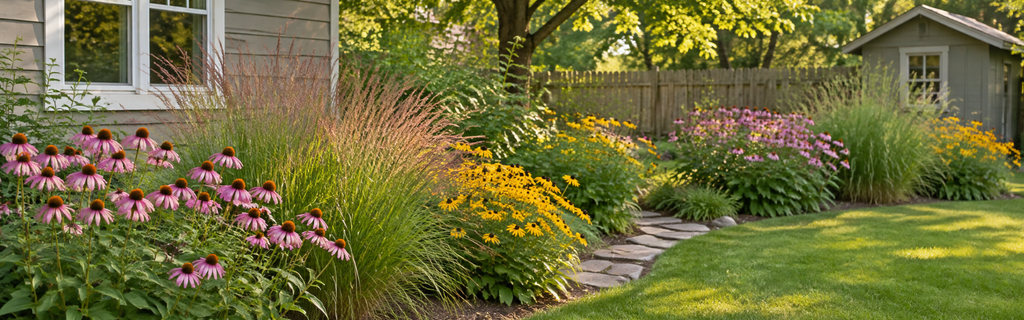
Imagine stepping into your garden on a summer morning and finding native flowers blooming, grasses moving gently in the breeze, and pollinators visiting throughout the day. The garden feels full of life, yet you haven’t spent every weekend watering, weeding, pruning, or trying to keep everything looking just right.
For many Michigan homeowners, that is exactly the kind of garden they would love to have.
The good news? A thoughtfully designed native garden can become easier to care for as it matures. But the secret isn’t simply choosing native plants and expecting nature to handle everything.
The secret is designing a garden that works with its surroundings rather than constantly requiring you to work against them.
Low-maintenance gardening begins long before the first plant goes into the ground.
What Does Low-Maintenance Really Mean?
One of the most common misconceptions about native gardening is that native plants require no maintenance.
While many Michigan native plants are well adapted to regional growing conditions, they still have individual preferences for sunlight, moisture, soil, and space. A plant placed in unsuitable conditions may struggle, even if it naturally grows elsewhere in Michigan.
A successful low-maintenance garden considers these needs from the beginning.
It also recognizes that gardens change.
Young native plantings generally require more attention while roots establish, plants become larger, and open spaces gradually fill in. Weeds may need to be removed, watering may be necessary during dry periods, and some plants may need occasional guidance.
Over time, however, a well-matched planting can become more resilient and require less routine intervention.
This natural progression is something we explored in Why Your Native Garden Gets Better Every Year.
The goal isn’t to eliminate gardening. It’s to reduce unnecessary work while creating a landscape that continues to develop beautifully.
Design With Nature, Not Against It
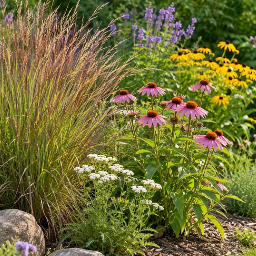
Think about the areas of your yard that already seem happiest.
Perhaps one corner receives morning sunshine and afternoon shade. Another stays noticeably damp after heavy rain. A sunny area near the driveway may become quite dry during summer.
These differences aren’t necessarily problems to correct. They’re valuable clues about which plants are likely to thrive.
Michigan landscapes can vary considerably, from sandy soils near the Great Lakes to heavier clay soils, woodland edges, and areas where drainage has been changed by construction.
Rather than trying to make every part of the yard behave the same way, thoughtful design responds to the conditions already present.
A native plant suited to a dry, sunny location may need less supplemental watering once established than one that prefers consistently moist soil. Likewise, choosing appropriate plants for a naturally damp area can reduce the need to continually adjust growing conditions.
Our article How to Choose Native Plants for Sun, Soil, and Moisture explores why understanding these conditions is such an important part of successful garden planning.
The less correction a garden needs, the more naturally it can develop.
A Garden That Has Room to Grow
Another important part of low-maintenance design is giving plants enough space to reach their natural size.
A young native plant may look small when first planted, but its mature height, width, and spreading habit can be quite different.
When plants are placed too close to walkways, crowd neighboring plants in ways that cause problems, or outgrow their intended spaces, the gardener may find themselves spending more time cutting back, dividing, or relocating them.
That doesn’t mean every plant needs to stand apart from its neighbors.
In fact, thoughtfully arranged native plant communities can create beautiful layers of foliage and flowers while helping occupy space that might otherwise be available to weeds.
As discussed in How to Let Your Native Garden Fill in Naturally, allowing appropriate plants to gradually fill their spaces can be part of developing a more established garden.
The key is understanding how those plants are likely to grow together.
A low-maintenance garden isn’t necessarily a smaller garden either. A well-planned planting can sometimes be easier to manage than several scattered beds, each requiring separate attention.
What matters most is creating a design that makes sense for the space, the plants, and the amount of time you want to spend maintaining it.
Five Design Choices That Make Native Gardens Easier to Maintain
Creating a low-maintenance native garden isn’t about finding one perfect plant or eliminating every garden chore. It’s about making a series of thoughtful decisions that allow plants to thrive together with less ongoing attention.
These five design principles can make a meaningful difference in how much work your garden requires over time.
1. Match Plants to the Conditions You Already Have
One of the simplest ways to reduce maintenance is to choose plants that naturally suit your garden’s growing conditions.
Before selecting plants, observe how sunlight moves across the space, where water collects after rain, and which areas dry out quickly.
For example, a sunny, relatively dry Michigan garden might accommodate little bluestem (Schizachyrium scoparium), while a consistently moist planting area may be better suited to blue flag iris (Iris versicolor).
Both are Michigan native plants, but they have different growing requirements.
The right plant in the right location often means less supplemental watering, fewer struggling plants, and less corrective maintenance.
Rather than changing the entire landscape to accommodate your favorite plants, consider choosing plants that appreciate the conditions you already have.
2. Plant in Generous, Repeating Groups
A garden filled with dozens of individual plants scattered throughout a bed can become visually busy and more difficult to manage.
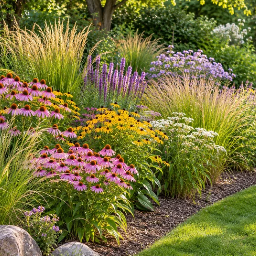
Instead, consider grouping compatible native plants in repeating arrangements.
For example, a combination of native grasses and flowering perennials can create a cohesive planting with interesting textures and seasonal color.
Repeating a few well-chosen plant combinations also makes it easier to recognize which plants belong in the garden and which are unwanted seedlings.
As the garden establishes, carefully planned plant groupings may help occupy open ground where weeds would otherwise grow.
The goal is not to crowd plants immediately. Allow room for their mature size and natural spreading habits.
3. Choose Plants With Manageable Growth Habits
Not every native plant behaves the same way in a residential garden.
Some grow in relatively defined clumps. Others spread through underground stems or produce abundant seedlings.
Both growth patterns can be valuable, depending on the location.
For a smaller garden near walkways, patios, or neighboring properties, plants with more predictable growth habits may be easier to manage.
In larger naturalized spaces, spreading plants may be useful for filling areas and creating continuous vegetation.
Before purchasing, consider three simple questions:
- How large will this plant typically become?
- Does it spread primarily by seed, underground growth, or both?
- Will I be comfortable allowing it to expand in this location?
A plant that thrives enthusiastically isn’t necessarily a poor choice. It simply needs a place where its growth habit works with your design.
4. Create Defined Edges and Easy Access
A natural-looking garden can still have a clear, intentional design.
One of the easiest ways to make a native planting feel cared for is to provide defined boundaries.
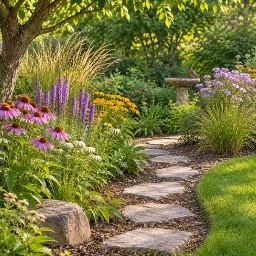
A simple mowed edge, narrow path, or well-maintained border can help separate planting areas from lawns, sidewalks, and other spaces.
These boundaries also make maintenance more manageable by providing access for occasional weeding, observing plants, and removing unwanted growth.
Think about where you will need to walk before the garden fills in.
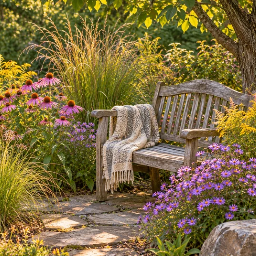
A thoughtfully placed stepping-stone path may prevent the need to reach awkwardly into a mature planting or step on plants while working.
A garden can look natural without being difficult to navigate or care for.
5. Design for All Four Michigan Seasons
Low-maintenance design considers what happens after summer flowers fade.
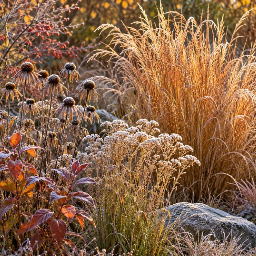
Native grasses, sturdy stems, seed heads, shrubs, and other structural elements can give a garden interest well into fall and winter.
Leaving appropriate stems and seed heads standing can also provide seasonal resources and habitat for wildlife, reducing the need for a complete fall cleanup.
Our article How to Design a Native Garden for Year-Round Wildlife explores how seasonal plant structure contributes to a more welcoming habitat.
Consider arranging plants so their changing forms complement one another. A garden with a strong foundation of grasses, flowering perennials, and appropriately sized shrubs may remain visually interesting long after blooming ends.
Rather than expecting every season to look the same, allow the garden’s appearance to evolve naturally.
Less Maintenance Begins With a Little Patience
Even a thoughtfully designed native garden requires attention, especially during its first few growing seasons.
Newly planted perennials, grasses, and shrubs need time to establish their root systems. During this period, regular observation, appropriate watering, and removing competing weeds are important.
As plants mature and begin occupying their intended spaces, many routine tasks may become less frequent.
The key is understanding that low-maintenance gardening is something you design for and gradually grow into.
Rather than following a rigid maintenance schedule, learn to recognize what your garden actually needs.
An occasional walk through the garden can reveal a great deal. Are certain plants spreading beyond their intended space? Has an unwanted plant appeared? Is a particular area remaining unusually dry?
Sometimes action is necessary. Other times, the best decision is to leave things alone.
Allowing healthy native plants to complete their seasonal growth cycles, leaving suitable stems and seed heads standing through winter, and accepting natural changes in the garden can reduce unnecessary work while supporting wildlife.
A well-designed native garden isn’t meant to remain frozen in its original arrangement.
It is meant to grow, change, and become increasingly connected to the landscape around it.
Barbara’s Observation
One of the things I appreciate most about native gardening is realizing that not every change requires a response.
A plant leaning toward the sunlight, grasses moving beyond their original outlines, or seed heads remaining long after flowering has ended can all be part of a garden finding its natural rhythm.
I’ve come to believe that a beautiful garden doesn’t necessarily reflect how much work we put into it.
Sometimes, it reflects how thoughtfully we designed it, and how much we’ve learned to trust what happens next.
Your Garden’s Story Is Worth Recording
A low-maintenance garden doesn’t become established overnight. Watching how it changes from one season to the next can help you recognize where your original design choices are working and where small adjustments might be useful.
Consider recording which areas need supplemental watering, where weeds return, and which plants gradually fill their spaces. These observations can help you make more informed decisions in future seasons.
COMPLIMENTARY FIRST MONTH
The Michigan Native Garden Journal
A beautiful way to record your garden’s progress, notice seasonal changes, and discover what your landscape is teaching you.
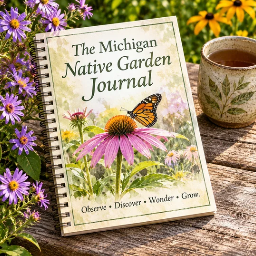
Observe • Discover • Wonder • Grow.
Keep Exploring
Continue developing a beautiful, manageable native garden with these related Michigan Garden Design articles:
- How to Choose Native Plants for Sun, Soil, and Moisture — Understand the growing conditions that influence plant success.
- How to Let Your Native Garden Fill in Naturally — Learn why patience and natural growth can be valuable parts of garden design.
- How to Use Native Grasses in Your Michigan Garden — Explore how grasses contribute structure, texture, and seasonal interest.
- How to Design a Native Garden for Year-Round Wildlife — Discover how thoughtful plant arrangements support wildlife throughout the seasons.
What’s Next?
Choose one area of your yard that seems to require more attention than you’d like.
Before making changes, spend a little time observing what creates the extra work.
Is it a plant growing in unsuitable conditions? A planting that has outgrown its space? An area where weeds repeatedly appear?
Write down one adjustment that could make this space easier to manage.
You don’t have to redesign your entire yard to begin creating a lower-maintenance garden.
Sometimes, one thoughtful change is enough to move in the right direction.
Coming Next:
How to Plan Your Native Garden During Winter
Winter may seem like an unlikely time to work on your garden, but it can be one of the most useful seasons for thoughtful planning.
Without the distractions of active growth and constant garden tasks, there’s an opportunity to see your landscape differently.
In our next Michigan Garden article, How to Plan Your Native Garden During Winter, we’ll explore how to use Michigan’s quieter gardening season to evaluate your landscape, consider new possibilities, and prepare for a more intentional growing season ahead.