
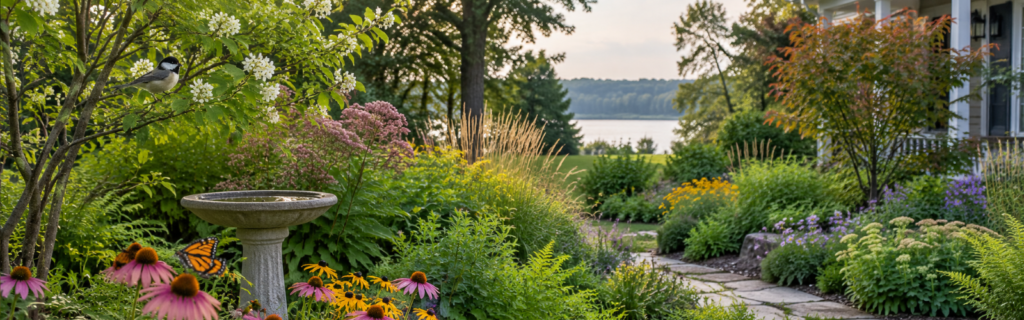
How to Create Spaces Where Wildlife Feels Safe
Michigan Garden Article No. 48
A garden can be filled with native flowers and still feel surprisingly exposed.
There may be nectar for butterflies, seeds for birds, and water nearby, yet wildlife visits only briefly. A chickadee drops onto a seed head and disappears. A butterfly pauses for a few moments before moving on. Rabbits remain along the edges instead of venturing farther into the yard.
Sometimes the missing piece is not another plant.
It is shelter.
When we think about gardening for wildlife, it is easy to focus on what animals eat. Flowers, berries, seeds, nectar, pollen, and host plants are all important parts of habitat. But wildlife also needs places where it can pause, hide, move, rest, and raise young.
A garden becomes more useful when those needs begin to overlap.
Wildlife Experiences the Garden Differently Than We Do
We tend to see a garden from standing height.
We notice the shape of the beds, where the flowers are blooming, whether the plants look balanced, and how the garden relates to the house.
A bird experiences that same space from branch to branch.
A bee encounters it flower by flower.
A small animal may experience it from only a few inches above the soil.
That change in perspective can completely alter the way we think about garden design.
A wide stretch of open lawn that feels calm and spacious to us may offer very little protection to something trying to cross it. A dense shrub that appears slightly untidy from the patio may be exactly the kind of protected resting place a bird is looking for.
Even the spaces beneath plants matter.
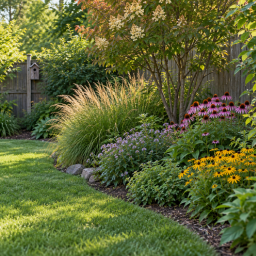
Leaf litter, stems, low vegetation, grasses, shrubs, and overhead tree branches create different layers of shelter. When several of those layers occur together, the garden begins to feel less like a collection of individual plants and more like habitat.
This is one reason the ideas in Learning How to Trust Your Native Garden matter so much. A garden does not have to look perfectly controlled at every moment to be working beautifully.
Sometimes the spaces that appear a little fuller are doing some of the most important work.
Think in Layers, Not Isolated Plants
One of the simplest ways to create safer spaces is to begin thinking vertically.
A garden might include:
- trees or taller woody plants overhead
- shrubs beneath them
- tall perennials and grasses
- medium-height flowering plants
- lower plants close to the soil
- fallen leaves and natural material at ground level
Not every yard needs every layer everywhere.
The goal is simply to avoid designing the entire landscape at one height.
A native garden filled only with three-foot-tall flowering perennials can provide wonderful seasonal food, but adding nearby shrubs, grasses, lower-growing plants, or a tree can create additional places for wildlife to move between feeding and shelter.
The same principle applies on a smaller property. Even one layered corner can become meaningful.
A shrub beside a perennial planting. A small tree with native flowers growing below it. A patch of grasses connecting one planting area to another. A birdbath positioned close enough to vegetation that birds have somewhere nearby to retreat.
These combinations often matter more than adding another isolated plant somewhere else in the yard.
Connection Matters
Wildlife habitat does not have to cover an entire property to be useful.
But the pieces work better when they connect.
A garden bed along the house, another around a tree, and a third near the back fence may each provide food and shelter. Adding vegetation between them, or simply reducing the distance wildlife must cross through completely open space, can help those areas begin functioning together.
This connects naturally with what we explored in How to Let Your Native Garden Fill in Naturally. As plants mature, spread, and begin touching one another, the garden can become more than visually fuller. It may also develop the complexity that gives wildlife more places to use.
And that is where creating wildlife habitat becomes less about decorating the yard with individual “wildlife plants” and more about designing relationships between plants.
Food matters.
Water matters.
But so does the space between them.
Designing Safer Spaces Into the Garden
Creating shelter for wildlife does not require turning your yard into a thicket.
In fact, some of the most useful changes are fairly simple.
The goal is to create places where wildlife can move from food to water to shelter without feeling completely exposed. That often means adding layers, softening open spaces, and paying attention to where protection already exists.
Start With One Protected Corner
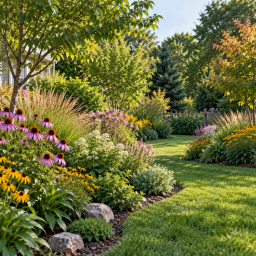
If your yard feels very open, begin with one area rather than trying to redesign everything at once.
A back corner, side yard, fence line, or area beneath an existing tree can become a strong starting point.
Look for a place where you could combine several heights of vegetation:
- a shrub or small tree
- taller perennials or grasses
- medium-height flowering plants
- lower vegetation near the soil
That single layered area can create places for wildlife to perch, forage, rest, and retreat.
It also tends to look intentional from a design standpoint because the planting has structure rather than appearing like a collection of unrelated plants.
Use Shrubs as Shelter Anchors
Shrubs are especially valuable because they create volume.
A flowering perennial may provide nectar or seeds, but a shrub can create a protected interior space as well as branches above the ground.
Placed near a perennial bed, birdbath, or feeding area, shrubs can make the surrounding space feel more secure.
You do not need a solid hedge.
Even one or two well-placed shrubs can help create a transition between open lawn and denser planting.
When choosing shrubs, consider the size they will eventually reach. A plant that looks small in a nursery container may become a significant structural element later, so give it enough room to mature naturally.
Let Grasses Create Soft Cover
Native grasses can help connect planting areas while creating movement and shelter closer to the ground.
They are particularly useful along the edges of garden beds or in places where a completely open gap exists between two planted areas.
A drift of grasses can soften that transition.
They also add structure later in the season, when many flowering plants begin to fade.
Rather than planting grasses as isolated specimens, consider using them in small groupings. Repetition creates a stronger visual effect and helps the planting feel intentional.
Think About the Space Around Water
Water is one of the most obvious wildlife attractants, but its placement matters.
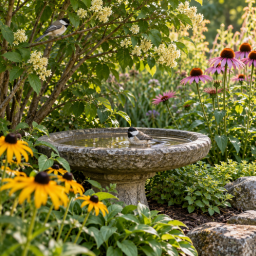
A birdbath positioned in the middle of a broad, open lawn may provide water, but it also leaves birds exposed while they use it.
Placing water near shrubs, tree branches, or layered plantings gives birds somewhere nearby to retreat.
That does not mean placing a water source deep inside dense vegetation where you cannot see or maintain it.
Instead, think about creating a balance:
open enough to access and observe, but close enough to shelter that wildlife has options.
The same principle applies to shallow dishes, small fountains, and other modest water features.
Reduce Long Stretches of Exposure
One of the most useful design questions you can ask is:
How far would a small animal need to travel before reaching cover?
You do not need to eliminate every patch of lawn.
Instead, look for unusually large gaps between safe spaces.
If a planting bed sits along the house and another is located near the property line, could a small island bed, tree, shrub grouping, or grass planting help visually and physically connect them?
Even partial connections can make the landscape feel more cohesive.
This is where wildlife-friendly design and good garden design often meet.
A connected landscape usually feels more intentional to us, too.
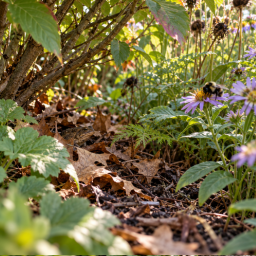
Leave Some Ground-Level Protection
Not all shelter happens above the soil.
The lower layer of the garden matters too.
Leaf litter, low-growing plants, spent stems, and natural plant debris can provide protection and habitat at ground level.
That does not mean allowing everything to accumulate indefinitely.
It simply means reconsidering the idea that every garden bed must be completely bare beneath the plants.
A thin natural layer can soften the soil surface and create a more complex environment than exposed mulch alone.
This is especially valuable in areas beneath shrubs, grasses, and perennial groupings where a little natural material fits visually.
Create a Gradual Transition
A strong wildlife garden often moves from low to medium to tall rather than shifting abruptly from lawn to one tall plant.
That gradual transition feels more natural and creates more usable spaces.
For example:
lawn
→ low plants
→ flowering perennials
→ grasses or shrubs
→ small tree
You do not need to create that sequence everywhere.
But using it in one or two key areas can completely change how the yard functions.
The result is not simply more plants.
It is more depth, connection, and protection.
And once you begin seeing the garden this way, you may notice that some of the safest spaces already exist.
They may simply need to be connected.
Making Habitat Feel Intentional
A wildlife-friendly garden does not need to look wild in every direction.
In fact, some of the most inviting habitat spaces are created by combining natural complexity with clear garden structure.
Defined bed edges, pathways, repeated plant groupings, and thoughtfully placed shrubs can help a garden feel cared for even when leaves remain beneath plants or stems are left standing longer into the season.
The goal is not to choose between a beautiful garden and a useful habitat.
It is to design so the two support one another.
Keep Some Open Views
Shelter matters, but so does visibility.
You should still be able to see into the garden, enjoy the plants, maintain water sources, and move comfortably through the space.
Rather than filling every opening, create pockets of protection.
A dense planting near a shrub.
A quieter corner beneath a tree.
A grouping of grasses along the back of a border.
A low layer beneath taller perennials.
These sheltered pockets can exist alongside open paths, patios, and lawn.
Think of the garden as a series of choices for wildlife rather than one continuous wall of vegetation.
Let Maintenance Become More Selective
Creating safer habitat often changes the way we think about cleanup.
Instead of asking, “What can I remove?” try asking:
“Is something using this?”
A standing seed head may still provide food.
A hollow stem may have value beyond the growing season.
Leaves beneath shrubs may be doing more than simply waiting to be raked.
Not every part of the garden needs the same level of cleanup at the same time.
You can keep high-visibility areas more refined while allowing quieter spaces to remain more natural.
That balance is often enough to make a garden feel intentional to people and more usable to wildlife.
Build Habitat Over Time
You do not need to complete a wildlife garden in one season.
Start with one sheltered area.
Add one shrub.
Connect two planting beds.
Move a birdbath closer to cover.
Leave one patch of leaves where they naturally fall.
Then watch what happens.
As plants mature and fill in, the garden itself will begin showing you where additional shelter is needed and where enough already exists.
That is one of the quiet advantages of gardening for wildlife.
You are not designing only for appearance.
You are creating a place that becomes more useful as relationships develop.
Barbara’s Observation
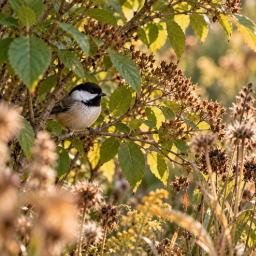
The more time I spend watching gardens, the more I notice that wildlife rarely chooses the spaces we consider the most perfect.
Birds disappear into the shrub that grew a little fuller than expected.
Insects move beneath leaves we almost cleaned away.
A butterfly may feed in the brightest part of the garden, then vanish into a quieter layer we barely noticed.
What looks like empty space to us may feel exposed to something much smaller.
And what looks slightly untidy to us may feel like safety.
Sometimes creating habitat begins with learning to see the garden from another point of view.
The Michigan Native Garden Journal
One of the best ways to understand whether your garden is becoming safer for wildlife is simply to watch.
Choose one area and notice how it is used.
Which birds visit the shrubs?
Where do butterflies disappear after feeding?
Do you see more activity near water when shelter is close by?
Record those small observations over time, and patterns begin to emerge.
COMPLIMENTARY FIRST MONTH
The Michigan Native Garden Journal
↓ GET YOUR COPY ↓
Observe • Discover • Wonder • Grow
The Journal gives you a place to record what wildlife is showing you about the spaces you have created.
Keep Exploring
If you would like to continue building a garden that works more naturally with wildlife, explore:
- Learning How to Trust Your Native Garden
- How to Let Your Native Garden Fill in Naturally
- Small Water Features for Wildlife
- The Best Native Plants That Feed Goldfinches
- Why Your Native Garden Gets Better Every Year
Each explores another piece of the same larger idea: creating gardens that become more useful, connected, and alive over time.
Keep Learning
If you’d like to explore wildlife habitat in greater depth, these trusted resources offer excellent guidance:
- National Wildlife Federation — Habitat Essentials
Learn more about the four essential components of wildlife habitat: food, water, cover, and places to raise young.
Explore Habitat Essentials from the National Wildlife Federation - Cornell Lab of Ornithology — How to Provide Seeds and Shelter for Backyard Birds
Cornell offers practical guidance on combining low vegetation, shrubs, and taller trees to provide cover and safer movement for birds—closely reinforcing the layered approach discussed in this article.
Learn about creating food and shelter for backyard birds
What’s Next
Choose one area of your yard and look at it from the perspective of something much smaller than you.
Where is the nearest shelter?
Where is the water?
Where is the food?
And how much open space lies between them?
You may discover that one small change—a shrub, a grass grouping, a relocated birdbath, or a little less cleanup—is enough to make that space feel completely different.
Coming Next:
The Best Native Plants for Fall Color
Fall color in a native garden is not limited to the changing leaves of trees.
Native perennials, grasses, shrubs, and other plants can bring rich golds, reds, bronzes, and purples into the garden as the growing season begins to wind down.
Next, we’ll look at some of the strongest Michigan-native choices for adding fall color while continuing to support the life already using the garden.