
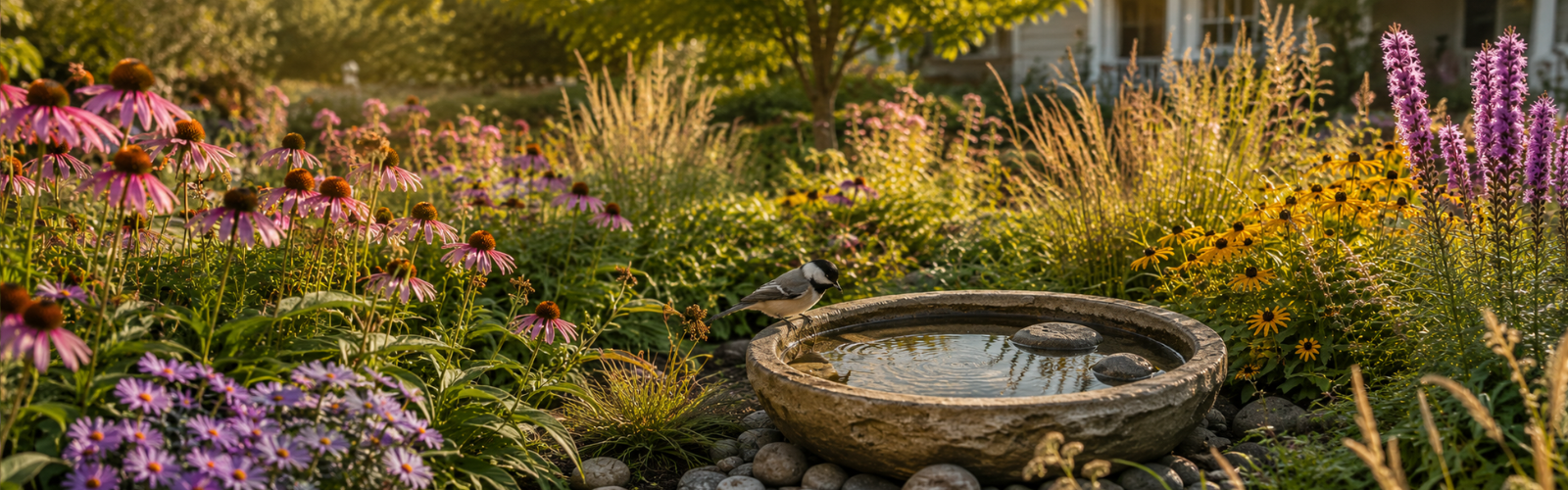
How To Create Small Water Features for Wildlife
Water has a way of changing a garden.
Add even a small amount, and suddenly there is movement, reflection, sound, and often, new visitors.
Birds arrive to drink and bathe. Butterflies may stop at damp edges. Bees and other insects need water too, particularly during the hottest stretches of a Michigan summer.
And the good news is that you do not need a pond, waterfall, or complicated installation to provide it.
Sometimes a shallow bowl in the right place is enough.
Wildlife Needs More Than Food and Flowers
When we think about creating habitat in our gardens, flowers are usually the first thing that comes to mind.
Native plants provide nectar, pollen, seeds, host plants, shelter, and nesting opportunities. They are the foundation of a thriving garden ecosystem.
But wildlife also needs water.
A garden filled with native flowers may provide abundant food while still leaving birds and insects searching elsewhere for a dependable place to drink.
That is why water is an important part of creating a complete pollinator habitat in your Michigan garden.
The goal does not have to be elaborate.
What matters most is providing water that wildlife can safely reach and use.
Think Small Before You Think Pond
The words water feature can make us imagine something expensive or difficult to maintain.
A liner.
A pump.
Digging.
Electricity.
Perhaps even fish.
But a wildlife water feature can be much simpler.
A shallow ceramic saucer, stone basin, birdbath, or weather-resistant container can become a valuable source of water when it is placed thoughtfully.
In fact, small water features offer several advantages.
They are easier to clean.
They can be moved if the location is not working.
The water can be refreshed frequently.
And they allow you to experiment before committing to something larger.
For someone just beginning to make a landscape more wildlife-friendly, this is often the perfect place to start.
Different Visitors Use Water Differently
One of the most interesting things about adding water is discovering who finds it.
Birds may use a shallow basin for both drinking and bathing.
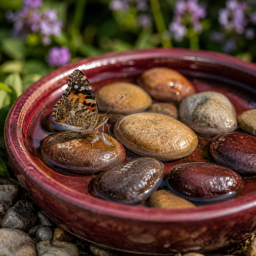
Butterflies sometimes gather moisture and minerals from damp soil or sand.
Bees and other small insects need very shallow access and secure places to land.
That means a water feature designed for wildlife should not simply be a deep container filled to the top.
Depth and access matter.
Adding stones that rise above the waterline can provide insects with safe landing places.
A gently sloped edge gives birds easier access.
Keeping at least part of the water shallow makes the feature useful to a wider range of visitors.
It is a small design decision that can make a surprisingly large difference.
Location Matters
Before choosing a container, spend a little time looking around your garden.
Where are birds already traveling?
Where are pollinators most active?
Where could you see the water feature from a window, patio, or garden bench?
A location near native plantings can make the water easier for wildlife to discover while providing nearby cover.
But avoid hiding it so deeply among dense plants that birds cannot easily watch for predators.
Partial shade can also be helpful, particularly during hot weather, because it may slow evaporation and keep the water from heating as quickly.
Most importantly, place the feature somewhere you will notice it.
A small wildlife water source only works well when the water stays reasonably clean and fresh.
If you walk past it regularly, maintaining it becomes much easier.
Water Can Become Part of the Garden Design
A wildlife feature does not need to look like something added solely for function.
It can belong beautifully within the landscape.
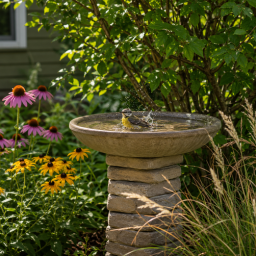
A simple stone-colored basin tucked near Prairie Dropseed can feel completely natural.
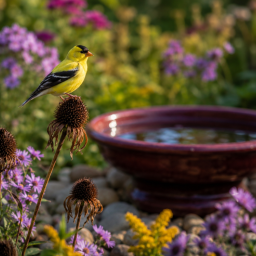
A low birdbath surrounded by Purple Coneflower and Black-eyed Susan can become a focal point.
A shallow container near the edge of a planting can reflect grasses and flowers above it.
This is where habitat gardening and garden design begin to overlap.
The best wildlife features often do both.
They provide something wildlife needs while giving us another reason to stop and watch what is happening in the garden.
Start With Observation
Before you add anything, spend a few days noticing how wildlife already moves through your property.
Watch where birds land.
Notice where butterflies gather.
Look for areas that receive afternoon shade.
Pay attention to places where you naturally pause or look out from inside the house.
That observation can tell you more about where a small water feature belongs than simply choosing the prettiest open spot.
And once the water is there, keep watching.
You may be surprised by how quickly something so small changes the activity around it.
Simple Water Features You Can Create at Home
A wildlife water feature does not need to be complicated to be useful.
In many gardens, the best option is something simple enough that you will actually keep it clean, filled, and functioning.
Here are several easy ways to add water to a Michigan garden.
A Shallow Basin
One of the simplest options is a wide, shallow basin placed directly in or beside a planting bed.
A ceramic plant saucer, sturdy stone bowl, or other weather-resistant container can work beautifully.
Choose something with gently sloping sides if possible, and keep the water relatively shallow.
Add a few stones that rise above the surface so bees, butterflies, and other insects have safe places to land.
A shallow basin works particularly well:
- near flowering native plants
- beside a pathway
- within view of a window or sitting area
- in a location that receives some afternoon shade
Because the container is small, the water can be emptied, rinsed, and replaced easily.
That simplicity is one of its greatest advantages.
A Wildlife-Friendly Birdbath
A traditional birdbath can serve wildlife very well, but depth matters.
Birds generally prefer shallow water where they can stand comfortably rather than a deep bowl with steep sides.
If your birdbath is deeper, placing flat stones inside can create different water depths and provide secure footing.
Location also matters.
Nearby shrubs or small trees give birds a place to retreat, preen, or wait their turn, but avoid placing the bath directly inside dense vegetation where predators can easily hide.
A birdbath can become especially effective when it is surrounded by native plants that provide food and shelter for birds.
Together, the plants and water begin functioning as habitat rather than separate garden features.
A Pollinator Water Station
Small insects need water too, but an ordinary bowl can be too deep for them to use safely.
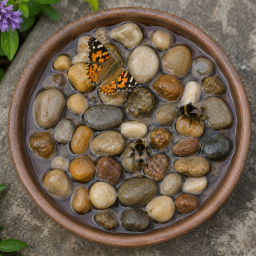
A pollinator water station can be as simple as a shallow dish filled with pebbles, stones, or coarse gravel.
Add enough water to wet the stones while allowing plenty of surfaces to remain above the waterline.
Bees and butterflies can land on those surfaces and reach the moisture without becoming submerged.
Place the dish near flowers where pollinators are already active.
Then watch.
You may begin noticing visitors you previously overlooked.
A Ground-Level Water Dish
Not every water source needs to sit on a pedestal.
A shallow container placed near ground level can be useful to birds and other small garden visitors.
Tucking one among native grasses or near the edge of a planting can also make it feel like a natural part of the landscape.
Just be sure the container remains visible enough that you remember to refresh it.
A layer of stones around the edge can help visually integrate the dish into the garden while providing additional landing surfaces.
A Small Recirculating Feature
If you enjoy the sound and movement of water, a small recirculating feature can add another dimension to the garden.
A compact fountain or bubbling basin can attract attention because moving water is often easier for birds to notice.
The sound can also become part of the garden experience for you.
Keep the design simple.
A shallow bubbling bowl or small fountain generally provides more wildlife value than a deep decorative container with inaccessible sides.
If the feature uses a pump, check it regularly to ensure that the water level remains high enough for the pump to operate properly.
Make Water Easy to Reach
Regardless of the style you choose, think about the smallest visitor that might approach it.
Smooth, steep-sided containers can be difficult for insects and even small birds to use.
A few simple additions can improve access:
- flat stones
- pebbles
- rough-textured edges
- shallow sections
- partially submerged sticks or branches
The goal is to provide multiple places where wildlife can approach the water without struggling.
Clean Water Matters
One of the advantages of keeping a wildlife water feature small is that maintenance is simple.
Refresh the water frequently, particularly during hot weather.
If algae, debris, or droppings begin collecting, empty the container and scrub it before refilling.
Avoid adding chemicals intended to keep ornamental water clear.
For a small wildlife feature, regular cleaning and fresh water are usually the better approach.
Mosquitoes are another reason to refresh the water often. They require standing water to reproduce, so regularly emptying and replacing the water helps interrupt that cycle.
Let the Garden Surround It
Once you have chosen your water feature, resist the temptation to treat it as an isolated object.
Instead, allow the surrounding planting to help it belong.
Native grasses can soften the edges.
Low-growing plants can frame the base.
Flowers nearby bring pollinators into the same area.
Shrubs farther back can provide cover for birds.
If you are already working toward a pollinator-friendly garden, adding water is simply another layer of habitat.
The result does not have to look like a designated “wildlife station.”
It can simply look like a beautiful garden where wildlife happens to find what it needs.
Begin With One
You do not need several water features to make a difference.
Begin with one.
Choose a location you pass frequently, add a shallow container, place a few stones inside, and keep it filled with fresh water.
Then pay attention to who discovers it.
That may be all the encouragement you need to add another.
Making Water Part of the Bigger Garden
Once you have chosen a simple water feature, the next step is helping it feel like it belongs in the garden.
A shallow bowl, birdbath, or bubbling basin can do more than provide water.
Placed thoughtfully, it can become part of the larger habitat you are creating.
Connect Water With Shelter
Wildlife rarely needs just one thing.
Birds may come to drink, but they also benefit from nearby shrubs, trees, and grasses where they can rest or retreat.
Pollinators may visit a shallow water source, then move directly into flowering plants nearby.
That is why water works especially well when it is placed close to other habitat elements rather than isolated in the middle of an open lawn.
Think in layers:
- water
- flowers
- grasses
- shrubs
- trees
Together, they create a much more useful garden than any one element alone.
Keep the Feature Easy to Maintain
A wildlife feature only helps when it remains usable.
Place it where you can easily reach it with a hose, watering can, or bucket.
If cleaning it becomes inconvenient, it is much easier to forget.
That is another reason small water features are so effective.
They can be emptied, rinsed, repositioned, and refreshed without turning garden care into a major project.
Simple usually wins.
Let the Seasons Guide You
In Michigan, water features naturally change with the seasons.
During summer, frequent refreshing may be necessary because of heat and evaporation.
In fall, leaves may collect in shallow bowls and need to be removed.
As freezing weather approaches, containers that can crack should be emptied and stored or turned over.
Other features may remain outside as decorative garden elements even when they are no longer holding water.
The important thing is to treat the water feature as part of the seasonal rhythm of the garden rather than something that must function exactly the same way all year.
Watch What Happens
One of the most rewarding parts of adding water is discovering which visitors find it.
You may notice birds you had not seen before.
Bees may begin landing on the stones.
A butterfly may stop at the damp edge.
Or perhaps the most noticeable change will simply be the sound of a bird bathing outside your window.
Small water features invite observation.
And that may be their greatest gift.
They remind us that wildlife-friendly gardening is not only about what we plant.
It is about creating the conditions for life to happen.
Barbara’s Observation
Water changes the feeling of a garden in a way that is difficult to describe until you experience it.
Even the smallest basin creates a place to pause.
You begin watching who visits.
You notice patterns.
You see how quickly birds learn where water can be found and how something as simple as a wet stone can become useful to a bee.
That is what I love about creating habitat.
The changes do not have to be large to matter.
Sometimes the smallest addition is the one that helps us notice the garden in an entirely new way.
Your Garden Has a Story. Start Recording It.
A new water feature gives you something wonderful to observe.
Which birds discover it first?
Do pollinators use the stones?
Does activity change with the weather or time of day?
The complimentary first month of The Michigan Native Garden Journal gives you a place to record those discoveries and begin noticing the patterns unfolding in your own landscape.
COMPLIMENTARY FIRST MONTH
The Michigan Native Garden Journal
GET YOUR COPY ↓
Observe • Discover • Wonder • Grow.
Keep Exploring
Continue building a garden that supports wildlife with these related Michigan Garden articles:
- How to Create a Pollinator Habitat in Michigan: It’s More Than Just Flowers
- Why Native Bees Are the Garden’s Most Important Pollinators
- Best Native Plants for Pollinators
- How to Use Native Grasses in Your Michigan Garden
For additional information about supporting wildlife at home, explore resources from some of our trusted organizations:
What’s Next
You do not need to transform your entire property at once.
Add one source of water.
Plant one more native species.
Leave one patch of stems standing.
Create one additional place for wildlife to feed, drink, or shelter.
Small choices begin adding up.
And over time, the garden becomes more than something beautiful to look at.
It becomes a place where life can happen.
Coming Next
Goldfinches bring a burst of color and movement to the garden, but the plants we choose can help determine whether they simply pass through, or stay awhile.
In the next Michigan Garden article, The Best Native Plants That Feed Goldfinches, we’ll look at the Michigan native plants that provide the seeds these beautiful birds naturally seek, along with simple ways to design a garden that supports them from late summer into fall and beyond.