
Why Your Native Garden Gets Better Every Year
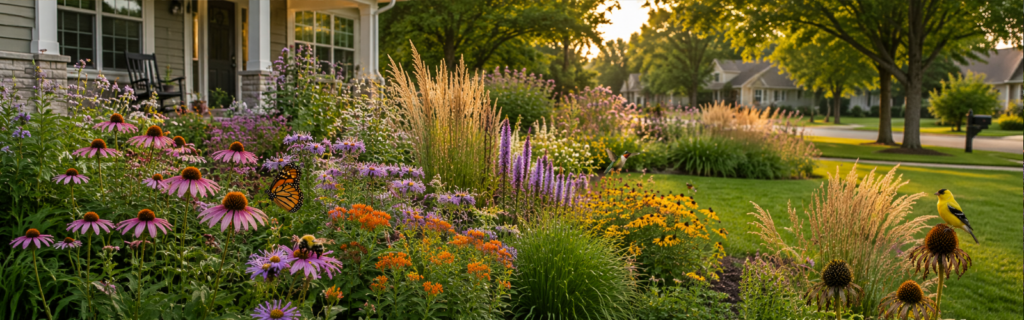
The Most Beautiful Native Gardens Weren’t Built Overnight
One of the hardest parts of planting a native garden is learning to be patient.
You spend weeks planning.
You carefully choose plants that belong in Michigan.
You prepare the soil, spread mulch, and water faithfully.
Then you step back…
…and your new garden may look surprisingly small.
The flowers aren’t filling every space.
The grasses haven’t reached their full height.
Butterflies visit, but not nearly as often as you hoped.
It’s easy to wonder if you’ve done something wrong.
The truth is, you’ve probably done everything right.
Native gardens simply grow differently than many traditional landscapes.
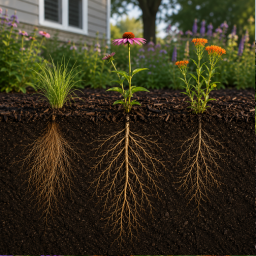
Instead of putting all of their energy into fast, leafy growth above the ground, many native plants spend their first season building something you can’t see.
A remarkable root system.
The Real Work Happens Underground
When we admire a mature prairie or woodland in Michigan, we’re usually looking at only half the story.
Below the surface lies an extraordinary network of roots.
Many native plants send roots several feet into the soil during their lifetime. Those deep roots allow them to:
- find moisture during dry periods,
- withstand Michigan’s changing weather,
- improve soil structure,
- store energy for future growth,
- and return stronger every spring.
During the first year, much of a plant’s energy is devoted to developing that underground foundation.
That means less dramatic growth above ground, but far greater resilience in the years to come.
Think of it like building a house.
Before anyone notices the beautiful rooms, someone has spent time pouring a strong foundation.
A native garden works much the same way.
Every Season Tells a Different Story
One of the greatest joys of gardening with natives is watching the landscape evolve.
A first-year garden rarely resembles a fifth-year garden.
In Year One, plants are becoming established.
By Year Two, many begin flowering more abundantly and filling the spaces between them.
By Years Three and Four, grasses sway together, pollinators become more frequent visitors, and the garden starts taking on the layered look many people imagine when they first begin.
Eventually, something wonderful happens.
The garden begins feeling less like something you’ve planted…
…and more like a natural community that has found its rhythm.
Every season adds another chapter to that story.
Nature Is Building Relationships
It’s easy to focus on the plants because they’re what we can see.
But every year, something else is happening.
The wildlife is learning where your garden is.
Native bees discover dependable sources of pollen.
Monarch butterflies return to patches of milkweed they’ve found before.
Goldfinches begin visiting seedheads as they mature.
Beneficial insects establish places to overwinter.
Even the soil becomes richer as roots, fungi, earthworms, and countless microorganisms work together beneath the surface.
Little by little, your garden becomes more than a collection of plants.
It becomes part of the surrounding ecosystem.
And ecosystems take time to grow.
Trust the Process
One of the most rewarding moments for many gardeners comes sometime during the second or third year.
Without realizing it, they step outside and notice something has changed.
The garden feels fuller.
More butterflies drift through the flowers.
Birdsong seems more constant.
The plants have settled into their spaces.
What once felt like individual plantings now feels like one connected landscape.
That transformation rarely happens all at once.
It happens gradually, almost quietly, season after season.
That’s one of the reasons native gardening is so rewarding.
The garden keeps surprising you.
What the First Few Years May Look Like
One of the best things you can give a new native garden is time.
Not because nothing is happening, but because so much is.
Every growing season allows roots to travel farther, plants to become stronger, beneficial insects to discover new habitat, and the relationships within the garden to become more complex.
Your garden won’t follow an exact calendar. Some plants establish quickly. Others take their time. A particularly dry summer or wet spring can change the pace considerably.
But there is a general progression that can help you recognize just how much your garden is accomplishing.
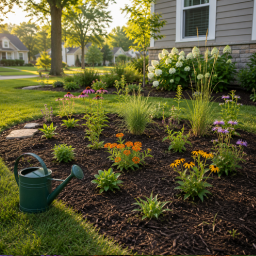
Year One: Building the Foundation
The first year is often the least dramatic above ground.
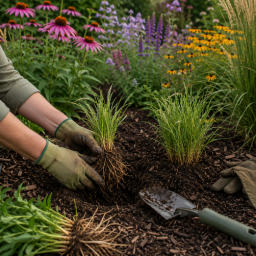
Your plants may look small compared with the space around them. Mulch may be more noticeable than flowers. Some plants may bloom beautifully while others seem content to produce little more than foliage.
That’s normal.
This is the year to focus less on appearance and more on establishment.
Keep newly planted natives appropriately watered while their roots become established. Watch for weeds that may compete with young plants. Pay attention to how water moves through the garden and which areas stay wetter or drier than you expected.
Most importantly, observe.
You’re learning your garden at the same time your plants are learning it.
If you’re just beginning this journey, our Simple Step-by-Step Guide to Creating a Native Garden in Michigan can help you understand how thoughtful plant selection and placement create the foundation for everything that follows.
Year Two: The Garden Begins to Introduce Itself
The second growing season can be exciting because familiar plants begin returning with more confidence.
Clumps may become wider.
Flowering can become more abundant.
Native grasses begin developing more presence.
The spaces between plants start becoming smaller.
And you may begin noticing something else.
More visitors.
A butterfly you don’t remember seeing last year.
Bumble bees moving from flower to flower.
A hummingbird appearing at the edge of the garden.
Goldfinches investigating developing seedheads.
This is when the connection between plants and habitat begins becoming much easier to see.
The garden is no longer simply growing.
It’s beginning to participate in the larger landscape around it.
Years Three and Beyond: The Garden Begins to Feel Established
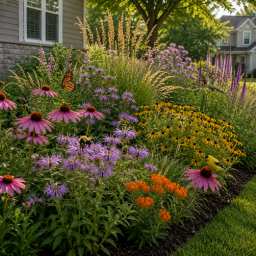
By the third year and beyond, many native gardens begin showing the character their gardeners envisioned from the beginning.
Plants have matured.
Grasses provide movement and structure.
Flowers overlap instead of appearing as isolated spots of color.
Roots occupy more of the soil.
And the garden may require less supplemental watering once plants suited to the site are well established, although prolonged drought can still call for attention.
Perhaps most noticeably, the garden begins to feel fuller.
That fullness isn’t simply aesthetic.
More plant material means more leaves for caterpillars.
More flowers mean more nectar and pollen.
More stems mean more potential nesting and overwintering habitat.
More seedheads mean more food for birds.
This is why an established native garden can become increasingly valuable to wildlife even when its footprint hasn’t changed at all.
More Plants Don’t Always Mean Buying More Plants
Another wonderful change can begin as native plants settle into the garden.
Some expand gradually into larger clumps.
Some produce seedlings.
Others gently move into nearby spaces where conditions suit them.
The garden begins participating in its own design.
That doesn’t mean allowing every plant to grow wherever it chooses. Gardening still involves editing.
A seedling growing in the perfect location might be allowed to stay.
Another might be moved to a bare section of the garden.
An enthusiastic species may occasionally need to be divided or thinned.
But this is where native gardening becomes particularly interesting.
Instead of constantly purchasing plants to fill every opening, you may begin working with what the garden gives you.
Over time, those small changes can create the natural repetition that makes mature native landscapes so beautiful.
The Garden Becomes More Resilient
Maturity also changes how a well-designed native garden responds to stress.
As appropriate native plants develop deeper and more extensive root systems, many become better equipped to handle periods of heat and dry weather.
As plants fill in, their foliage can shade portions of the soil, helping conserve moisture and leaving fewer open spaces for unwanted plants to establish.
As organic material naturally returns to the soil, the biological community beneath the garden continues developing as well.
This doesn’t make a native garden maintenance-free.
There will always be weeds to pull, plants to divide, weather to contend with, and occasional surprises.
But the gardener’s role begins to change.
You’re doing less to make the garden grow and more to guide the garden as it grows.
That’s an important difference.
Wildlife May Need Time, Too
We often expect that planting a pollinator garden will immediately bring butterflies, bees, hummingbirds, and birds.
Sometimes it does.
But habitat becomes richer as the garden matures.
A single flowering plant can certainly feed a bee.
A mature garden containing flowers from spring through fall, host plants for caterpillars, grasses for shelter, shrubs for nesting, seedheads for birds, and stems for overwintering insects offers something much greater.
It provides continuity.
Our article How to Create a Pollinator Habitat in Michigan: It’s More Than Just Flowers explores this idea in greater detail. Supporting pollinators isn’t simply about providing nectar—it means creating the food, water, shelter, nesting opportunities, and seasonal resources wildlife needs throughout its life cycle.
Each year your garden develops another layer of that habitat.
And each year, there may be a little more life to discover.
Don’t Compare Your Year One to Someone Else’s Year Ten
This may be the most important thing to remember.
The mature native garden you admire online didn’t always look that way.
There was once mulch between those plants.
Those enormous coneflowers were once small.
That sweeping stand of Little Bluestem began with individual clumps.
The gardener behind that beautiful landscape has probably moved plants, lost plants, divided plants, battled weeds, changed plans, and learned from more than a few mistakes.
That’s gardening.
So when you look at your young native garden and see empty spaces, don’t imagine what is missing.
Imagine what is coming.
The garden you’re looking at today isn’t the finished picture.
It’s the beginning of one.
Your Role Changes as the Garden Grows
In the beginning, a new garden needs you quite a bit.
You water.
You weed.
You watch every plant.
You wonder whether something is growing quickly enough, flowering enough, or getting exactly the right amount of sun.
As the garden becomes established, something changes.
You begin doing less for the garden and more with it.
Instead of constantly asking, What does this garden need from me?, you begin asking:
What is the garden showing me?
Perhaps a plant is thriving in one location but struggling somewhere else.
Maybe a patch of New England Aster has expanded beautifully and can now be divided.
You notice where seedlings naturally appear.
You discover which flowers the bees visit first each morning and which seedheads the goldfinches return to again and again.
Those observations gradually become part of the way you garden.
The landscape begins teaching you.
A Mature Garden Still Isn’t a Finished Garden
There is a tempting idea in gardening that someday everything will finally be exactly right.
Every plant will stay where it belongs.
Every combination will work perfectly.
Nothing will need moving.
And the garden will be finished.
Fortunately, nature doesn’t work that way.
A tree grows and creates more shade.
A particularly wet season favors one plant while a dry summer favors another.
A native perennial seeds into an unexpected corner and creates a combination you never would have planned.
Some plants flourish.
Some quietly disappear.
Others surprise you.
That’s not failure.
That’s a living landscape.
The goal isn’t to freeze your garden at its prettiest moment.
It’s to help it remain healthy, beautiful, and resilient as it changes.
Learn to Edit Instead of Control
As native gardens mature, one of the most useful skills a gardener develops is knowing when to intervene, and when not to.
A plant spreading beyond its space might need thinning.
A young seedling appearing between two established plants may be worth keeping.
A bare patch might benefit from a division taken elsewhere in the garden.
And sometimes the best decision is simply to wait another season.
This is where gardening becomes less about following instructions and more about developing judgment.
You begin recognizing patterns.
You learn which plants can mingle comfortably.
You discover where repetition makes the garden feel intentional.
You become more comfortable leaving seedheads through winter and allowing leaves to remain where they can protect beneficial insects.
The garden may look increasingly natural, but it isn’t neglected.
It’s being thoughtfully edited rather than tightly controlled.
That distinction is at the heart of gardening with nature.
The Rewards Become Bigger Than the Plants
Something else happens as the years pass.
You may realize that the things you notice most aren’t necessarily the flowers.
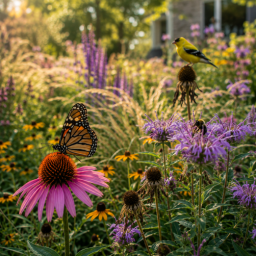
It’s the first monarch of summer.
The hummingbird that suddenly appears at Cardinal Flower.
The goldfinch balancing on a coneflower seedhead.
A bumble bee disappearing completely inside Wild Bergamot.
The sound of Little Bluestem moving on a breezy afternoon.
These moments are possible because the plants are there, but eventually the plants become part of something larger.
Your garden becomes a place where life happens.
That’s why creating a native garden is about much more than replacing one kind of landscaping with another.
You’re creating habitat.
And as that habitat becomes richer, so does the experience of living alongside it.
If you’ve been following How to Prepare Your Garden for Fall Pollinators, you’ve already seen how plants that were beautiful in summer continue providing food and shelter long after their flowers fade. A mature native garden increasingly supports wildlife through the entire year, not simply during peak bloom.
Measure Progress Differently
A new gardener may measure success by the number of flowers.
After a few years, you may begin noticing very different things.
Does the garden hold moisture better?
Are fewer weeds finding open soil?
Are plants beginning to fill their intended spaces?
Do you see insects you’ve never noticed before?
Are birds visiting more frequently?
Is something blooming from spring through fall?
Does the garden still have structure and life after the growing season ends?
Those are signs of a garden becoming more complete as an ecosystem.
And many of them can’t be purchased or installed on a weekend.
They develop because you’ve given the garden the one ingredient every living landscape needs:
time.
🌿 Barbara’s Gentle Reminder
When you plant a native garden, it’s natural to imagine what it will someday become.
I think that’s part of the joy.
But don’t become so focused on the garden you’re waiting for that you miss the one growing in front of you.
The little plant that finally produced its first flower.
The first butterfly that found it.
The native grass that suddenly doubled in size.
The unexpected seedling appearing exactly where you needed another plant.
Those are milestones, too.
A beautiful mature garden is wonderful.
But there’s also something remarkable about watching one become itself.
Give your plants time.
Give the wildlife time to find you.
Give yourself permission to learn as you go.
Your native garden doesn’t need to be perfect this year.
It simply needs the chance to become better next year.
And then better again the year after that.
Happy gardening,
Barbara Fleury
Founder, Michigan Garden Design
🌿 Your Garden Journey Continues Here
Enjoying this article?
Download the complimentary Sample Edition of The Michigan Native Garden Journal and begin recording the changing seasons, wildlife visitors, and the story unfolding in your own Michigan garden.
⬇ Download Your Complimentary Copy⬇
Continue Growing
If this article encouraged you to give your garden a little more time, you may also enjoy:
- Simple Step-by-Step Guide to Creating a Native Garden in Michigan
- How to Create a Pollinator Habitat in Michigan: It’s More Than Just Flowers
- How to Prepare Your Garden for Fall Pollinators
- The Best Native Plants for Hummingbirds in Michigan
- The Best Native Plants That Bloom All Summer in Michigan
Coming Next:
How to Create Winter Interest with Michigan Native Plants
When summer flowers disappear, a native garden doesn’t have to become an empty landscape. Discover how grasses, seedheads, berries, bark, and plant structure can create a beautiful Michigan garden all winter long—while continuing to provide valuable food and shelter for wildlife.
Continue Exploring
For additional information about native plants, pollinator habitat, and sustainable gardening in Michigan, explore resources from: