
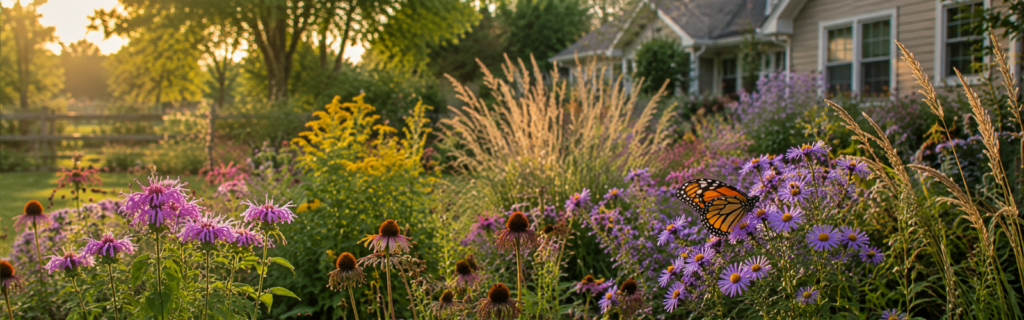
How to Help Monarch Butterflies During Migration in Michigan
There are moments in the garden that seem almost too brief to notice.
A warm August afternoon.
The gentle movement of Little Bluestem in the breeze.
Purple Coneflowers beginning to fade into seedheads.
Then, almost without warning, a monarch butterfly drifts into view.
It doesn’t hurry.
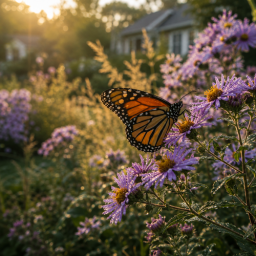
It circles your garden once, pauses on a patch of Wild Bergamot, then floats effortlessly to a cluster of New England Asters before disappearing over the fence.
The entire visit may last less than a minute.
Yet somehow, it stays with you.
Many of us smile when we see a monarch.
We pause what we’re doing.
We watch until it disappears.
But few people realize they may have just witnessed one small chapter in one of the greatest migrations on Earth.
That butterfly isn’t simply enjoying your flowers.
It may be preparing for a journey of thousands of miles.
Every Garden Can Become a Rest Stop
Each year, millions of monarch butterflies travel across North America.
Some are heading north in spring to begin the next generation.
Others are preparing for the incredible southward migration that will eventually carry them to the mountain forests of central Mexico.
Along the way, they need places to rest.
They need nectar-rich flowers to fuel their journey.
And in spring and summer, they need one very special native plant to continue their life cycle:
Milkweed.
Without it, monarch caterpillars cannot survive.
Without abundant nectar-producing flowers, migrating adults have fewer opportunities to replenish the energy needed for the next stage of their remarkable journey.
That’s why Michigan matters.
Our state sits along an important migratory pathway, offering food and shelter when monarchs need it most.
A Garden Doesn’t Have to Be Large to Make a Difference
It’s easy to imagine that helping monarch butterflies requires acres of prairie or a dedicated nature preserve.
The truth is much more encouraging.
A single patch of Butterfly Weed.
Several blooming Wild Bergamot plants.
A drift of New England Asters waiting for late summer.
Together, they can provide an important stop along a monarch’s journey.
Every flower offers nourishment.
Every native planting contributes another piece of habitat.
And every homeowner who chooses native plants becomes part of a much larger conservation story.
If you’ve already discovered why native plants naturally spread throughout your garden, you’ve seen how one healthy planting can gradually become a richer, more connected habitat over time.
For monarch butterflies, those growing native gardens become much more than beautiful landscapes.
They become places of refuge.
A Journey Worth Following
Over the next few minutes, we’ll explore where monarch butterflies travel, why Michigan plays such an important role in their migration, and the simple ways your garden can help support these remarkable travelers throughout their journey.
You don’t need a large property.
You don’t need dozens of different plants.
Sometimes, helping begins with understanding why one butterfly chose to visit your garden in the first place.
An Incredible Journey Through Michigan
Every monarch butterfly you see in your garden has a story.
Some may have hatched only a few weeks earlier in Michigan.
Others may have arrived from neighboring states as they continue their journey across North America.
And the monarchs you see in late summer are unlike any other generation born during the year.
Instead of living for only a few weeks, these remarkable butterflies enter a special stage that allows them to survive for months. Their mission isn’t to reproduce immediately—it’s to travel.
For many, that journey will stretch more than 2,000 miles to the oyamel fir forests of central Mexico, where millions of monarchs spend the winter clustered together in the mountain forests.
The following spring, they begin the long journey north once again.
No single butterfly completes the entire round trip.
Instead, several generations work together to continue one of nature’s most remarkable cycles.
It’s an extraordinary reminder that every generation has an important role to play.
Why Michigan Plays Such an Important Role
Michigan isn’t simply a place monarchs pass through.
For many butterflies, it’s an important place to refuel before continuing south.
As summer begins to fade into autumn, nectar becomes increasingly important.
Goldenrods bloom.
New England Asters brighten roadsides and gardens.
Wild Bergamot, Joe-Pye Weed, Ironweed, and other native flowers continue providing valuable food when monarchs need it most.
Each stop helps replenish the energy stored as fat, fuel they’ll depend on for the next stage of their migration.
When those flowers are missing, the journey becomes more difficult.
When they’re abundant, our gardens become small but meaningful waystations along a much larger migration route.
That’s one of the beautiful things about native gardening.
The flowers you’ve planted for your own enjoyment may also become part of a journey that stretches across an entire continent.
More Than Just Milkweed
When most people think about helping monarch butterflies, one plant immediately comes to mind:
Milkweed.
And for good reason.
Milkweed is the only plant on which monarch butterflies lay their eggs, and it’s the only food monarch caterpillars can eat.
Without milkweed, there would be no future generations of monarchs.
But adult butterflies have another important need.
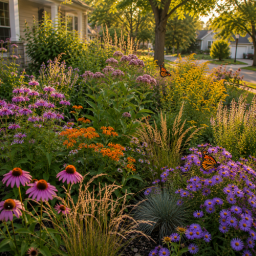
They require a continuous supply of nectar-producing flowers throughout the growing season, and especially during migration, when every stop to feed helps prepare them for the miles ahead.
That’s why a successful monarch garden includes much more than milkweed alone.
A diverse collection of native flowering plants provides nectar from spring through fall, ensuring that monarchs—and countless other pollinators—can find food whenever they arrive.
If you’ve enjoyed learning about the remarkable relationships between native plants and wildlife, you may also enjoy How To Create a Pollinator Friendly Garden In Michigan, where we explore how shelter, nesting sites, and seasonal blooms work together to support bees, butterflies, hummingbirds, and other beneficial wildlife.
You might also like Why Native Bees Are the Garden’s Most Important Pollinators, which highlights the often-overlooked native bees that pollinate many of the flowers and food crops we depend on every day.
Plant Native Milkweed for the Next Generation
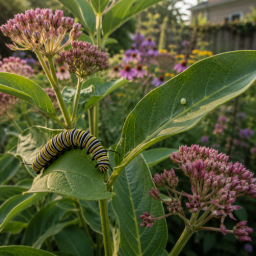
If there’s one plant every Michigan gardener should know, it’s milkweed.
Milkweed isn’t just another wildflower.
It’s the only plant monarch butterflies use to lay their eggs, and it’s the only food monarch caterpillars can eat.
Several native milkweed species grow beautifully in Michigan gardens, including:
- Butterfly Weed (Asclepias tuberosa) for sunny, well-drained locations
- Swamp Milkweed (Asclepias incarnata) for consistently moist soils
- Common Milkweed (Asclepias syriaca) where there’s room for it to spread naturally
Each species plays an important role.
The best choice depends on your garden conditions rather than which one is “best.”
If you’ve been exploring native plants for different growing conditions, you may also enjoy The Best Native Plants for Wet Areas in Michigan and The Best Plants for Dry Soil in Your Michigan Garden, where you’ll find additional species that pair beautifully with native milkweeds.
Keep Nectar Available From Spring Through Fall
Milkweed helps the next generation.
Nectar helps the butterflies already in flight.
One of the greatest gifts we can offer migrating monarchs is a garden that always has something blooming.
Early in the season, native phloxes, beardtongues, and wild columbine begin supporting emerging pollinators.
Summer brings favorites like Purple Coneflower, Wild Bergamot, Culver’s Root, and Blazing Stars.
As migration reaches its peak in late summer and early fall, New England Asters, Goldenrods, and other late-blooming natives provide some of the most valuable nectar of the entire year.
By planting flowers with overlapping bloom times, your garden becomes a dependable source of food whenever monarchs arrive.
It’s also one of the easiest ways to support native bees, hummingbirds, skippers, swallowtails, and many other beneficial insects throughout the growing season.
If you’re looking for ideas, The Best Native Michigan Plants That Bloom All Summer is a wonderful place to begin planning a garden that provides continuous color and continuous habitat.
Small Gardens Can Make an Extraordinary Difference
It’s easy to wonder whether one garden can really matter.
After all, monarch butterflies travel thousands of miles.
How much difference could a single backyard possibly make?
More than you might imagine.
A monarch doesn’t measure the size of your property.
It doesn’t compare your garden to a prairie preserve.
It simply searches for the next flower.
The next source of nectar.
The next safe place to pause before continuing its journey.
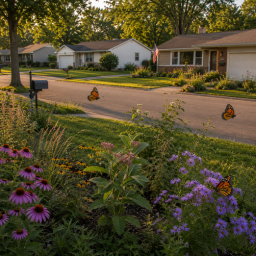
To that butterfly, your garden isn’t small.
It’s exactly where it needed to be.
And that’s a remarkable thought.
Helping Monarchs Helps So Much More
One of the beautiful surprises of gardening with native plants is that the same flowers that nourish monarch butterflies also support an incredible diversity of wildlife.
Native bees gather pollen.
Hummingbirds visit tubular blooms.
Goldfinches feed on ripening seedheads.
Beneficial insects find shelter among stems and grasses.
By creating habitat for monarchs, you’re also creating a healthier, more resilient garden for countless other species.
Nature rarely works one relationship at a time.
Everything is connected.
And your garden becomes part of that connection.
Barbara’s Gentle Reminder
Every autumn, monarch butterflies leave Michigan on a journey that seems almost impossible.
Many will travel farther than most of us will drive in a year.
Yet along the way, they don’t ask for much.
A patch of blooming flowers.
A place to rest.
A moment to gather strength before moving on.
Your garden can be one of those places.
You may never know how many monarchs visited.
You may never see where they continue after leaving your yard.
But every time you plant native flowers, leave room for milkweed, or choose habitat over perfection, you’re offering hope to one of nature’s most remarkable travelers.
And sometimes, hope begins with something as simple as a butterfly pausing in your garden for just a few quiet moments.
Happy gardening,
Barbara Fleury 🌿
Founder, Michigan Garden Design
🌿 Continue Growing
If you’d like to learn more about creating a garden that supports monarchs and other pollinators, these articles are a wonderful next step:
- How To Create a Pollinator Friendly Garden In Michigan
- The Best Native Michigan Plants That Bloom All Summer
- The Best Native Michigan Plants for Late Summer Pollinators
- The Best Reasons for Native Plants to Spread
- How to Design a Simple Native Garden in Michigan
Coming Next:
The Best Native Plants for Hummingbirds in Michigan
Brilliant flashes of emerald and ruby are among the greatest rewards of planting native flowers. In our next article, we’ll explore the native plants hummingbirds depend on, why they return to the same gardens year after year, and how you can create a welcoming habitat for these remarkable visitors.
Continue Exploring
If you’d like to learn more about monarch butterflies and their remarkable migration, these trusted organizations offer outstanding educational resources:
- Monarch Joint Venture — Conservation guidance, migration information, and habitat resources.
- Xerces Society — Science-based recommendations for protecting monarch butterflies and other pollinators.
- Journey North — Follow monarch migration across North America through citizen science observations.
- Michigan State University Extension — Monarch migration and pollinator-friendly landscapes.
- Monarch Watch — Research, tagging programs, and educational resources about monarch migration.