
How to Let Your Native Garden Fill in Naturally
A newly planted native garden often asks something difficult of us.
Patience.
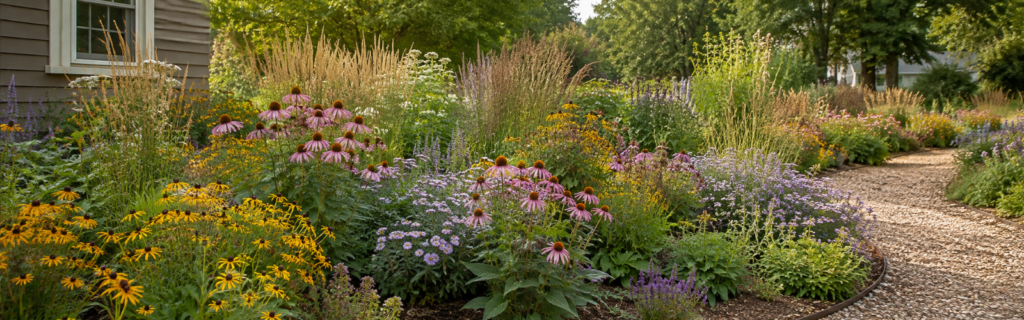
We plant young perennials, grasses, and shrubs with an image in our minds of the mature garden they will someday become.
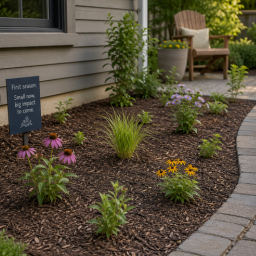
But in the beginning, there may be a lot of visible soil.
Plants may look farther apart than expected.
Some grow quickly while others seem almost unchanged.
And it can be tempting to decide that something is missing.
Before adding more plants, however, it is worth remembering that a native garden is not designed to remain exactly as it looked on planting day.
It is meant to grow into itself.
Native Plants Need Time to Become a Community
Many native perennials spend their first season establishing roots rather than producing dramatic top growth.
What appears to be a small plant above ground may be developing an increasingly strong root system below it.
By the second and third growing seasons, the garden can begin changing noticeably.
Plants become wider.
Grasses form fuller clumps.
Some species produce seedlings.
Others spread gradually from their crowns or underground growth.
Those individual plants begin touching, overlapping, and filling the spaces between one another.
This is part of what makes established native gardens feel so different from newly planted ones.
They begin to function as a plant community, rather than a collection of individual plants surrounded by mulch.
It is one of the reasons the garden described in Why Your Native Garden Gets Better Every Year becomes more resilient and interesting with time.
Empty Space Is Not Always a Problem
When we see exposed soil, our instinct may be to fill it immediately.
Sometimes that is appropriate.
But sometimes the space is temporary.
A young Purple Coneflower may eventually become several times wider than it was when planted.
Prairie Dropseed may take time to develop its graceful mature form.
Aster, Black-eyed Susan, and other natives may begin appearing nearby from seed.
What looks like a gap in Year One may barely exist in Year Three.
That does not mean you should ignore every open area.
It means the question becomes:
Is this space truly empty, or is the garden still growing into it?
That distinction can save you from overplanting a young garden.
Native Plants Fill Space in Different Ways
Not every native plant spreads the same way.
Some remain relatively well-behaved clumps that slowly increase in size.
Others send out rhizomes or underground stems.
Some reseed generously.
Still others may move only a little from where they were originally planted.
Understanding those differences helps you anticipate what the garden may become.
A native grass might gradually widen while remaining in one recognizable clump.
A flowering perennial may begin producing seedlings several feet away.
Another species may slowly knit neighboring plants together through underground growth.
None of these behaviors is automatically good or bad.
The important question is whether that growth supports the garden you are trying to create.
Let Plants Touch
Many traditional landscapes are designed so individual plants remain visually separated.
Native gardens often become healthier and more natural-looking when plants begin touching one another.
That living cover can help shade the soil.
It can reduce some opportunities for weeds to establish.
It creates more continuous habitat near ground level.
And visually, the garden begins feeling fuller and more settled.
This does not mean allowing every vigorous plant to take over.
It means recognizing that some overlap is exactly what we want.
The goal is not endless open mulch between perfectly isolated plants.
The goal is a layered planting where leaves, stems, flowers, and grasses begin occupying the available space together.
Watch Before You Add More
If you are unsure whether an area needs another plant, give yourself a season to observe it.
Take a photograph.
Notice which plants are increasing in size.
Look for seedlings.
Watch how much light actually reaches the soil once neighboring plants are fully grown.
Pay attention to which species seem comfortable and which remain small or stressed.
The garden often gives us useful information before we make another purchase.
Know What Healthy Filling-In Looks Like
A garden filling naturally might show:
- plant crowns becoming wider
- stems beginning to overlap neighboring plants
- new seedlings appearing near mature plants
- grasses becoming fuller from year to year
- fewer large patches of exposed soil
- repeating plants beginning to create visual rhythm
Those are signs that the planting is beginning to knit together.
But natural growth is not the same as abandoning the garden.
There will still be moments when a plant spreads too aggressively, another disappears, or a genuine gap develops.
The skill is learning when to guide the garden—and when to simply let it continue.
Give the Garden Time to Answer
Before reaching for another plant, ask yourself what the garden might look like next year.
And the year after that.
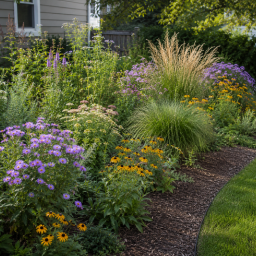
A young native garden is not a finished picture.
It is a process.
Some of the most satisfying changes happen when plants begin occupying spaces we once thought we needed to fill ourselves.
That is when the garden starts becoming less about individual plants and more about the relationships forming between them.
How to Guide the Garden Without Overworking It
Once a native garden begins filling in, the gardener’s role starts to change.
Instead of constantly adding more plants, you begin making smaller decisions.
Leave this seedling.
Move that one.
Thin a crowded clump.
Open a little space around a slower-growing plant.
The goal is not to control every inch.
It is to guide the garden so its natural growth still supports the look and function you want.
Let Some Seedlings Stay
One of the easiest ways a native garden fills in naturally is through self-seeding.
Plants such as Black-eyed Susan, asters, coneflowers, and other seed-producing natives may begin appearing beyond where they were originally planted.
When that happens, resist the urge to remove every volunteer simply because you did not put it there.
Instead, ask:
- Is it growing in a useful spot?
- Does it help repeat a plant already in the bed?
- Will it crowd something slower or more valuable?
- Does it strengthen the overall rhythm of the planting?
If the answer is yes, let it stay.
Natural reseeding can make a garden feel more connected and less rigid over time.
Move Volunteers Instead of Removing Them
Sometimes a seedling is welcome, but not exactly where it chose to grow.
That does not mean it has to go.
Young volunteer plants are often easier to move than mature perennials.
If a seedling appears too close to a path, another plant, or the front edge of a bed, consider relocating it to a true gap elsewhere.
This is one of the most economical ways to expand a native garden.
You are essentially letting the garden help supply its own future plants.
That idea connects naturally with How to Save Native Flower Seeds for Next Year, both approaches allow established plants to become part of the next generation of the garden.
Know When a Gap Is Real
Not every open space deserves immediate attention.
But some gaps are genuine.
A space may need help if:
- a plant has died and neighboring plants are unlikely to fill the area
- weeds repeatedly establish there
- the soil remains exposed after surrounding plants reach mature size
- the area lacks seasonal interest
- the planting looks visually disconnected year after year
If the space still looks empty after you have given nearby plants time to mature, then it may be appropriate to add something.
The key is waiting long enough to know the difference.
Fill Gaps With Purpose
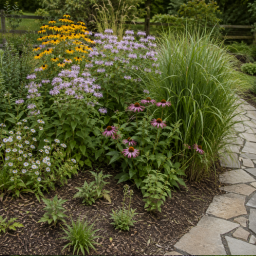
When you do add a plant, choose one that solves a specific problem.
If the space is hot and dry, choose a native adapted to those conditions.
If the area is shaded by neighboring plants, select something that tolerates partial shade.
If the bed lacks early-season interest, add a spring-blooming native rather than another late-summer flower.
If the garden needs more structure, perhaps the answer is a grass rather than another flowering perennial.
This is where the design principles from How to Use Native Grasses in Your Michigan Garden can become especially useful.
Do not fill a gap just because there is room.
Fill it because the garden is missing something.
Thin When One Plant Starts Taking Over
Natural growth is not always perfectly balanced.
Some natives are more enthusiastic than others.
If one species begins overwhelming neighboring plants, thinning can help restore balance without eliminating the plant altogether.
Remove or relocate a portion of the spread.
Leave enough to preserve repetition and habitat value.
Then watch what happens.
The goal is not to punish a vigorous plant for being vigorous.
It is simply to keep one species from reducing the diversity of the planting.
Divide Mature Clumps When It Helps the Garden
Some clump-forming natives gradually become large enough to divide.
Division can:
- rejuvenate an aging clump
- reduce crowding
- create more plants for another area
- help fill an existing gap
This can be especially useful when a plant has proven that it thrives in your conditions.
Rather than introducing something completely new, you can repeat what is already working.
That repetition often helps a garden look more intentional too.
Keep the Edges Clear
One of the easiest ways to let the interior of a native garden feel natural without looking neglected is to keep the edges defined.
A clear path.
A crisp bed line.
An intentional border.
Those simple cues tell the eye that the garden is being cared for, even when plants inside are overlapping, reseeding, and moving around a little.
This can be especially important in front yards or smaller residential spaces where a looser planting style may feel unfamiliar at first.
A tidy edge gives the garden permission to be more relaxed inside.
Protect Slower Plants
Some species simply take longer to establish.
If a vigorous neighbor begins leaning over or shading a slower-growing plant, a little intervention can help.
You may need to:
- trim back nearby growth
- move a volunteer seedling
- divide an aggressive clump
- temporarily open more light around the smaller plant
This is not the same as constantly controlling the garden.
It is selective editing.
You are helping the plant community stay diverse.
Let Repetition Develop Naturally
One of the nicest things about self-seeding and gradual spreading is that repetition can develop without looking forced.
A few asters may begin appearing farther down the bed.
Black-eyed Susans may repeat themselves in a new cluster.
A grass may slowly become large enough to divide and echo elsewhere in the garden.
Those repeated forms help tie the landscape together.
Over time, the garden begins creating some of its own design rhythm.
Observe Before You Intervene
Whenever you are unsure whether to remove, move, or add something, give yourself time to watch.
Take another photograph.
Compare it with last year.
Notice what is expanding.
Notice what is disappearing.
Look at the garden in spring, midsummer, and fall before deciding that a space is not working.
A native garden often solves small design problems on its own if we give it enough time.
And when it does need help, the best intervention is usually smaller than we first imagined.
Knowing When the Garden Is Finding Its Balance
A native garden does not need to look finished.
It needs to look settled.
That is an important difference.
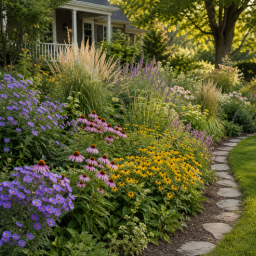
A settled garden has plants beginning to overlap, repeat, and respond to one another. There may still be small gaps, new seedlings, and areas that continue to change from year to year.
But the planting starts to feel connected.
Look for Healthy Fullness
A garden that is filling in well often shows a few clear signs:
- less exposed soil between mature plants
- repeating groups of flowers or grasses
- seedlings appearing in useful places
- layers of height and texture
- fewer weeds finding open ground
- seasonal change without large empty patches
This is the point where the garden begins doing more of the work for you.
The plants are no longer simply occupying their original planting holes.
They are beginning to function as a community.
Keep Editing Lightly
Even a well-established native garden still benefits from occasional editing.
You may move a volunteer that landed too close to a path.
Thin a plant that is beginning to dominate.
Divide a mature clump.
Replace something that never truly adapted to the site.
But those decisions become smaller and more selective.
You are no longer redesigning the garden every season.
You are helping it stay balanced.
Let the Garden Teach You What Belongs
One of the greatest advantages of giving a native garden time is that the plants begin revealing which conditions suit them best.
Some species become vigorous.
Others stay modest.
A few may disappear entirely.
That information is valuable.
Instead of seeing every loss as a failure, use it as a clue.
If one plant repeatedly struggles in a particular location, the answer may not be another specimen of the same plant.
It may be choosing something better adapted to the light, moisture, soil, or competition already present there.
The garden becomes its own design reference.
Make Future Planting Decisions From What You See
As you consider adding new plants, begin with what is already working.
Repeat successful species.
Fill seasonal bloom gaps.
Add structure where the garden needs it.
Introduce something new only when it solves a real need.
That approach creates a garden that feels increasingly cohesive rather than increasingly crowded.
And it is one of the best ways to avoid the temptation to keep buying plants simply because there is still a little visible soil.
Barbara’s Observation
There is a moment in the life of a native garden when you realize you are no longer looking at individual plants.
You are looking at relationships.
One plant has leaned into another.
A seedling has appeared where you never planned it.
A grass has grown large enough to soften an edge that once felt empty.
The spaces begin disappearing, but not because you filled every one of them yourself.
The garden did some of that work.
That is one of the things I find most rewarding about native gardening.
We make the first decisions.
Then, if we are patient enough to watch, the garden begins making a few of its own.
Your Garden Has a Story. Start Recording It.
A filling garden changes quickly from one season to the next.
Which plants are spreading?
Where are seedlings appearing?
Which areas still feel open?
Which combinations are beginning to work especially well?
The complimentary first month of The Michigan Native Garden Journal gives you a place to record those observations so you can compare what you are seeing now with what the garden becomes next year.
COMPLIMENTARY FIRST MONTH
The Michigan Native Garden Journal
↓ GET YOUR COPY ↓
Observe • Discover • Wonder • Grow.
Keep Exploring
Continue learning how your native garden changes and matures over time:
- Why Your Native Garden Gets Better Every Year
- How to Use Native Grasses in Your Michigan Garden
- How to Save Native Flower Seeds for Next Year
- How to Prepare Michigan Native Plants for Winter
For additional guidance on native plant establishment and garden management, explore trusted resources from Michigan State University Extension, Wildflower Association of Michigan, and Michigan Pollinator Initiative.
What’s Next
Before adding another plant, spend a little time watching what is already happening.
Notice which areas are filling naturally.
Mark the places that still need help.
Look for plants that deserve to be repeated.
And pay attention to the conditions around the spaces that remain open.
Those observations will make your next planting decisions much easier.
The goal is not to fill every inch as quickly as possible.
It is to help the garden become fuller in a way that still feels healthy, diverse, and intentional.
Coming Next
Fall can be one of the best times to add native plants to a Michigan garden—but thoughtful planning matters.
In the next Michigan Garden article, How to Plan for Your Fall Native Plantings, we’ll look at how to decide what your garden actually needs, which spaces are ready for new plants, and how to make fall additions that strengthen the landscape instead of simply filling holes.
A little observation now can make every plant you add this fall work harder for the garden.