
How to Plan for Your Fall Native Plantings
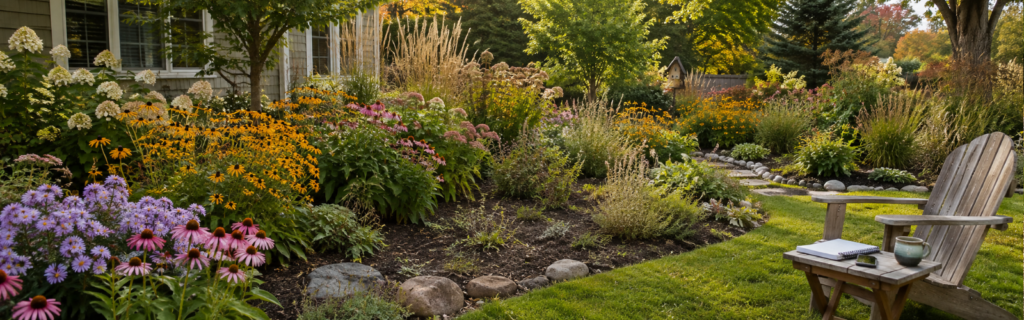
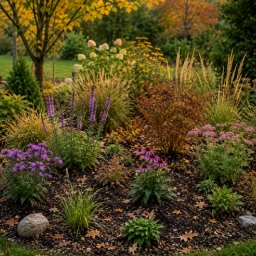
By late summer, your garden is giving you information that was much harder to see in spring.
You can tell which plants became larger than expected.
You can see where the afternoon sun really falls.
You know which areas stayed damp after rain and which dried quickly.
You can see where the garden filled in beautifully, and where a gap still remains.
That makes late summer one of the best times to begin planning fall native plantings.
Fall planting is not simply about finding empty spaces and filling them.
It is an opportunity to use everything the garden has taught you this season to make better choices for the next one.
Start With What Is Already Working
Before making a plant list, walk through your garden and look for success.
Which plants grew well?
Which ones handled your soil without struggling?
Where did pollinators gather most often?
Which combinations looked especially good together?
Those observations give you valuable clues about what may succeed nearby.
If Purple Coneflower, Little Bluestem, or asters are thriving in one part of the garden, repeating those plants elsewhere may create both ecological continuity and stronger visual rhythm.
You do not always need something new.
Sometimes the best addition is more of something the garden has already proven it can support.
This is one of the natural lessons from How to Let Your Native Garden Fill in Naturally: mature gardens become stronger when we respond to what is already happening rather than constantly starting over.
Look for What Is Missing
Next, look beyond individual empty spaces.
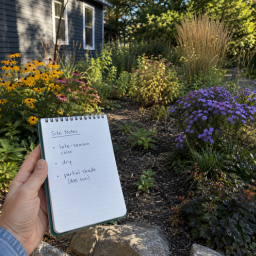
Ask what the garden itself is missing.
Perhaps you have plenty of summer flowers but very little early-season bloom.
Maybe late summer is beautiful, but the garden loses color too quickly in fall.
Perhaps everything is roughly the same height.
Or maybe you have flowers but very little grass, shrub structure, or ground-level cover.
A gap in the garden does not always mean, “I need another flower.”
It might mean:
- more early-season bloom
- more fall nectar
- a native grass for movement and structure
- lower plants to cover exposed soil
- a shrub for shelter and winter interest
- repetition of a plant already performing well
Planning this way helps prevent the garden from becoming a collection of unrelated plants.
Instead, each addition has a purpose.
Pay Attention to Light
Plant tags often tell us whether a plant prefers sun, partial shade, or shade.
But your garden is the better source of information.
By late summer, trees are fully leafed out, neighboring plants are at mature height, and shadows are easier to evaluate.
Notice where sunlight reaches the garden in the morning.
Watch what happens in the afternoon.
A location that seemed sunny in April may be surprisingly shaded by August.
Likewise, an area you assumed was too shady may receive several useful hours of direct light.
Before choosing a new native plant, match it to the conditions you actually observe, not the conditions you remember from spring.
Notice Moisture Patterns
Fall planning is also a good time to think about water.
Where does rain collect?
Which part of the garden dries first?
Are there areas near downspouts that remain moist longer?
Does the soil beneath a mature tree stay consistently dry?
Michigan native plants have adapted to an enormous range of conditions, from dry sandy soils to moist woodland edges.
The goal is not to change every difficult spot.
It is often easier to find a plant that already prefers what that spot provides.
That principle can save time, water, and frustration.
Think About Mature Size
One of the easiest mistakes to make when planting in fall is judging a plant by the size of the nursery pot.
A small perennial in September may become a substantial plant within a few growing seasons.
Before placing it, consider:
- mature width
- mature height
- whether it stays in a clump or spreads
- whether it reseeds readily
- what neighboring plants will eventually do
This is especially important after watching how quickly some natives can fill space.
The goal is to give new plants enough room to grow into the garden without creating unnecessary gaps, or planting so tightly that you are dividing everything two years later.
Photograph the Garden Before You Shop
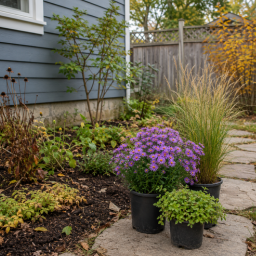
One of the simplest planning tools is your phone.
Take pictures of the areas you are considering planting.
Capture the whole bed, not just the empty spot.
Then look at the photograph away from the garden.
Sometimes it becomes much easier to see what is missing when you are looking at the entire composition rather than standing in the middle of it.
You may notice that the garden needs repetition.
Or a stronger vertical element.
Or something softer along an edge.
This is the same kind of observation we use when learning to read the garden before changing it.
Good planting decisions usually begin before you arrive at the nursery.
Make a Short List, Not a Shopping List
Before fall plant sales begin, write down what you need the new plants to accomplish.
For example:
Need: late-season nectar
Conditions: full sun, average-to-dry soil
Space: approximately three feet wide
Or:
Need: lower plant along garden edge
Conditions: morning sun, afternoon shade
Goal: cover soil and soften the border
Now you are shopping for a solution.
That is very different from walking through rows of beautiful plants and deciding where each one might fit afterward.
And it is one of the best ways to make a garden feel increasingly intentional over time.
Let This Season Plan the Next One
Fall planting begins with observation.
Before choosing another native plant, look at what this season revealed.
What thrived?
What struggled?
Where does the garden feel complete?
Where does something genuinely seem to be missing?
Your landscape has spent the entire growing season answering those questions.
The first step is simply learning to listen.
Turning Your Observations Into a Fall Planting Plan
Once you know what your garden needs, fall planting becomes much simpler.
Instead of asking, “What should I buy?”
you can ask,
“Which native plant fits this particular place and purpose?”
That small change can lead to much better results.
Choose Plants for the Conditions You Have
Start with the three conditions that matter most:
- sunlight
- soil moisture
- available space
Then narrow your choices from there.
If the area is sunny and dry, choose natives already adapted to those conditions.
If it stays moist after rain, look for species that naturally tolerate more moisture.
If the space is narrow, avoid plants that will eventually become too wide or spread aggressively.
Matching the plant to the site is almost always easier than trying to change the site to accommodate the plant.
It also helps create a garden that needs less intervention later.
Think in Groups, Not Singles
When adding fall plants, repetition can make the garden feel much more intentional.
Rather than buying one of several different species, consider planting several of the same plant where space allows.
A small group can:
- create a stronger visual presence
- make flowers easier for pollinators to find
- help the garden fill in more naturally
- create repetition with plants already growing elsewhere
You do not need large masses.
Even three plants repeated together can have more impact than three unrelated plants scattered through the bed.
Leave Room for Growth
Fall-planted natives may look small.
That does not mean they should be planted tightly.
Use the mature size of the plant, not the nursery container, as your guide.
A little open soil during the first year is often preferable to overcrowding the garden before plants have had a chance to mature.
The goal is to create enough room for plants to eventually touch and overlap without immediately competing for the same space.
How Late Can You Plant in Michigan?
Fall can be an excellent planting season because cooler temperatures reduce stress on new plants while the soil may remain warm enough for continued root development.
But earlier is better.
Ideally, give new perennials several weeks to begin establishing before the ground freezes.
In much of Michigan, planting in September and early October generally provides a better establishment window than waiting until late fall.
Weather varies considerably from year to year, so watch conditions rather than relying on a single cutoff date.
If the soil is still workable, planting may still be possible, but the later you plant, the less time roots have to establish before winter.
Shrubs and larger plants may require slightly different timing and care, so treat them individually rather than assuming every native should be planted on the same schedule.
Plant at the Right Depth
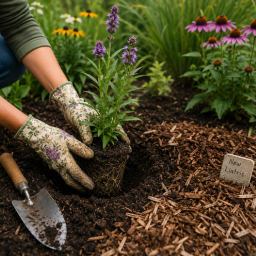
Fall planting technique is essentially the same as spring planting.
Dig a hole wide enough to accommodate the root system without forcing it into a tight space.
Place the plant so the top of the root ball sits approximately level with the surrounding soil.
Avoid burying the crown deeply.
Backfill gently with the soil you removed rather than creating a completely different soil environment inside the planting hole.
Then water thoroughly.
Water Even When the Weather Is Cooler
Cooler temperatures can make us forget about watering.
But newly planted natives still need consistent moisture while their roots establish.
Water deeply after planting and continue checking the soil during dry periods until the ground freezes.
This is especially important if fall turns unusually warm or dry.
Established native plants may eventually need very little supplemental water.
Newly planted ones are different.
They have not yet developed the root systems that make mature native plants so resilient.
Mulch Lightly
A modest layer of mulch can help conserve moisture and protect newly disturbed soil.
But avoid piling mulch against the crown of the plant.
You also do not need an extremely thick layer.
Remember that the long-term goal is for living plants to occupy more of that space over time.
Mulch is temporary support, not the permanent feature of the planting.
Mark New Plants
Fall-planted perennials can disappear almost completely once winter arrives.
By spring, it can be surprisingly difficult to remember exactly where everything was planted.
A simple plant marker can prevent accidental digging or trampling while you wait for new growth to emerge.
This is also a good place to record the new planting in The Michigan Native Garden Journal, what you planted, where you placed it, and what conditions you observed at the time. (See below for your complimentary one month copy).
Plant With Next Year in Mind
The plants you add this fall do not need to make the garden look finished immediately.
You are planting for what the landscape will become.
Give the roots time.
Give the plants room.
And give yourself permission to see the small fall planting as the beginning of something rather than the final result.
Plant With the Bigger Garden in Mind
A successful fall planting is not measured by how many new plants you add.
It is measured by how well those plants strengthen what is already there.
Before planting the last pot, step back and look at the entire bed.
Does the new addition repeat something already working?
Does it extend bloom time?
Does it add structure, habitat, or ground coverage?
Does it truly belong in that location?
Those questions help prevent fall planting from becoming simple gap-filling.
Avoid the Urge to Overplant
Young plants can make a bed look unfinished.
That is normal.
Give each plant enough room to reach its mature size, and remember that some will spread or reseed over time.
The lessons from How to Let Your Native Garden Fill in Naturally still apply.
You are creating the framework.
The garden will continue doing some of the filling on its own.
Make a Record Before Winter
Once everything is planted, take a photograph.
Record what you added and where.
You may think you will remember in spring, but after months of snow, dormant stems, and changing light, those details can become surprisingly fuzzy.
Your notes can also help you evaluate the planting next year.
Did the plant return strongly?
Did it receive enough light?
Did the spacing work?
That information makes each future planting decision better.
Expect a Quiet First Spring
Fall-planted natives may not explode with growth the moment spring arrives.
Some emerge slowly.
Others put their energy into roots before producing much visible growth.
Give them time before assuming they did not survive.
Watch for new shoots, keep weeds from crowding them, and allow the plants to settle into their first full growing season.
Fall planting is an investment in what comes next.
Barbara’s Observation
I think fall planting feels different from planting in spring.
In spring, the whole garden seems to be rushing forward.
In fall, planting feels quieter.
You are placing something into the soil knowing that much of the important work will happen where you cannot see it.
Roots will settle.
Winter will arrive.
And months later, a small green shoot may appear exactly where you hoped it would.
There is something wonderfully hopeful about planting for a garden you have not seen yet.
Your Garden Has a Story. Keep Recording It.
Fall is an ideal time to record what the garden taught you this year.
Which plants thrived?
Where did you add something new?
What do you hope will look different next season?
The complimentary first month of The Michigan Native Garden Journal gives you a place to capture those observations before another growing season begins.
COMPLIMENTARY FIRST MONTH
The Michigan Native Garden Journal
↓ GET YOUR COPY ↓
Observe • Discover • Wonder • Grow.
Keep Exploring
Continue preparing your Michigan native garden for what comes next:
- How to Let Your Native Garden Fill in Naturally
- How to Prepare Michigan Native Plants for Winter
- How to Use Native Grasses in Your Michigan Garden
- Why Your Native Garden Gets Better Every Year
For additional guidance on fall planting and native plant establishment, explore trusted resources from Michigan State University Extension and Wildflower Association of Michigan.
What’s Next
Choose one area of your garden and make a short list of what it actually needs.
Then plant with purpose.
You do not need to finish the entire landscape this fall.
One thoughtful addition that fits the site, strengthens the planting, and has room to mature can do more for the garden than several plants added simply because there was space.
Coming Next
Fall planting is not merely possible in Michigan, it can offer some real advantages.
In the next Michigan Garden article, Why Fall Is One of the Best Times to Plant Michigan Native Plants, we’ll look at what cooler temperatures, warm soil, reduced transplant stress, and seasonal moisture can mean for newly planted natives, and why autumn may deserve a much bigger place in your planting plans.