
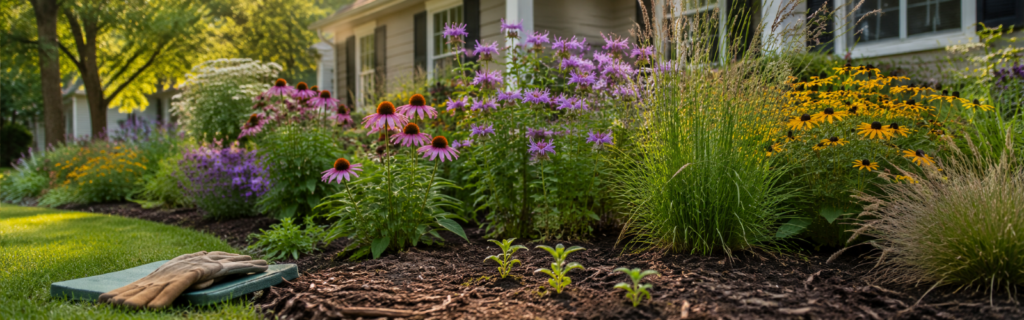
The Best Reasons for Native Plants to Spread
“I Think Something Is Wrong…”
It started with a single tiny plant.
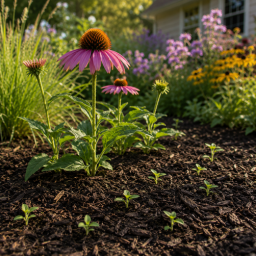
Last spring, you carefully planted a beautiful Purple Coneflower in the corner of your garden. You watered it during dry spells, admired its blooms all summer, and smiled every time a butterfly landed on its flowers.
Now it’s the following spring.
As you’re walking through the garden, coffee in hand, something catches your eye.
Just a few inches from last year’s coneflower is another one.
Much smaller.
Only a few leaves.
You kneel down for a closer look.
Then you notice another.
And another.
You don’t remember planting them.
For a brief moment, your excitement turns into concern.
“Are these weeds?”
“Is this plant taking over?”
“Should I pull these before they spread even farther?”
If you’ve ever had those thoughts, you’re in very good company.
In fact, they’re some of the most common questions people ask after planting their first native garden.
A Different Kind of Garden
Many of us grew up believing that a successful garden stays exactly the way we planted it.
One shrub here.
Three flowers there.
Nothing moves unless we move it.
Traditional landscapes often reward that kind of predictability.
Native gardens work a little differently.
They aren’t trying to remain frozen in time.
They’re living communities.
When the conditions are right, many native plants naturally produce seedlings or slowly expand into nearby open spaces. They’re not trying to become invasive or unruly, they’re simply doing what they’ve done across Michigan’s forests, prairies, and wetlands for thousands of years.
That tiny seedling beside your coneflower isn’t necessarily a sign that you’ve lost control.
It may be one of the first signs that your garden is beginning to feel at home.
One of Nature’s Quiet Gifts
Think about your favorite place in nature.
Maybe it’s a peaceful woodland trail.
A dune overlooking Lake Michigan.
A prairie preserve glowing with summer wildflowers.
None of those places were planted one flower at a time.
Over countless seasons, plants found the places where they could thrive.
Seeds drifted on the wind.
Birds carried berries to new locations.
Flowers bloomed, faded, and left behind the next generation.
Little by little, plant communities grew into something that looked effortless.
That’s the same quiet process beginning in your own backyard.
It happens slowly.
Almost so slowly that you don’t notice it until one spring morning when you discover a tiny volunteer growing exactly where nature decided it belonged.
Looking at Your Garden Through New Eyes
What if those little seedlings weren’t a warning?
What if they were a compliment?
Not from a neighbor.
Not from another gardener.
From nature itself.
They’re one small way your garden says,
“These conditions are good. Life can continue here.”
That’s a remarkable milestone.
Especially if this is your first native garden.
Now, let’s explore the first, and perhaps most practical, reason native plants spread, and why that simple process can actually save you time, money, and work in the years ahead.
Reason #1: Your Garden Is Creating the Next Generation
There comes a point when a native garden stops being simply a collection of plants.
It becomes a living community.
One of the first signs is something many gardeners almost overlook—the appearance of a new generation.
Every tiny seedling represents a plant that has successfully completed its life cycle. It flowered, attracted pollinators, produced viable seed, and found a suitable place to grow.
That’s an extraordinary achievement.
In a traditional landscape, many ornamental plants bloom beautifully but never reproduce in meaningful ways. They depend almost entirely on the gardener to divide them, replace them, or purchase more plants.
Many Michigan native plants have a different story.
When growing in the right conditions, they begin renewing themselves.
That’s one of nature’s oldest success stories.
A Garden That Can Grow With Time
Imagine visiting the same native garden every summer for ten years.
The first year might feel a little sparse.
By the third year, the original plants have matured.
By the fifth year, small drifts begin forming.
By the tenth year, the garden feels settled, as though it has always belonged there.
It didn’t become beautiful because someone bought hundreds of additional plants every spring.
It became beautiful because the original planting was given time to grow into itself.
Patience is one of the greatest design tools in native gardening.
In Simple Garden Tips for Michigan Gardeners that Actually Work, we talk about allowing gardens to mature naturally instead of expecting instant results. Native landscapes reward patience in ways that traditional landscapes often cannot.
Every Seedling Tells a Story
Not every seed becomes a new plant.
Some are eaten by birds.
Some become food for insects.
Some never find the right combination of sunlight, moisture, and soil.
The few that do survive are reminders that countless natural relationships are working together.
Bees visited the flowers.
Seeds developed.
The weather cooperated.
The soil welcomed new life.
When you notice a volunteer native plant, you’re seeing the result of an entire season of successful interactions between plants, pollinators, birds, weather, and healthy soil.
That’s much bigger than one tiny seedling.
It’s an ecosystem quietly doing what ecosystems have always done.
Success Looks Different in a Native Garden
Many gardeners measure success by how much they accomplish.
How many flowers they planted.
How many weeds they pulled.
How many weekends they spent working outside.
Native gardening gently changes that perspective.
Success isn’t always measured by what you’ve done.
Sometimes it’s measured by what nature has begun doing alongside you.
When your garden starts creating the next generation of plants, it’s telling you something important.
Life isn’t just visiting your garden anymore.
It’s choosing to stay.
Reason #2: They Help Build a Fuller, More Beautiful Garden
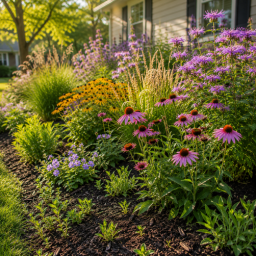
When most native gardens are first planted, they’re intentionally given room to grow.
That means the first year often includes more mulch than flowers.
It can feel a little underwhelming.
You know the plants will mature, but it’s hard not to notice the open spaces between them.
Then, almost without realizing it, your garden begins to change.
The original plants become larger.
A few seedlings appear nearby.
Grasses soften the edges of the planting.
Small drifts begin to form where there was once bare ground.
The transformation isn’t dramatic.
It’s gradual.
And that’s exactly what makes it so beautiful.
Instead of looking like individual plants carefully placed in the landscape, your garden begins to feel connected. Flowers and grasses relate to one another naturally, creating the relaxed beauty we often admire in Michigan’s prairies, woodlands, and open meadows.
This is one of the greatest rewards of patience.
A native garden doesn’t simply grow bigger.
It grows into itself.
If you’re planning your first native landscape, you may enjoy How to Design a Simple Native Garden in Michigan, where we explore how thoughtful spacing today creates a more natural-looking garden in the years ahead.
Nature Does Some of the Designing
One of the most surprising discoveries for new native gardeners is that nature can be an excellent design partner.
A seed carried by the wind doesn’t sprout everywhere.
It grows where conditions are right.
A volunteer Wild Bergamot may appear in a sunny opening.
A Jacob’s Ladder seedling may establish itself beneath the filtered shade of a young Serviceberry.
Little Bluestem may gradually soften the edge of a planting bed, while Butterfly Weed remains happily where it was first planted.
Each species has its own personality.
Some spread readily.
Others stay almost exactly where you placed them.
Together, they create gardens that feel balanced, relaxed, and wonderfully alive.
Of course, you’re still the gardener.
If a seedling appears where it blocks a pathway or crowds another favorite plant, you can transplant it, share it with a friend, or simply remove it.
Nature offers the possibilities.
You decide which ones become part of your garden’s story.
Reason #3: They Create Better Habitat for Wildlife
A single flower can feed a bee.
A community of flowers can support an ecosystem.
That’s one of the most important reasons native plants naturally spread.
As your garden becomes fuller, it also becomes more inviting to the wildlife that depends on it.
Native bees spend less energy searching for pollen when flowers grow in natural drifts.
Butterflies are more likely to find host plants when several grow together.
Songbirds discover more seeds in autumn and more insects to feed their young throughout the growing season.
Even beneficial insects that help control garden pests find more places to shelter among thicker plantings.
Every new native plant adds another layer of habitat.
If you’ve read How To Create a Pollinator Friendly Garden In Michigan, you’ll recognize that thriving wildlife needs much more than nectar. It needs shelter, nesting places, host plants, and a diversity of native species growing together.
That’s exactly what happens when a native garden is allowed to mature naturally.
Every Garden Has the Opportunity to Give Back
It’s easy to think of a garden as something we create for ourselves.
A place that’s beautiful.
Peaceful.
Enjoyable to spend time in.
A native garden certainly becomes all of those things.
But over time, it becomes something more.
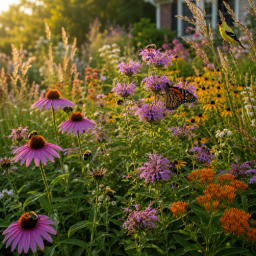
It becomes a place where bees gather pollen.
Where monarch butterflies find milkweed.
Where goldfinches feed on ripening seedheads.
Where countless small lives find food, shelter, and a place to continue.
And the wonderful part is this:
Many of those gifts begin with something as small as a single volunteer seedling.
Reason #4: They Help Create a More Resilient, Lower-Maintenance Garden
Many homeowners begin planting native gardens because they want to spend less time fighting their landscape and more time enjoying it.
One of the unexpected benefits of native plants naturally spreading is that they often make the garden more resilient over time.
As desirable plants gradually fill open spaces, there’s simply less room for many weeds to become established.
The soil stays shaded longer after a rain.
Moisture is retained more effectively during dry summer weeks.
Plant roots help stabilize the soil while creating healthier conditions below the surface.
None of this happens overnight.
It happens one growing season at a time.
The result isn’t a garden that never needs attention.
It’s a garden that increasingly works with nature instead of against it.
Reason #5: Every Native Garden Becomes Part of Something Bigger
Stand in your backyard for a moment.
Now imagine your garden from above.
Beyond your fence is another yard.
Then another.
Then another.
To us, those are separate properties.
To a bumble bee searching for pollen…
A monarch butterfly looking for milkweed…
Or a migrating bird stopping to rest…
They are connected.
Every native garden becomes one small piece of a much larger landscape.
A patch of Wild Bergamot may feed pollinators that visit gardens throughout your neighborhood.
A stand of Little Bluestem may shelter beneficial insects that move from yard to yard.
The berries on a Serviceberry tree may nourish birds that carry native seeds far beyond your property.
You may never see those connections happening.
But they’re there every day.
That’s one of the most hopeful things about planting native species.
No garden is too small to matter.
Small Beginnings Can Change a Neighborhood
One homeowner plants a few native flowers.
A neighbor notices the butterflies.
Another asks what those beautiful purple blooms are.
Someone else decides to replace a corner of lawn with native grasses.
Slowly, almost without anyone realizing it, the neighborhood begins to change.
Not because every yard looks the same.
But because each one contributes something valuable.
More flowers.
More habitat.
More life.
One garden inspires another.
That’s how lasting change often begins.
Not all at once.
One garden at a time.
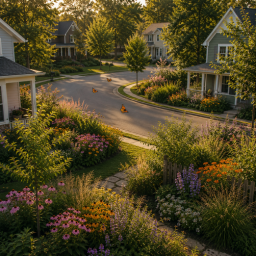
Barbara’s Gentle Reminder
One of the most rewarding moments in native gardening is realizing that your plants have begun making decisions of their own.
A tiny volunteer seedling can feel unexpected at first.
But over time, you begin to recognize it for what it truly is—a sign that your garden is becoming a living, thriving community.
You don’t have to keep every seedling.
You don’t have to let every plant spread.
But when you understand why native plants naturally reproduce, you’ll start seeing those little surprises with new appreciation.
Sometimes the healthiest gardens aren’t the ones that stay exactly the same.
They’re the ones that continue growing, changing, and welcoming more life with each passing season.
Happy gardening,
Barbara Fleury 🌿
Michigan Garden Design
🌿 Continue Growing
If you enjoyed this article, you might also like:
- Creating a Beautiful Native Garden with Layers
- How To Design a Four-Season Michigan Garden
- How To Create An Amazing Habitat with Native Trees
- The Best Native Michigan Plants for Late Summer Pollinators
- Common Native Garden Mistakes (and How to Avoid Them)
Coming Next
How to Help Monarch Butterflies During Migration in Michigan
Late summer in Michigan brings one of nature’s quiet miracles. Monarch butterflies begin an extraordinary migration south, stopping along the way to gather nectar before continuing their remarkable journey. In our next article, we’ll learn how even a modest Michigan garden can become an important refuge for these amazing travelers, and why the native plants you choose matter more than you might think.
Continue Exploring
To learn more about how native plants support healthy ecosystems, these trusted resources are excellent places to continue your journey:
- Michigan State University Extension — Practical guidance on gardening with Michigan native plants.
- Michigan Natural Features Inventory — Learn about Michigan’s native plant communities and natural habitats.
- Xerces Society — Resources for creating habitat for pollinators and other beneficial insects.
- Lady Bird Johnson Wildflower Center — Native plant database and gardening information.
- Wildflower Association of Michigan — Detailed native plant profiles, including growth habits and propagation.