
How to Prepare Your Garden for Fall Pollinators
Fall Begins Long Before the Leaves Change
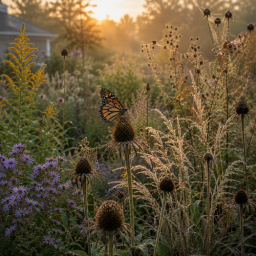
When most people think about preparing their gardens for fall, they picture rakes, leaf bags, and weekend cleanup projects.
But for Michigan’s pollinators, autumn begins much earlier.
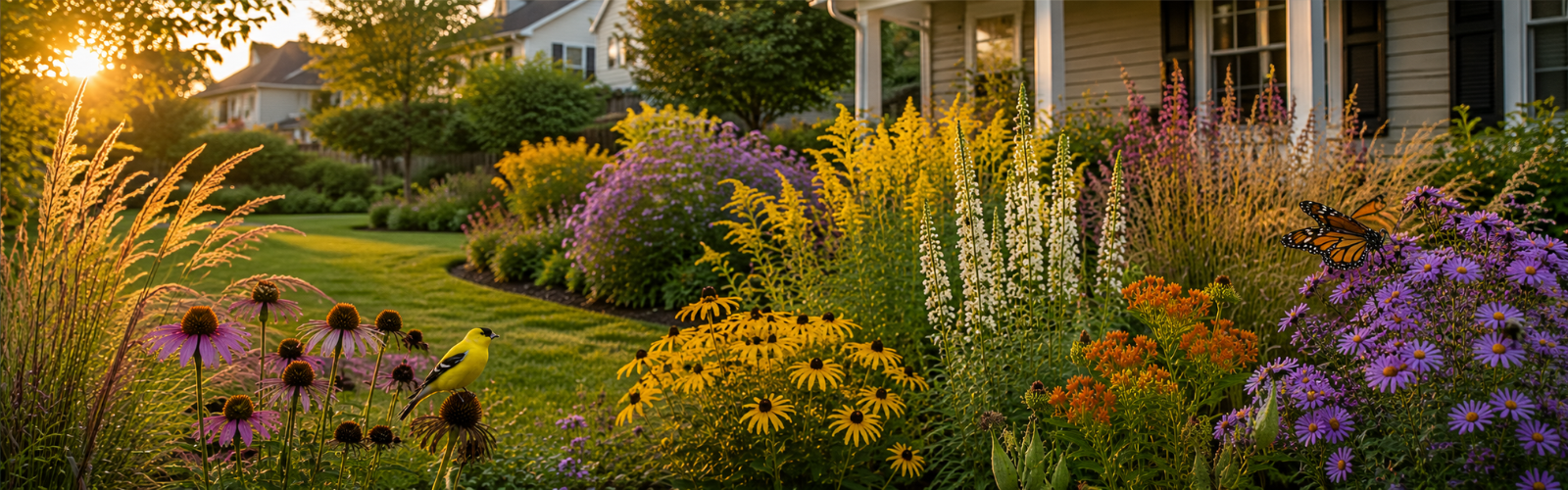
Long before the maples turn brilliant shades of red and gold, monarch butterflies are fueling up for one of the longest migrations in the insect world. Native bees are searching for the last blooms of the season. Goldfinches feast on ripening seedheads, while hummingbirds continue visiting flowers before beginning their remarkable journey south.
What happens in your garden during late summer can determine how well these visitors prepare for the months ahead.
That’s why August and September are some of the most important months of the gardening season.
Instead of thinking about winding the garden down, it’s helpful to think about helping wildlife finish the season strong.
Your Garden Is a Final Rest Stop
Imagine setting out on a thousand-mile road trip with very few places to stop for food.
That’s the challenge many pollinators face as summer draws to a close.
Across Michigan, blooming flowers become less abundant as the season progresses. Gardens filled with late-season native plants suddenly become essential places to rest, feed, and gather the energy needed for migration or winter survival.
A stand of New England Aster buzzing with native bees.
Goldenrods covered with butterflies.
A patch of Butterfly Weed still supporting hungry monarch caterpillars.
Seedheads filled with goldfinches preparing for cooler weather.
These aren’t simply beautiful autumn scenes.
They’re life-support systems.
Every bloom that remains open just a little longer can make a meaningful difference for the wildlife that depends on it.
If you recently read The Best Native Plants for Hummingbirds in Michigan, you’ve already seen how native flowers provide reliable food throughout the growing season. As summer fades, those same gardens become even more valuable, offering some of the last dependable sources of nectar before colder weather arrives.
The Pollinators Haven’t Left Yet
One of the biggest misconceptions about fall gardening is that pollinators disappear once summer flowers begin fading.
In reality, many of Michigan’s busiest pollinators are still hard at work.
Native bees continue collecting pollen wherever flowers remain available.
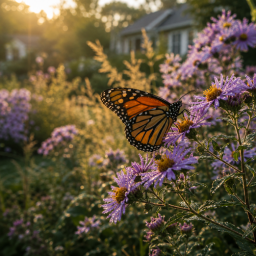
Monarch butterflies pause frequently during migration to replenish their energy.
Hoverflies, beneficial wasps, and countless other helpful insects continue searching for nectar well into autumn.
Even hummingbirds may still visit your garden surprisingly late in the season before heading south.
For these animals, every flowering plant matters.
Removing blooms too early or replacing them with heavily manicured landscapes can create long stretches where food simply isn’t available.
Fortunately, native gardens naturally solve much of this problem.
Many of Michigan’s most valuable native plants save some of their finest displays for late summer and early fall.
A Garden That Keeps Giving
One of the wonderful things about planting native species is that they don’t stop working when summer ends.
In fact, many begin serving new purposes.
Flowers continue producing nectar.
Developing seeds feed birds.
Stems become future nesting sites for native bees.
Leaves shelter beneficial insects preparing for winter.
Even after blooming has finished, the garden continues supporting life in ways that aren’t always obvious at first glance.
If you’ve been following our Nature Notes Educational Series, you’ve already discovered that your garden remains full of activity long after the sun goes down. The same idea applies as the seasons change. While we may see fewer flowers, the garden itself is still quietly providing food, shelter, and habitat for an incredible variety of wildlife.
Five Simple Ways to Help Pollinators This Fall
The good news is that supporting pollinators doesn’t require a complete garden makeover.
In many cases, the best thing you can do is simply let your native garden continue doing what it was designed to do.
Here are five ways to prepare your garden for the changing season while giving Michigan’s pollinators the resources they need.
1. Keep the Nectar Flowing
As summer winds down, nectar becomes increasingly difficult for pollinators to find.
By including late-blooming native plants in your garden, you’ll provide an important source of energy just when it’s needed most.
Some of Michigan’s best late-season native flowers include:
- New England Aster (Symphyotrichum novae-angliae)
- Smooth Aster (Symphyotrichum laeve)
- Stiff Goldenrod (Solidago rigida)
- Showy Goldenrod (Solidago speciosa)
- Culver’s Root (Veronicastrum virginicum) in late summer
- Blue Giant Hyssop (Agastache foeniculum)
These flowers support native bees, butterflies, beneficial insects, and migrating monarchs while adding beautiful color to the autumn landscape.
Many gardeners are surprised to learn that goldenrod is not responsible for seasonal allergies. Its pollen is heavy and carried by insects rather than the wind. The real culprit is often ragweed, which blooms at the same time but is much less noticeable.
2. Leave the Seedheads Standing
As flowers fade, it can be tempting to cut everything back immediately.
Instead, consider leaving seedheads in place.
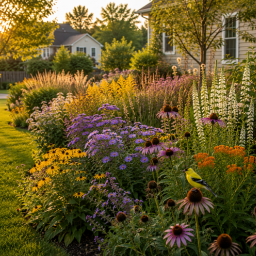
Coneflowers, Black-eyed Susans, Little Bluestem, Prairie Dropseed, and many other native plants continue providing value long after blooming has ended.
Their seeds become an important food source for birds such as goldfinches, chickadees, and juncos.
Standing stems also create beautiful winter structure, catching frost and snow in ways that make the garden just as interesting in January as it was in July.
If you’ve enjoyed watching birds visit your garden throughout the summer, you’ll likely see even more activity once those seedheads begin to mature.
3. Resist the Urge to Over-Clean
One of the biggest gifts you can give pollinators is…patience.
Many beneficial insects spend the winter tucked inside hollow stems, beneath fallen leaves, or just below the soil surface.
When gardens are cleaned too thoroughly in autumn, those important overwintering sites can disappear.
Instead of removing every leaf and every stem, leave a portion of your garden as nature intended.
Allow leaves to remain beneath shrubs.
Keep sturdy perennial stems standing until spring whenever possible.
The result may look a little less tidy than a traditional landscape—but it creates a much healthier habitat for the wildlife you’ve worked so hard to attract.
Our article Common Garden Pests and Helpful Insects in Michigan explores how many of these beneficial insects quietly protect your garden throughout the growing season. Giving them safe places to overwinter helps ensure they’ll return next year.
4. Skip the Fall Fertilizer
Late in the growing season, many native plants are naturally preparing for dormancy.
Applying fertilizer encourages fresh, tender growth that may not have enough time to harden before freezing temperatures arrive.
Most established Michigan native plants thrive without additional fertilizer.
Instead of encouraging new growth, allow your plants to slow naturally as daylight decreases and temperatures cool.
Healthy root systems are already storing the energy they’ll need to emerge again next spring.
5. Add Habitat, Not Just Flowers
Flowers are only one piece of the puzzle.
Pollinators also need places to rest, shelter, and survive the winter.
Native shrubs, ornamental grasses, brush piles, and even small patches of undisturbed leaves all contribute to a healthier habitat.
A garden with several layers—trees, shrubs, perennials, grasses, and groundcovers—offers protection from wind, predators, and harsh weather while supporting a remarkable diversity of wildlife.
Even adding one native shrub this fall can make your garden more welcoming for birds and beneficial insects throughout the year.
Small Changes, Lasting Impact
Preparing your garden for fall doesn’t have to mean working harder.
In many cases, it means allowing nature to finish the season on its own terms.
The flowers continue feeding pollinators.
The seedheads nourish birds.
The stems become shelter.
The leaves protect countless tiny creatures that most of us never even see.
When we understand the purpose behind these natural processes, it’s easier to see that sometimes doing a little less is actually giving nature much more.
Native Plants That Shine in Late Summer and Fall
If you’re looking to add just a few plants this season, choose species that continue providing nectar and habitat as summer transitions into autumn.
These Michigan natives are among the most valuable:
New England Aster (Symphyotrichum novae-angliae)
One of the last great nectar sources of the year, New England Aster is a favorite of migrating monarch butterflies and countless native bee species. Its rich purple flowers often remain in bloom well into fall, bringing vibrant color to the garden just when many other plants have finished.
Showy Goldenrod (Solidago speciosa)
Bright golden flowers attract an incredible diversity of pollinators while creating one of Michigan’s signature late-season displays. Despite its reputation, goldenrod is insect-pollinated and is not the plant responsible for most fall allergies.
Little Bluestem (Schizachyrium scoparium)
Although it isn’t grown for nectar, Little Bluestem provides nesting habitat, winter shelter, and beautiful copper-colored foliage as temperatures cool. Its seedheads also become an important food source for birds throughout the colder months.
Prairie Dropseed (Sporobolus heterolepis)
By late summer, Prairie Dropseed develops graceful seedheads and a soft golden color that adds movement and texture to the landscape. Its dense clumps also provide excellent cover for beneficial insects and small wildlife.
Culver’s Root (Veronicastrum virginicum)
Blooming well into late summer, Culver’s Root offers nectar during an important transition period before many fall flowers reach their peak. Its elegant white flower spikes also add vertical interest to native plantings.
Together, these plants illustrate an important principle of native gardening:
A beautiful autumn garden can also be one of the most valuable habitats you create all year.
A Few Habits Worth Rethinking
Many traditional fall gardening practices come from an era when landscapes were expected to look neat and dormant through winter.
Native gardens ask us to see things a little differently.
Instead of viewing seedheads as something to remove, we can see them as winter bird feeders.
Instead of seeing standing stems as untidy, we can recognize them as nesting sites for native bees.
Instead of rushing to clear every fallen leaf, we can remember that many butterflies, moths, beetles, and other beneficial insects depend on that natural blanket for protection until spring.
A garden can still be beautifully maintained while allowing nature to complete its seasonal work.
Sometimes the healthiest gardens are the ones that look just a little more natural.
Looking Ahead to Spring
One of the greatest rewards of gardening with native plants is realizing that every season prepares the next.
The flowers blooming today produce tomorrow’s seeds.
The insects finding shelter this fall become next year’s pollinators.
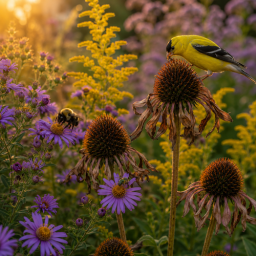
The birds feeding on seedheads help disperse native plants while bringing life and movement to winter landscapes.
When spring finally returns, your garden won’t be starting over.
It will simply be continuing a story that never truly stopped.
Every thoughtful decision you make this autumn becomes part of that story.
🌿 Barbara’s Gentle Reminder
It’s easy to think of autumn as the end of the gardening season.
I’ve come to think of it differently.
Fall is when the garden quietly prepares for everything that’s still to come.
Some of the most meaningful work we do as gardeners happens during these weeks, not because we’re planting the most flowers, but because we’re giving wildlife the resources it needs to finish the year strong.
If your garden looks a little wilder than your neighbor’s this winter, that’s okay.
Those seedheads, grasses, and fallen leaves may not look like much at first glance, but they’re sheltering bees, feeding birds, protecting butterflies, and preparing the garden for another beautiful spring.
Sometimes the kindest thing we can do is simply let nature finish its work.
Happy gardening,
Barbara Fleury
Founder, Michigan Garden Design
🌿 Your Garden Journey Continues Here
Enjoying this article?
Download the complimentary Sample Edition of The Michigan Native Garden Journal and begin recording the changing seasons, wildlife visitors, and the story unfolding in your own Michigan garden.
⬇ Download Your Complimentary Copy

Continue Growing
If you enjoyed this article, you may also like:
- The Best Native Plants for Hummingbirds in Michigan
- How to Help Monarch Butterflies During Migration in Michigan
- How to Create a Pollinator Habitat in Michigan: It’s More Than Just Flowers
- Why Native Bees Are the Garden’s Most Important Pollinators
- The Best Native Plants for Summer Color
Coming Next:
How to Create Winter Interest with Michigan Native Plants
A native garden doesn’t lose its beauty when the flowers fade. Discover how grasses, seedheads, shrubs, berries, and bark create a landscape that’s just as captivating in January as it is in June, while continuing to support birds and other wildlife throughout the winter.
Continue Exploring
To learn more about supporting pollinators through every season, these trusted organizations offer excellent resources:
- Michigan State University Extension — Native plants, pollinator gardening, and seasonal landscape care.
- Michigan Department of Natural Resources — Michigan wildlife habitat and conservation.
- Xerces Society for Invertebrate Conservation — Pollinator habitat, overwintering insects, and native bee conservation.
- Pollinator Partnership — Planting guides and pollinator-friendly gardening practices.
- National Wildlife Federation — Backyard habitat certification and wildlife-friendly landscapes.