
The Best Native Trees for Michigan Landscapes
A beautiful Michigan landscape begins with more than what grows at ground level. The right native tree can bring shade, seasonal beauty, wildlife habitat, and a sense of permanence to a garden for generations.
A Tree Is More Than a Beautiful Addition to Your Landscape
Think about a garden you love. Perhaps it has colorful flowers, winding pathways, or a favorite place to sit. But chances are, somewhere in that landscape, a tree helps bring everything together.
It may provide a canopy of shade over a sitting area, frame a view from the house, or soften the transition between a garden and the surrounding neighborhood. In spring, it might offer delicate blossoms. By autumn, its leaves may transform the entire character of the yard.
Trees create something that flowers and smaller plants cannot accomplish on their own: a lasting structure around which the rest of the landscape can develop.
For Michigan homeowners interested in gardening with native plants, choosing the right tree is one of the most meaningful decisions they can make.
And the benefits extend far beyond appearance.
Why Native Trees Matter in Michigan Gardens
Michigan is home to a remarkable diversity of native trees, from towering oaks and maples to smaller flowering trees that fit comfortably into residential landscapes.
These trees developed as part of Michigan’s natural ecosystems, forming relationships with insects, birds, mammals, fungi, and other organisms over many generations.
A native tree can contribute to the garden in several important ways:
- Food for wildlife: Depending on the species, trees may provide nuts, seeds, fruits, or foliage used by wildlife.
- Habitat and shelter: Branches, leaves, and mature tree structures provide places for birds and other animals to rest, seek protection, and sometimes nest.
- Support for beneficial insects: Native tree foliage can provide food for caterpillars and other insects, which are themselves important food sources for many birds.
- Natural cooling: A well-placed canopy creates shade and helps moderate summer temperatures.
- Long-term garden structure: Trees establish height, seasonal character, and a framework for the plants growing beneath them.
According to Michigan State University Extension’s guidance on native landscaping, thoughtfully selected native plants can help homeowners create attractive landscapes while supporting wildlife and local environmental conditions.
This is especially important when we begin thinking about the garden as more than a collection of individual plants.
In our article, How to Design a Native Garden for Year-Round Wildlife, we explored how different plant layers contribute to a more welcoming environment. Native trees form the uppermost layer, influencing the light, temperature, shelter, and growing conditions experienced by everything beneath them.
A tree planted today can gradually become the foundation of an entire garden.
The Best Native Tree Is the One That Fits Your Landscape
It is tempting to choose a tree because of beautiful spring flowers, spectacular autumn color, or a photograph showing its mature form.
Those qualities matter. But the most successful tree selection begins with understanding where that tree will grow.
Michigan landscapes vary considerably.
A property near Lake Michigan may experience sandy soil and wind exposure, while an inland yard may have heavier clay soil. Some properties have consistently moist ground, while others become extremely dry during summer.
Even two locations within the same yard can offer very different growing conditions.
Before selecting a native tree, consider three important questions.
How much room will it have when fully grown?
A young tree may look perfectly proportioned when planted, but its mature canopy and root system need adequate space. Consider nearby buildings, overhead utilities, walkways, and neighboring trees.
What are the existing soil, sunlight, and moisture conditions?
Native does not automatically mean a tree will thrive anywhere in Michigan. Each species has particular preferences, and selecting one suited to your actual conditions is more effective than trying to change an unsuitable location.
What role should the tree play in the landscape?
Are you hoping to provide summer shade? Create privacy? Offer spring blossoms? Establish a focal point? Support birds and beneficial insects?
Your answer can help narrow the possibilities considerably.
Michigan State University Extension emphasizes matching a tree to its planting site, particularly because residential soils and growing conditions may be very different from those found in natural habitats.
Think Beyond the Tree Itself
One of the most interesting things about planting a native tree is imagining how the landscape around it may change.
A young tree might initially stand in an open, sunny yard. As it grows, its expanding canopy begins creating areas of partial shade. Those spaces may eventually become suitable for shade-tolerant native wildflowers, ferns, or woodland sedges.
A flowering tree near a patio could become a beautiful seasonal focal point. A larger shade tree might eventually provide a comfortable place to sit during warm summer afternoons.
This is where thoughtful garden design becomes especially rewarding.
In How to Create Garden Rooms with Native Plants, we explored how plants can define spaces and give different areas of a landscape their own character. Trees can play a particularly important role in that process, creating overhead enclosure without making a garden feel crowded.
And as we discussed in How to Let Your Native Garden Fill in Naturally, a garden is not a finished picture the day it is planted. It develops through time.
Trees remind us of that perhaps more than any other plant.
Choosing one is not simply a decision about how the garden will look next spring. It is a decision about what kind of place the garden may become ten, twenty, or even fifty years from now.
Choosing Native Trees That Bring Beauty and Purpose to Your Landscape
Michigan offers a wonderful variety of native trees, but not every tree belongs in every landscape. Some are especially suited to smaller yards, while others need plenty of room to develop their broad canopies and extensive root systems.
The following selections offer a balance of seasonal beauty, wildlife value, and practical landscape uses.
Rather than choosing a tree simply because it is beautiful, consider what it can contribute to your garden as it matures.
Smaller Native Trees for Residential Gardens
1. Allegheny Serviceberry (Amelanchier laevis)
Typically 15–25 feet tall
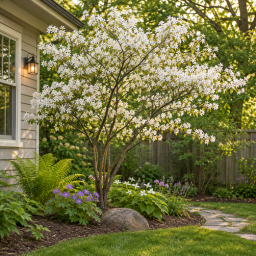
Serviceberry is an appealing choice for homeowners who want a smaller tree with interest across several seasons.
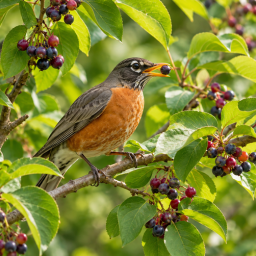
Delicate white blossoms appear in spring, followed by small, dark purple fruits that attract birds. Autumn brings beautiful shades of orange and red.
Best suited for: Full sun to partial shade, with well-drained soil that retains some moisture.
Landscape use: Near patios, along woodland edges, or as a graceful focal point in a smaller garden.
2. Eastern Redbud (Cercis canadensis)
Typically 20–30 feet tall
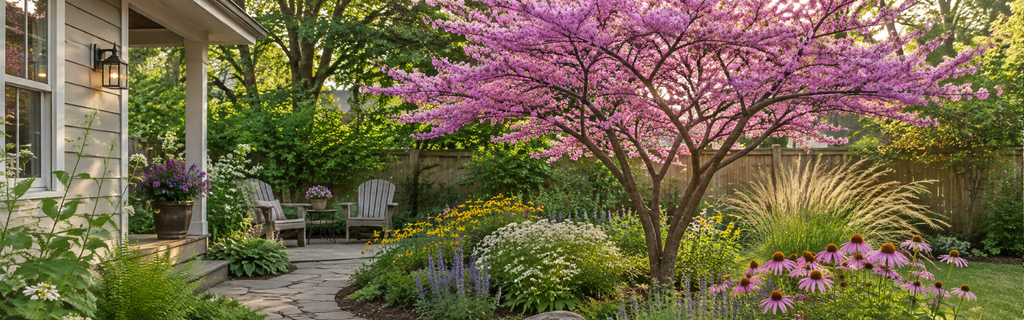
Few native trees announce spring quite like Eastern Redbud. Its rosy-pink flowers emerge along bare branches before its distinctive heart-shaped leaves fully develop.
Early blossoms provide nectar for visiting pollinators, while its spreading form creates a beautiful natural silhouette.
Best suited for: Full sun to partial shade and reasonably moist, well-drained soil. Native primarily to southern Lower Michigan, it is best suited to appropriately sheltered locations.
Landscape use: An ornamental accent near an entryway, patio, or woodland garden.
Medium to Large Native Trees for Structure and Shade
3. River Birch (Betula nigra)
Typically 50–70 feet tall, sometimes taller
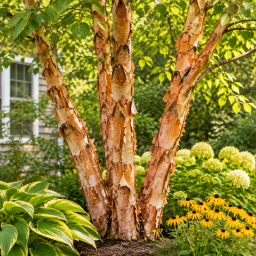
River Birch offers something especially appealing during Michigan’s quieter seasons: beautiful, peeling bark that reveals warm shades of cinnamon, cream, and brown.
Its graceful branching adds movement, while its foliage creates welcoming summer shade.
Best suited for: Full sun and moist soils, particularly locations where other trees may struggle with periodic wetness.
Landscape use: Rain garden surroundings, larger residential yards, or naturalized areas with adequate space for its canopy.
4. White Oak (Quercus alba)
Typically 50–80 feet tall
White Oak is an exceptional choice when space allows for a substantial, long-lived shade tree.
Its broad canopy creates an inviting landscape setting, while its acorns provide food for wildlife. Oak foliage also supports numerous native insects, including caterpillars that become food for birds.
Best suited for: Full sun and deep, well-drained soil, with generous room for mature growth.
Landscape use: Larger properties, open lawn areas, or the centerpiece of a developing woodland habitat.
Native Evergreens for Year-Round Beauty
5. Eastern White Pine (Pinus strobus)
Often 50–80 feet tall in landscapes, potentially taller
Eastern White Pine brings a softer appearance to the landscape than many other evergreens. Its long, slender needles create a graceful texture that remains beautiful throughout winter.
Its evergreen branches offer shelter for birds, particularly when deciduous trees have lost their leaves.
Best suited for: Full sun to partial shade, well-drained soil, and locations protected from excessive salt exposure.
Landscape use: Larger properties, natural privacy screens, woodland edges, and year-round garden structure.
Matching the Tree to the Garden
As these examples demonstrate, native trees offer very different possibilities.
A serviceberry might provide spring flowers and fruit within view of a kitchen window. A River Birch could bring beautiful bark and shade to a naturally moist area. An oak might become the defining feature of a larger landscape.
The key is to choose for the space you actually have, not simply the tree you admire most.
It is also worth remembering that trees and the plants beneath them can become part of a larger design. Native woodland flowers, sedges, and shrubs can help create a layered landscape as the tree matures.
A single thoughtfully placed tree can be the beginning of something much more interesting.
Giving Your Native Tree a Strong Beginning
Choosing the right native tree is an important first step. Giving it the conditions it needs to establish is just as important.
Even a tree naturally suited to Michigan’s climate needs some attention during its first few growing seasons.
Fortunately, successful planting does not need to be complicated.
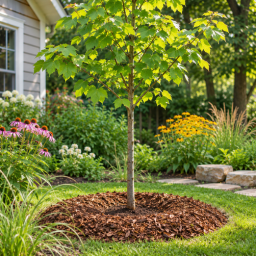
Plant with the Future in Mind
In Michigan, early spring and fall are often favorable times to plant trees, when temperatures are cooler and moisture is generally more available.
Before planting, keep a few essentials in mind:
- Give roots room to grow. Dig a broad planting hole, generally two to three times wider than the root ball, but no deeper than necessary.
- Avoid planting too deeply. The root flare, where the trunk begins widening into the roots, should remain visible at the soil surface.
- Mulch thoughtfully. Apply approximately two to three inches of organic mulch around the tree, keeping it several inches away from the trunk.
- Water consistently. Newly planted trees need adequate moisture while their roots become established. Check soil conditions and adjust watering during rainy or dry periods.
- Allow room for maturity. Consider the tree’s eventual height, canopy width, and proximity to structures before deciding on its permanent location.
Avoid assuming that a native tree needs no care simply because it belongs in Michigan. Once established in a suitable location, many native trees can become relatively low-maintenance additions to the landscape.
But establishment takes time.
Let the Garden Develop Around the Tree
One of the pleasures of planting a tree is watching the surrounding garden change.
As its canopy expands, sunlight patterns shift. New opportunities emerge for woodland flowers, native sedges, and shrubs that thrive in partial shade.
A tree that initially seems like a solitary feature may eventually become the center of a small woodland garden or a welcoming place for birds.
You do not need to create that entire landscape immediately.
Sometimes the most thoughtful approach is to plant the tree, observe how the space responds, and allow the next planting decisions to develop naturally.
A garden with a strong foundation has room to grow into itself.
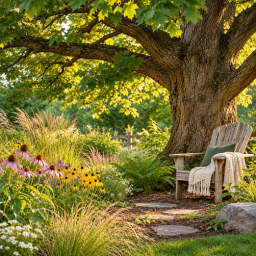
Barbara’s Observation
There is something particularly meaningful about planting a tree when you know you may never see it reach its full potential.
We often measure our gardens by what changes from one season to the next. Trees invite us to think on a different timescale.
A small tree planted today may someday shade a favorite chair, shelter nesting birds, or become the backdrop for a garden someone else will enjoy.
Perhaps that is one of the loveliest things about planting native trees. We are creating beauty for today while leaving something meaningful for the years ahead.
The Michigan Native Garden Journal
A newly planted tree gives you a wonderful opportunity to observe how a garden develops.
Record its planting date, sunlight conditions, and location. Notice when its leaves appear in spring, how its canopy changes throughout summer, and whether birds begin visiting its branches.
Over time, those observations can help you understand not only the tree itself but the changing garden around it.
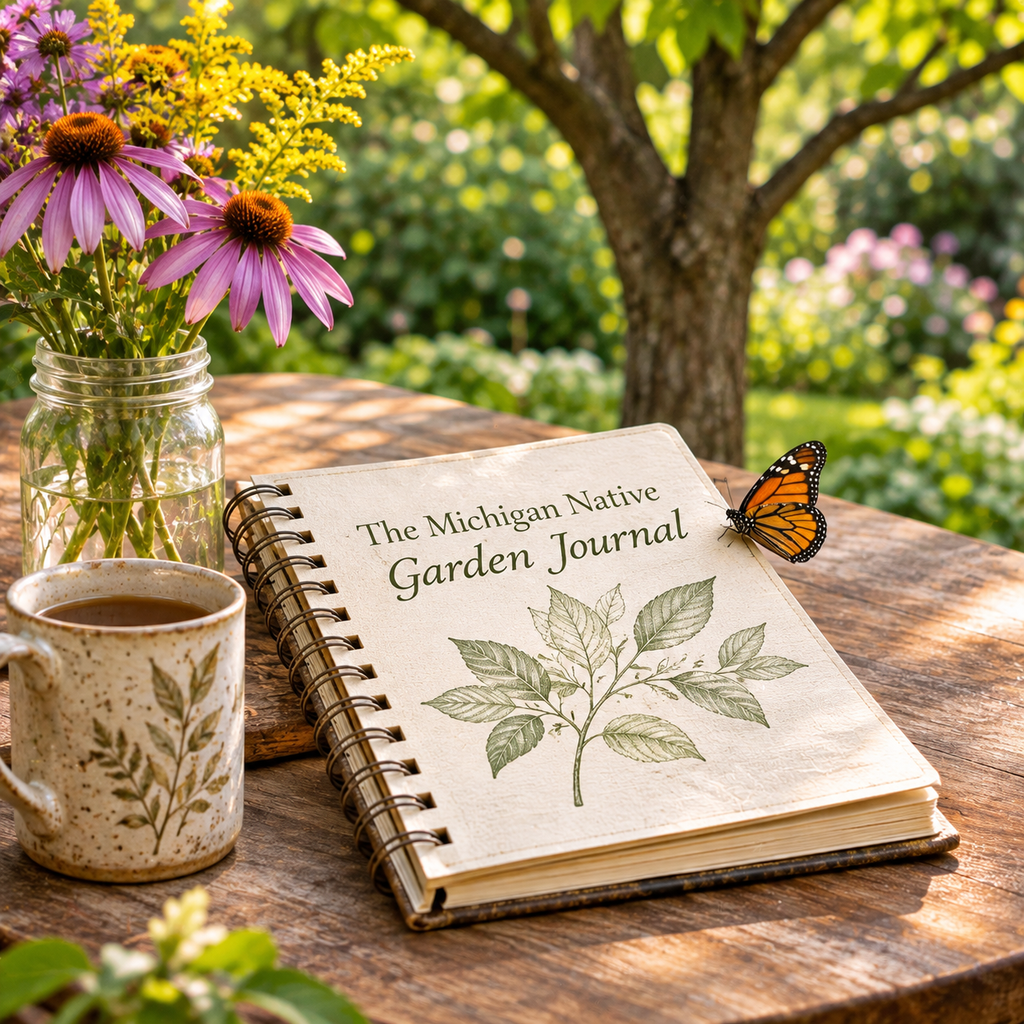
The complimentary first month of The Michigan Native Garden Journal offers a simple, thoughtful way to begin.
COMPLIMENTARY FIRST MONTH
The Michigan Native Garden Journal
Observe • Discover • Wonder • Grow
Keep Exploring
Continue discovering how native plants can bring beauty, structure, and wildlife value to your Michigan landscape.
- How to Design a Native Garden for Year-Round Wildlife — Explore how different plant layers create habitat through every season.
- How to Create Garden Rooms with Native Plants — Discover how trees, shrubs, and perennial plants can define inviting outdoor spaces.
- How to Let Your Native Garden Fill in Naturally — Learn why patience can be one of the most valuable tools in garden design.
- How to Create Spaces Where Wildlife Feels Safe — Consider the importance of shelter and thoughtful plant placement.
For additional tree-care information, explore Michigan State University Extension’s home gardening resources.
What’s Next
Take a walk around your property and identify one location where a native tree could make a meaningful difference.
Consider how much sunlight the area receives, whether the soil tends to stay moist or dry, and what you would like the tree to provide.
You do not need to plant anything today.
Sometimes the best first step is simply recognizing where a tree could belong.
Coming Next
How to Create a Backyard Habitat with Native Plants
A native tree can be the foundation of a thriving landscape, but wildlife needs more than a canopy overhead.
In our next Michigan Garden article, we’ll explore how to bring trees, shrubs, flowers, grasses, and other natural elements together to create a backyard habitat that offers food, shelter, and opportunities for wildlife throughout the seasons.
Because even a modest Michigan backyard can become a welcoming place for nature.