
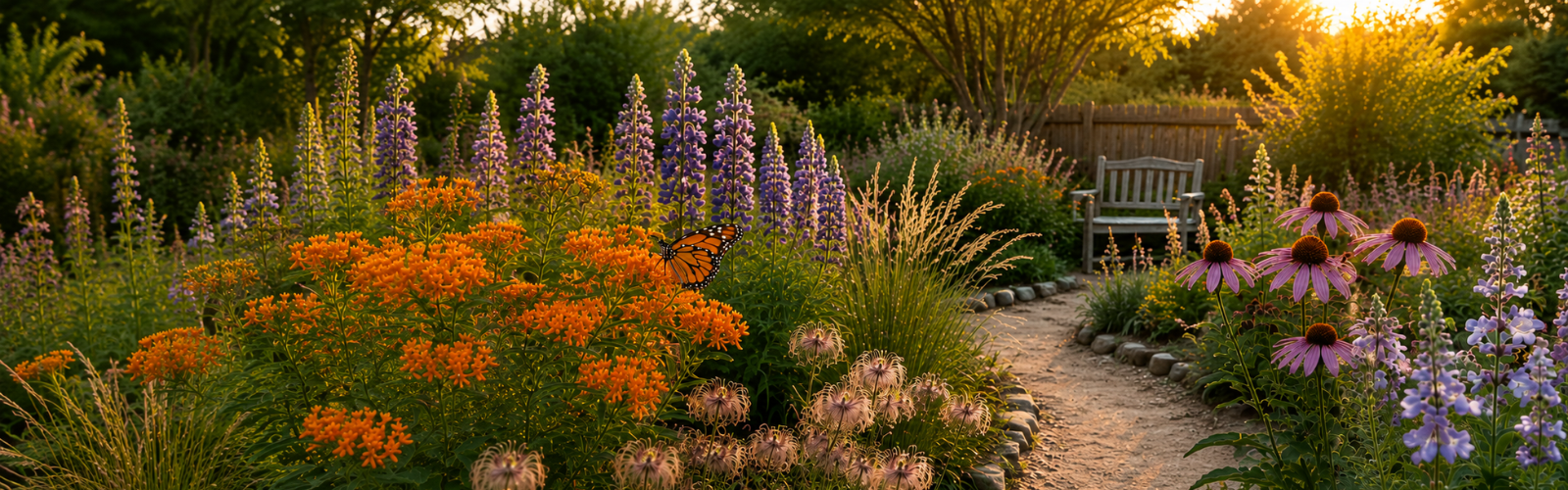
The Best Native Plants That Thrive in Sandy Soil
Discover beautiful Michigan native plants that don’t just survive in sandy soil—they flourish in it.
Have you ever watered your garden, only to find the soil dry again just a day or two later?
Perhaps you’ve planted flowers that looked beautiful at the garden center but never seemed to settle in once they reached your yard. You fertilize. You water again. You wonder what you’re doing wrong.
If this sounds familiar, you’re not alone.
Across much of Michigan, especially along our Lake Michigan shoreline, homeowners garden in sandy soil. It’s one of the most common questions I hear:
“Can I really grow a beautiful garden in sand?”
The answer is a resounding yes.
In fact, some of Michigan’s healthiest, most wildlife-filled landscapes grow in exactly these conditions.
The secret isn’t changing your soil.
It’s choosing plants that already feel at home there.
If you’re unsure what type of soil you have, the Michigan State University Extension offers excellent guidance on identifying Michigan soil types and improving planting success.
Sandy Soil Isn’t Your Problem
Some of Michigan’s most breathtaking natural landscapes are rooted in sand.
Walk the dunes at Saugatuck or Hoffmaster State Park. Explore the rolling hills near Sleeping Bear Dunes. Wander through an oak barren on a warm summer afternoon.
You’ll find wildflowers blooming.
Native grasses dancing in the breeze.
Butterflies drifting from flower to flower.
Birds nesting among shrubs.
None of these landscapes receive fertilizer.
No one waters them every few days.
Nature has spent thousands of years creating plant communities perfectly adapted to sandy soil.
When we choose those same native plants for our own landscapes, gardening suddenly becomes much easier.
Instead of fighting nature, we’re finally working with it.
How Do You Know If You Have Sandy Soil?
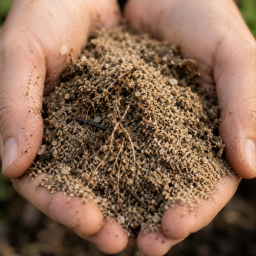
Sandy soil has a personality all its own.
It usually feels gritty between your fingers rather than smooth or sticky.
After a heavy rain, puddles disappear quickly as water drains deep into the ground. During summer, the soil often dries much faster than neighboring yards with clay-rich soils.
You may have sandy soil if your garden:
- Drains quickly after rain
- Feels loose and crumbly when you dig
- Requires frequent watering during hot weather
- Warms up early in spring
- Is easy to dig, even after several dry days
Many homeowners assume these characteristics are disadvantages.
In reality, they’re simply clues that different plants will perform better.
If your garden has heavier soil instead, you may enjoy reading The Best Native Plants That Thrive in Clay Soil, where we explore plants that prefer nearly the opposite growing conditions.
Why Native Plants Thrive Here
Many traditional landscape plants evolved in rich woodland soils or carefully cultivated gardens. They often rely on regular watering and fertilizer to look their best.
Michigan’s native plants tell a different story.
Many have root systems that extend several feet below the surface, far deeper than most ornamental flowers. These roots allow them to find moisture long after the surface soil has dried. They also help stabilize soil, improve its structure over time, and make the plants remarkably resilient during summer heat.
Once established, many native plants require:
- Less supplemental watering
- Little to no fertilizer
- Fewer pesticides
- Less overall maintenance
Better yet, they provide food and shelter for countless butterflies, native bees, songbirds, and other wildlife.
Choosing native plants isn’t simply about growing flowers.
It’s about rebuilding tiny pieces of Michigan’s natural ecosystems, one garden at a time.
The Lady Bird Johnson Wildflower Center maintains one of the most comprehensive native plant databases available. If you’re interested in learning more about how native plant root systems improve soil health, check this resource out.
Why Some of Michigan’s Most Beautiful Places Grow in Sand
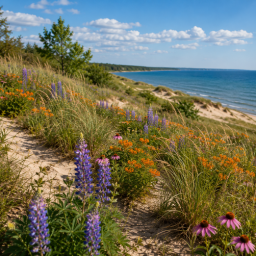
One of my favorite reminders comes whenever I visit Michigan’s dunes.
The soil is dry.
The wind can be relentless.
Summer temperatures climb quickly.
Yet everywhere you look, life flourishes.
Butterfly Weed glows bright orange against pale sand.
Little Bluestem catches the evening light as it sways in the breeze.
Wild Lupine paints entire hillsides with shades of blue each spring.
These plants aren’t surviving despite the sandy soil.
They’re thriving because of it.
Your own landscape can do the same.
Seven Beautiful Native Plants That Love Sandy Soil
Butterfly Weed (Asclepias tuberosa)
If I could recommend just one flowering perennial for a sunny sandy garden, Butterfly Weed would always be near the top of the list.
Its brilliant orange flowers seem to glow against pale sandy soil, especially during the warm evenings of midsummer. Even from a distance, it’s one of those plants that catches your eye, and apparently, monarch butterflies feel exactly the same way.
Unlike many garden flowers that struggle during dry spells, Butterfly Weed develops a remarkably deep taproot that allows it to find moisture well below the surface. Once established, it becomes one of the most dependable perennials in a sunny landscape.
More importantly, it’s one of the few plants monarch butterflies rely on to lay their eggs. The leaves become food for developing caterpillars, while the flowers provide nectar for countless pollinators throughout summer.
This is one of those rare plants that’s every bit as valuable ecologically as it is beautiful.
Best for:
- Full sun
- Dry sandy soil
- Pollinator gardens
- Monarch habitat
Bloom Time: June–July
Little Bluestem (Schizachyrium scoparium)
If flowers provide the color, native grasses provide the music.
Little Bluestem begins the growing season with soft blue-green foliage before slowly transforming into glowing shades of bronze, copper, orange, and rose as autumn approaches. Throughout winter, its upright stems continue catching frost, snow, and morning sunlight while providing shelter for birds and beneficial insects.
Its deep roots, often reaching several feet into the soil, make it exceptionally drought tolerant once established.
I often encourage gardeners not to think of Little Bluestem as simply a grass.
Think of it as the thread that ties an entire planting together.
Its graceful movement softens bold flowers like Purple Coneflower and Butterfly Weed while creating a garden that feels wonderfully natural instead of overly formal.
Best for:
- Prairie-style gardens
- Sunny borders
- Slopes
- Four-season interest
Height: 2–3 feet
Wild Lupine (Lupinus perennis)
Every spring, Wild Lupine reminds us that sandy soil can produce extraordinary beauty.
Tall spikes of soft blue and violet flowers rise above delicate foliage, creating one of Michigan’s most recognizable native wildflower displays. In the wild, entire hillsides can become awash in color.
Wild Lupine is also one of Michigan’s most important native plants for conservation. In portions of the state, it serves as the exclusive host plant for the federally endangered Karner blue butterfly. Without Wild Lupine, this tiny butterfly cannot complete its life cycle.
Even if you never see a Karner blue in your own garden, planting Wild Lupine helps preserve one of Michigan’s most iconic native plant communities while providing nectar for many other pollinators.
It thrives in full sun and appreciates exactly the kind of well-drained sandy soil many homeowners struggle to garden in.
Best for:
- Full sun
- Dry sandy locations
- Spring color
- Native pollinator habitat
Bloom Time: May–June
Prairie Smoke (Geum triflorum)
Some native plants stop you with brilliant color.
Prairie Smoke captures your attention in a quieter way.
In spring, its nodding pink flowers seem almost shy, gently swaying above finely textured foliage. But after the blooms fade, something magical happens. Each flower transforms into a feathery plume that catches the breeze, creating soft clouds of silvery pink “smoke” floating above the plant.
It’s one of Michigan’s most unique native wildflowers and often becomes a conversation piece in the garden.
Prairie Smoke naturally grows in dry prairies, open woodlands, and sandy soils where excellent drainage is the norm. Once established, it asks for very little while rewarding gardeners with months of changing texture.
Although compact in size, it pairs beautifully with larger grasses and wildflowers, softening the front of garden beds while extending seasonal interest long after flowering has finished.
Best for:
- Sunny borders
- Rock gardens
- Smaller landscapes
- Dry sandy soil
Bloom Time: May
Prairie Dropseed (Sporobolus heterolepis)
There are plants that provide flowers.
Then there are plants that create atmosphere.
Prairie Dropseed is one of those plants.
Its graceful fountain of narrow green leaves forms neat mounds that remain attractive from spring until snowfall. In late summer, delicate flower stems rise above the foliage, carrying tiny blossoms with a surprisingly sweet fragrance that some gardeners compare to buttered popcorn or warm coriander.
As autumn arrives, the foliage glows with shades of gold, amber, and copper before remaining standing throughout winter.
Prairie Dropseed also serves an important ecological role. Its extensive root system improves soil stability, supports beneficial soil organisms, and provides cover for insects and small wildlife.
In a native garden, it becomes one of those quiet plants that makes everything around it look even better.
Best for:
- Borders
- Walkways
- Foundation plantings
- Four-season beauty
Height: 2–3 feet
Purple Coneflower (Echinacea purpurea)
Few native wildflowers are as universally loved as Purple Coneflower.
Its cheerful pink-purple petals and bold central cone bloom through much of the summer, attracting an incredible variety of native bees, butterflies, and beneficial insects.
As summer turns to fall, another transformation begins.
The colorful petals gradually fade away, leaving behind sturdy seed heads that become favorite feeding stations for American Goldfinches and other songbirds. Even after a snowfall, these seed heads continue adding beauty and life to the winter garden.
Purple Coneflower adapts well to a variety of soils but performs especially well where drainage is excellent. Sandy soils allow its roots to establish quickly while reducing many of the problems associated with overly wet conditions.
For gardeners just beginning their native planting journey, this is often one of the easiest and most rewarding species to grow.
Best for:
- Pollinator gardens
- Beginner gardeners
- Cut flowers
- Bird-friendly landscapes
Bloom Time: July–September
Hairy Beardtongue (Penstemon hirsutus)
Hairy Beardtongue may not have the familiar name recognition of Purple Coneflower, but it deserves far more attention.
In early summer, graceful spikes of soft lavender flowers emerge above compact foliage, creating elegant vertical accents throughout the garden. Bumblebees, in particular, seem irresistibly drawn to its tubular blossoms.
Because it blooms earlier than many prairie wildflowers, Hairy Beardtongue helps bridge an important seasonal gap, providing nectar just as pollinator activity begins increasing.
Its naturally compact habit makes it especially useful near pathways or toward the front of planting beds, where visitors can appreciate the delicate flowers up close.
Like many Michigan natives, it evolved in dry, open habitats where sandy soil drains quickly after rain.
Best for:
- Sunny borders
- Native bee gardens
- Smaller spaces
- Early summer color
Bloom Time: June
A Garden Is More Than Individual Plants
One of the biggest differences between a traditional landscape and a thriving native garden is how the plants work together.
In nature, you’ll rarely find a single Butterfly Weed growing all by itself in the middle of an open field.
Instead, you’ll discover communities.
Native grasses weave between flowering perennials.
Early bloomers give way to summer flowers.
Late-season asters and goldenrods continue feeding pollinators long after many gardens have stopped blooming.
Each plant supports the others, creating layers of beauty that change with every season.
When we design gardens this way, they feel less like collections of individual plants and more like living ecosystems.
🌿 Plant Community Spotlight
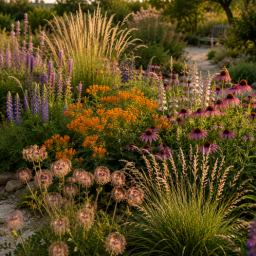
One simple planting combination can provide nearly six months of changing interest while supporting an incredible variety of wildlife.
Imagine a sunny garden bed anchored by graceful drifts of Little Bluestem and Prairie Dropseed.
Clusters of Wild Lupine bloom first each spring, followed by the brilliant orange flowers of Butterfly Weed.
As summer unfolds, Hairy Beardtongue gives way to Purple Coneflower, whose seed heads remain standing well into winter.
By autumn, the grasses have transformed into warm shades of copper and gold, catching the afternoon sunlight while birds feed among the seed heads.
No single plant dominates.
Instead, each takes its turn.
The result feels remarkably natural, because it is.
Scientists at the Xerces Society have long emphasized that planting diverse communities of native species provides far greater ecological value than isolated individual plants.
🌿 Barbara’s Garden Observation
One of my favorite moments happens when a homeowner tells me they’re frustrated with their sandy soil.
I completely understand why they feel that way.
For years, we’ve been taught that “good” gardens require rich, dark soil. But every time I visit Michigan’s dunes, dry prairies, or open oak savannas, I’m reminded that some of our state’s most beautiful landscapes grow in conditions many people would consider challenging.
Nature doesn’t see sandy soil as a problem.
It sees it as an opportunity for the right plants to shine.
Sometimes the healthiest gardens begin not by changing the soil beneath our feet, but by changing the way we see it.
Caring for Your Sandy Soil Garden
One of the greatest rewards of gardening with native plants is that the work often becomes easier over time.
The first growing season is all about helping your plants establish healthy root systems. Even drought-tolerant natives benefit from regular watering during their first year, especially during extended periods of summer heat.
Once those roots begin reaching deeper into the soil, something remarkable happens.
The plants become increasingly self-sufficient.
Instead of relying on frequent watering, many begin drawing moisture from well below the surface, just as they have in Michigan’s natural landscapes for thousands of years.
That patience is often rewarded with healthier plants, stronger blooms, and a garden that becomes more resilient with each passing season.
Mulching Sandy Soil the Right Way
Mulch is one of the simplest ways to help sandy soil hold moisture a little longer while reducing weed growth.
A light layer—about two to three inches—is usually enough.
Natural hardwood mulch or shredded leaves both work well in native gardens because they gradually improve the soil as they break down.
When applying mulch, remember one simple rule:
Keep it away from the crowns of your plants.
Pull the mulch back a few inches from the base of each perennial to allow good air circulation and reduce the risk of rot.
A little breathing room goes a long way.
Four Common Mistakes to Avoid
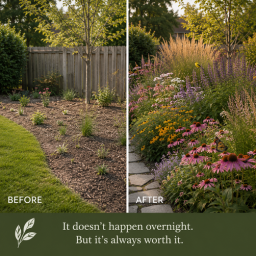
Even native plants appreciate a good start.
Here are a few of the most common mistakes I see in sandy gardens.
Watering Too Often
Frequent, shallow watering encourages shallow roots.
Instead, water deeply and less often during the establishment period. This encourages roots to grow downward where moisture remains longer.
Adding Too Much Fertilizer
It’s easy to assume sandy soil needs constant feeding.
In reality, many Michigan native plants evolved in nutrient-poor environments and actually perform best without heavy fertilization.
Too much fertilizer often produces lush foliage at the expense of flowers and can make plants weaker over time.
Planting Individual Specimens
One Butterfly Weed.
One Coneflower.
One Little Bluestem.
While each plant is beautiful on its own, native gardens become far more effective – and far more beautiful – when plants are grouped together in drifts and repeating clusters.
Nature rarely plants one of anything.
Cleaning Up Too Early
Many beneficial insects spend the winter inside hollow stems, beneath fallen leaves, or tucked among native grasses.
Waiting until spring temperatures have consistently warmed before cutting everything back helps protect these important garden partners.
Sometimes leaving the garden alone is one of the best things we can do.
Frequently Asked Questions
Will native plants spread aggressively in sandy soil?
Most Michigan native plants spread gradually rather than aggressively. Some expand into attractive clumps over time, while others gently self-seed where conditions are favorable. A little patience allows the garden to develop naturally without becoming overwhelming.
Should I improve my sandy soil before planting?
In most cases, no dramatic soil improvement is necessary.
Adding compost throughout an entire planting area can help retain moisture during establishment, but avoid creating isolated pockets of amended soil around individual plants. Native roots should be encouraged to grow naturally into the surrounding soil.
Can I grow shrubs and small trees in sandy soil?
Absolutely.
Many Michigan native shrubs and trees—including Serviceberry, New Jersey Tea, Bearberry, Eastern Red Cedar, and several oak species—are naturally adapted to sandy conditions and make excellent additions to wildlife-friendly landscapes.
Will I still need to water during drought?
Even mature native gardens appreciate occasional deep watering during unusually long periods of drought.
The difference is that established native plants generally recover much more quickly than many traditional landscape plants once rainfall returns.
Continue Growing
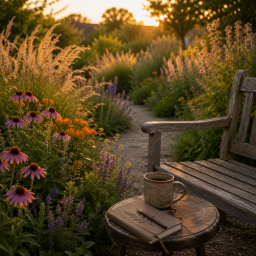
Every garden begins with the ground beneath our feet.
Some gardens begin in clay.
Others begin in rich woodland soil.
And many, especially here in Michigan, begin in sand.
Rather than seeing sandy soil as something to overcome, consider it an invitation.
An invitation to grow plants that have called Michigan home for thousands of years.
An invitation to welcome butterflies, native bees, songbirds, and countless other forms of wildlife into your landscape.
An invitation to spend a little less time fighting nature, and a little more time enjoying it.
Some of Michigan’s most extraordinary landscapes began with sand.
Yours can too.
Happy gardening,
Barbara 🌿
Michigan Garden Design
Coming Next:
Common Native Garden Mistakes (and How to Avoid Them)
Even experienced gardeners occasionally work against nature without realizing it. In our next article, we’ll look at a few simple changes that can make your native garden healthier, more resilient, and even easier to care for.