
How to Plan Your Native Garden During Winter
Winter Is When a Thoughtful Garden Begins
There is something wonderfully different about looking at a Michigan garden in winter.
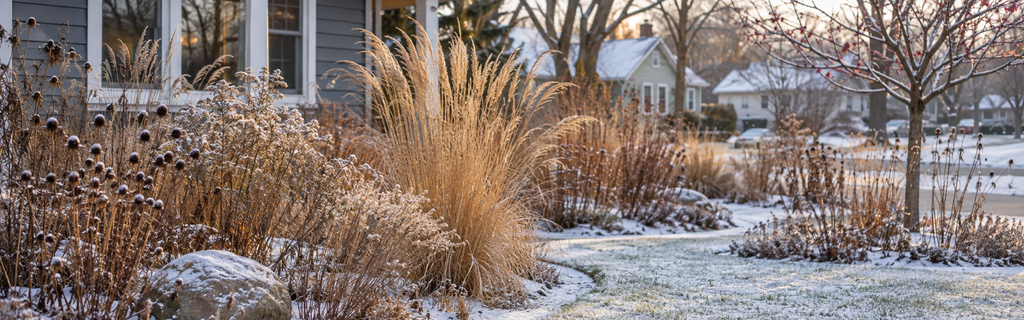
The colorful flowers have faded, the leaves have fallen, and the familiar fullness of summer has given way to a quieter landscape. What remains are the shapes of trees and shrubs, the dried stems of native perennials, and perhaps a few ornamental grasses moving gently in the winter wind.
At first glance, it may seem there is very little happening in the garden.
But winter offers something every gardener can appreciate: the opportunity to see the garden more clearly, without the distractions of the growing season.
And that makes it one of the most valuable times to begin planning.
Whether you’re dreaming of your first native garden, expanding an established planting, or rethinking an area that never quite worked as you imagined, winter gives you time to make thoughtful decisions before spring arrives.
The best part? You don’t need to dig a single hole to begin.
See Your Garden Without Its Summer Disguise
During the growing season, plants have a wonderful way of filling spaces, softening edges, and hiding areas that might benefit from a little attention.
Winter removes much of that visual cover.
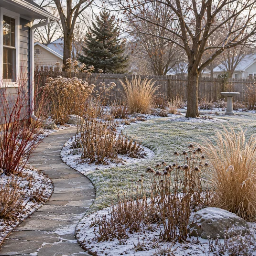
Suddenly, the relationship between your garden beds, walkways, trees, and open spaces becomes easier to recognize. You may notice that one planting bed feels disconnected from the rest of the landscape or that an area near the patio could use additional structure.
Perhaps a garden that looked beautiful in July seems rather empty by December.
These observations can become valuable design clues.
Rather than looking only at where you could add more flowers, consider how your garden functions as a whole. Where would a native shrub provide year-round interest? Could a grouping of grasses create a softer transition between garden beds? Is there an opportunity to make an existing planting feel more intentional?
If you’ve been working toward a garden that requires less attention, our article, Simple Garden Tips for Michigan Gardeners That Actually Work, offers additional ideas for making thoughtful decisions that support the garden over time.
Winter planning isn’t necessarily about adding more plants. It’s about understanding what your garden needs.
Let Michigan’s Winter Conditions Inform Your Plans
Michigan gardens experience a remarkable range of conditions, and winter can reveal characteristics that are easy to overlook during warmer months.
Snow may accumulate in one corner while another area remains exposed to winter winds. Melting snow may reveal where water collects or drains toward a low spot. Road salt and snow piled along driveways can also influence which plants will be appropriate for those locations.
These details matter.
A garden near Lake Michigan may experience different winter conditions than one farther inland. Northern Michigan and the Upper Peninsula have their own considerations, just as urban and suburban properties may contain altered soils, drainage patterns, and sheltered micro-climates.
Winter observations are useful, but they are only part of the picture. Sunlight patterns change throughout the year, and frozen or snow-covered ground cannot tell you everything about summer soil moisture.
The goal is to combine what you notice now with what you’ve learned during other seasons.
For gardeners dealing with areas that stay damp or collect runoff, our guide to The Best Native Michigan Plants for Wet Areas offers a helpful starting point for understanding those conditions.
The more you understand your particular property, the easier it becomes to choose plants that belong there.
Plan for the Garden You Want to Experience
Before opening a plant catalog or making a shopping list, consider what you would like your garden to become.
Perhaps you want more butterflies and native bees visiting throughout the growing season. Maybe you’d love to watch songbirds from your kitchen window or enjoy a peaceful seating area surrounded by native flowers.
You might simply want a beautiful landscape that feels more natural and requires less maintenance once established.
These are all worthwhile goals, and they don’t require an enormous property.
A small garden bed can become a meaningful part of the landscape when plants are selected for the space, growing conditions, and purpose.
Winter also gives you permission to think beyond the coming spring. Imagine how the garden could look in midsummer, what will remain standing in autumn, and whether its structure will continue to offer interest once winter returns.
A thoughtfully designed native garden is not meant to look exactly the same throughout the year.
Its beauty comes, in part, from the way it changes.
Turn Your Winter Observations Into a Garden Plan
Once you’ve had an opportunity to observe your garden during winter, the next step is turning those observations into a plan you can begin implementing when the growing season returns.
You don’t need professional design software, complicated drawings, or an extensive knowledge of native plants.
A notebook, a few photographs, and a willingness to look at your landscape differently are enough to get started.
The goal isn’t to plan every inch of your property. It’s to create a thoughtful foundation that helps you make better decisions about what to plant, where to plant it, and how the garden will develop over time.
1. Start With a Simple Garden Sketch
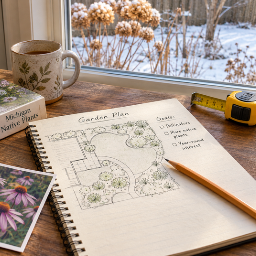
Begin by drawing a basic outline of the area you’d like to improve.
Include permanent features such as your home, driveway, sidewalks, existing trees, patios, and garden beds. Exact measurements can come later, although approximate dimensions will help you understand how much planting space you have.
Next, identify areas that might benefit from a change.
Perhaps there’s an open space between two garden beds that could connect them visually. Maybe you have a foundation planting that needs additional interest or an unused corner that could become a small wildlife habitat.
Don’t worry about choosing plants yet.
Instead, consider how you want the space to function and how the different areas of your landscape might work together.
A good garden plan begins with the space itself, not a shopping list.
2. Make Notes About Sunlight, Soil, and Moisture
One of the most important decisions in native garden design is matching plants to the conditions where they will grow.
Start by recording what you already know about your property.
Does one area receive strong afternoon sun during summer? Is another shaded by mature trees? Does water collect after heavy rainfall, or does the soil dry quickly?
Winter can provide additional clues, but remember that conditions change throughout the year.
For example, an area beneath deciduous trees may receive considerable sunlight in early spring before the leaves emerge, then become much shadier during summer.
Likewise, melting snow may reveal drainage patterns, but it doesn’t necessarily tell you how moist the soil will remain in July.
If you’re uncertain about your soil, consider arranging a soil test through Michigan State University Extension’s Home Soil Test before making decisions about amendments.
Our article, How to Choose Native Plants for Sun, Soil, and Moisture, also explores why understanding these conditions is such an important part of successful native garden design.
3. Choose Your Garden’s Main Purpose
A native garden can accomplish several things, but identifying one or two primary goals will make your planning much easier.
Perhaps your priority is providing flowers for pollinators throughout the growing season. You might want to create additional shelter and natural food sources for birds, reduce the amount of lawn you maintain, or simply enjoy more seasonal color.
Once you know what matters most, plant selection becomes more intentional.
For example, a garden designed primarily for pollinators might emphasize groups of flowering native perennials with overlapping bloom periods. A garden intended to provide year-round wildlife interest could include native grasses, shrubs, seed-producing flowers, and areas where stems and leaf litter remain undisturbed.
If creating a welcoming space for wildlife is among your goals, our article, How to Create a Backyard Habitat with Native Plants, offers additional ideas for bringing those elements together.
You don’t need to accomplish everything in the first year.
A well-designed garden can grow gradually, with each new planting contributing to your larger vision.
4. Think in Layers, Not Individual Plants
One of the easiest ways to create a garden that feels natural and thoughtfully designed is to consider how plants will relate to one another.
Instead of scattering individual plants throughout a bed, imagine groups that create structure, rhythm, and seasonal interest.
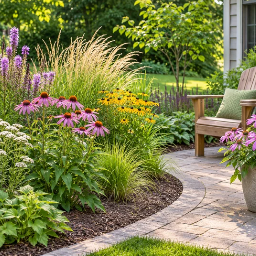
Depending on your available space, you might combine lower-growing flowers near a walkway, medium-height perennials through the center, and taller plants or native shrubs toward the back.
Native grasses can add texture and movement, while plants with different bloom periods help the garden remain interesting as the seasons change.
Remember to consider mature plant size rather than how large a plant looks when you purchase it.
Our article, How to Let Your Native Garden Fill In Naturally, explores why giving plants room to develop can be more beneficial than trying to create an instantly full garden.
Winter is an especially good time to visualize these layers because the underlying structure of your landscape is easier to see.
5. Create a Realistic Spring Planting Priority List
Before you finish your winter planning, identify just one or two areas you would like to address first.
Perhaps your priority is establishing a small pollinator bed, adding native plants along a walkway, or replacing an area of lawn with a more diverse planting.
Write down what needs to happen before planting begins. This might include measuring the space, confirming sunlight conditions, researching suitable plants, or preparing an existing bed.
You can also begin exploring native plant nurseries and reviewing which plants may be available when spring arrives.
However, resist the temptation to purchase plants simply because they look beautiful in a photograph.
The right plant for your garden should suit your growing conditions, available space, and overall design goals.
Thoughtful planning now can prevent unnecessary purchases, misplaced plants, and avoidable maintenance later.
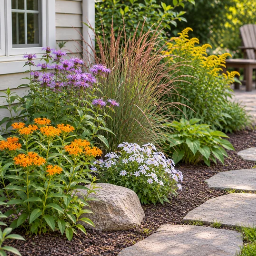
Give Your Garden Plan Room to Grow
One of the most valuable things you can do during winter planning is recognize that your garden doesn’t need to be completed in a single season.
In fact, some of the most inviting native gardens develop gradually, as plants mature, conditions become better understood, and gardeners discover what works particularly well in their landscape.
Your winter plan should provide direction, not become a rigid set of instructions.
As spring approaches, you may discover that an area receives more moisture than expected, an existing native plant has begun spreading into a desirable space, or a planned planting bed would benefit from a slightly different shape.
These aren’t necessarily setbacks. They’re opportunities to make your design more responsive to the garden itself.
A thoughtful garden plan allows for adjustments while keeping your overall vision intact.
Avoid the Temptation to Do Everything at Once
After spending the winter imagining possibilities, it’s understandable to feel enthusiastic when gardening season finally arrives.
But purchasing too many plants, expanding several beds simultaneously, or making major changes without understanding the conditions can create unnecessary work.
Instead, return to the priorities you identified during winter.
Choose a manageable starting area, confirm its growing conditions, and select plants that will have enough room to reach their mature size.
If your plan involves replacing lawn or removing existing vegetation, allow time for proper site preparation rather than rushing directly into planting.
Remember that native gardens evolve. A newly planted bed may look somewhat sparse during its first growing season, but that doesn’t mean every open space needs to be filled immediately.
Patience is part of the design process.
And sometimes, the most valuable decision is knowing when to let the garden develop before making another change.
Barbara’s Observation
I’ve always appreciated how winter changes the way we see a garden.
When the flowers are gone and the landscape becomes quieter, it’s easier to notice the relationships between plants, spaces, and the surrounding environment.
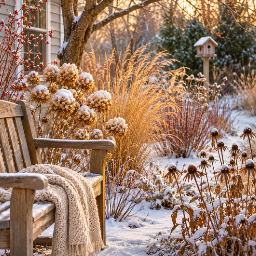
What appeared to be an empty corner in summer might reveal an opportunity for a native shrub. A stand of dried grasses may demonstrate how beautiful a garden can remain long after flowering has ended.
Winter reminds me that garden design isn’t only about imagining what we want to add.
It’s also about learning to recognize what’s already there.
And sometimes, the best garden plans begin with simply paying attention.
Your Garden Journal: Begin Planning Before Spring
Winter is a wonderful time to begin recording your observations, ideas, and hopes for the coming growing season.
Consider photographing an area you’d like to improve, sketching a possible planting bed, or making notes about where snow collects and how sunlight moves across your property.
These small observations can become valuable references when spring arrives.
The Michigan Native Garden Journal offers a thoughtful place to begin documenting your garden’s changing seasons and the decisions that shape its future.
🌿 COMPLIMENTARY FIRST MONTH 🌿
The Michigan Native Garden Journal
Observe • Discover • Wonder • Grow
Keep Exploring
Continue developing your native garden plans with these related Michigan Garden Design articles:
- How to Design a Low-Maintenance Native Garden — Explore thoughtful design choices that can make your garden easier to care for as it matures.
- How to Choose Native Plants for Sun, Soil, and Moisture — Understand how growing conditions influence successful plant selection.
- How to Create a Backyard Habitat with Native Plants — Discover ways to include wildlife habitat in your overall garden design.
- How to Let Your Native Garden Fill In Naturally — Learn why patience and appropriate spacing are important parts of establishing a native garden.
For additional Michigan-specific gardening information, visit Michigan State University Extension’s Home Gardening resources.
What’s Next?
Choose one area of your garden that you’d like to improve next year.
On a mild winter day, take a photograph from a location you frequently enjoy, such as a kitchen window, patio, or walkway.
Then ask yourself three simple questions:
- What do I appreciate about this space already?
- What would make it more beautiful, functional, or welcoming to wildlife?
- What is one realistic improvement I could make when spring arrives?
Write down your thoughts and keep the photograph with your garden notes.
You don’t need a complete landscape design to begin. Sometimes, one well-considered change becomes the foundation for something much larger.
Coming Next:
The Best Compact Native Plants for Small Michigan Gardens
A beautiful native garden doesn’t require acres of land or enormous planting beds.
In our next Michigan Garden article, The Best Compact Native Plants for Small Michigan Gardens, we’ll explore native plants that bring seasonal beauty and ecological value to smaller spaces.
Whether you’re working with a narrow foundation bed, a modest backyard, or a garden tucked beside a patio, you’ll discover how choosing plants with the right growth habits and mature sizes can help you create a landscape that feels full of life without feeling overcrowded.
Because even the smallest garden can make room for nature.