

Where Do Butterflies Go in Winter?
There is something almost magical about watching a butterfly move through a summer garden.
One moment, it rests on a flower, its wings opening and closing in the sunlight. The next, it floats effortlessly toward another bloom, seemingly without a destination or a care in the world.
Throughout Michigan’s warmer months, butterflies bring movement and color to our gardens. They visit our native flowers, settle on sun-warmed leaves, and occasionally pause long enough for us to appreciate the extraordinary details of their wings.
And then, as autumn settles in, they begin to disappear.
By the time frost has touched the garden and the last flowers have faded, the butterflies we enjoyed all summer are nowhere to be seen.
Where have they gone?
We often think of butterflies as creatures of sunshine and warmth, so it is difficult to imagine them surviving a Michigan winter. Yet many do, although their winter lives look remarkably different from the ones we recognize.
Some travel extraordinary distances. Others remain much closer than we might imagine, tucked away in places we walk past without a second thought.
The surprising truth is that a garden without visible butterflies may still be sheltering the next generation.
Not Every Butterfly Leaves Michigan
When we think about butterflies and winter, the monarch often comes to mind.
Its remarkable migration has captured our attention for generations. Monarchs from eastern North America, including Michigan, travel south to overwintering sites in the mountains of central Mexico.
But the monarch’s journey is only one of nature’s winter survival stories.
Many other butterflies spend the colder months much closer to home.
Some overwinter as eggs, waiting for warmer conditions before development continues. Others survive as caterpillars, sheltered among leaves, vegetation, or other protected places.
Still others spend winter in the chrysalis stage, suspended in a remarkable period of development until conditions allow them to emerge.
And a few butterflies actually survive the winter as adults.
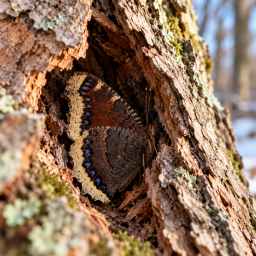
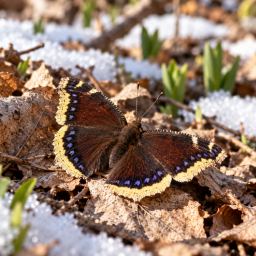
The mourning cloak, a butterfly found in Michigan, is one such example. Rather than migrating south, it can shelter in protected places such as beneath loose tree bark or within crevices, emerging when temperatures become favorable.
Imagine seeing a butterfly on an unexpectedly warm early spring day, before most garden flowers have even begun to bloom.
It may not be a new arrival at all.
It may be a survivor of winter, returning to the sunlight after months spent hidden from view.
Winter Is Not Always a Time of Absence
One of the most interesting things about a winter garden is how much life remains present even when we cannot see it.
A fallen leaf may be more than a fallen leaf.
A dried plant stem may be more than something waiting to be removed.
The sheltered spaces beneath garden vegetation, around trees, and within undisturbed areas can provide important overwintering habitat for insects, including certain butterflies and moths.
This is one reason I find the idea of a perfectly cleaned-up garden increasingly difficult to reconcile with the natural world.
What looks untidy to us may serve a purpose we have not yet learned to recognize.
In our Michigan Garden article, How to Create Spaces Where Wildlife Feels Safe, we explore the importance of shelter and protected spaces. Winter brings another dimension to that conversation: sometimes the most valuable shelter is something we might otherwise remove.
Of course, not every leaf shelters a butterfly, and not every standing stem contains an overwintering insect. Different species have very different needs.
But understanding that these possibilities exist changes how we look at the garden.
Instead of seeing winter as the season when everything has disappeared, we begin to recognize it as a season when much of nature has simply become less visible.
The Remarkable Art of Waiting
Butterflies cannot maintain their body temperatures the way birds and mammals do. Their activity and development are closely tied to environmental conditions.
For species that remain in Michigan through winter, survival often depends on entering a period of greatly reduced activity or suspended development.
This seasonal strategy is called diapause.
During diapause, development or reproductive activity is paused, helping an insect endure a season when conditions are unfavorable.
Depending on the species, this waiting period may occur in the egg, caterpillar, chrysalis, or adult stage.
It is a reminder that nature does not always respond to difficulty by moving somewhere else.
Sometimes survival means becoming still.
Sometimes it means waiting beneath the very plants that supported life during the warmer months.
And sometimes the garden we believe has finished its work for the year is quietly protecting what will emerge in spring.
A Winter World Hidden in Plain Sight
Imagine walking through your Michigan garden on a cold November morning.
The flowers have faded, the leaves have gathered beneath the trees, and the once-busy garden has settled into silence.
It might seem that the butterflies have left nothing behind.
But somewhere among those fallen leaves, dried stems, and sheltered corners, a butterfly may be waiting for spring.
The challenge is that we rarely know exactly where.
Unlike birds, which may return to a feeder or shelter in familiar places, overwintering butterflies can be remarkably difficult to find. Their survival often depends on remaining unnoticed, protected from predators and the harshest winter conditions.
Once we understand where they might be hiding, even the quietest corners of the garden begin to take on new meaning.
Beneath the Fallen Leaves
One of the most valuable places to begin looking is beneath our feet.
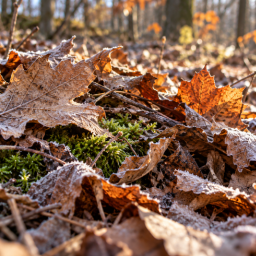
Fallen leaves create a protective layer over the soil, helping moderate temperature changes and providing shelter for many small creatures.
For certain butterflies, this layer becomes an essential winter refuge.
The great spangled fritillary, a butterfly found in Michigan, spends winter as a tiny caterpillar. After hatching, the young caterpillar shelters among fallen leaves, waiting until spring when its violet host plants begin growing again.
Consider how easily that small life could be overlooked.
A gardener might rake away the leaves without ever realizing what was beneath them.
This is one reason the Xerces Society encourages gardeners to leave fallen leaves in places where they can provide winter habitat.
It does not mean every leaf must remain exactly where it falls. Leaves covering a walkway or accumulating heavily on a lawn may need attention.
But allowing them to remain beneath trees, around shrubs, and within garden beds preserves some of the natural protection insects depend upon.
Sometimes the simplest way to support wildlife is to leave something where nature placed it.
Among Stems, Twigs, and Branches
Not every butterfly spends winter near the ground.
Some find protection attached to woody stems, branches, tree trunks, and other sheltered surfaces.
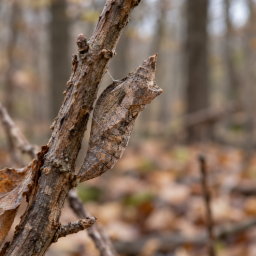
The eastern black swallowtail, for example, overwinters as a chrysalis. Its appearance can be remarkably similar to a dried leaf or a small piece of weathered plant material.
A chrysalis may be attached to a stem or other firm surface, blending so successfully into its surroundings that we walk past without noticing it.
This makes the familiar autumn practice of cutting everything back worth reconsidering.
A dried stem may appear lifeless, but the vegetation and woody material we remove can sometimes support overwintering insects.
In our article, How to Let Your Native Garden Fill in Naturally, we explored the value of allowing a garden to develop without constantly interfering.
The same patience serves us well in winter.
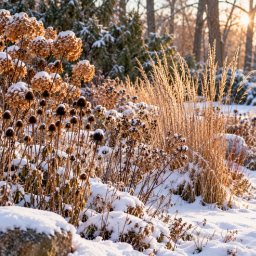
Leaving selected perennial stems standing, retaining small areas of natural vegetation, and avoiding unnecessary disturbance can help preserve winter habitat.
We do not need to identify every chrysalis to recognize the value of leaving potential shelter undisturbed.
Behind Bark and Within Sheltered Spaces
Perhaps the most surprising winter refuge belongs to butterflies that remain alive as adults.
The mourning cloak is one of Michigan’s remarkable examples.
With its deep brown wings edged in pale yellow, this butterfly can survive the winter tucked beneath loose bark, inside protected crevices, or among sheltered woody debris.
It may emerge during an unexpectedly mild late-winter or early-spring day, sometimes long before we would expect to see a butterfly.
What a wonderful discovery that would be.
The butterfly we encounter in early spring may have been living nearby all winter, hidden within a familiar tree or another protected space.
It reminds us that mature trees, fallen branches, and small undisturbed areas can provide more than visual structure in the landscape.
They can be places of refuge.
A Gentler Approach to Winter Garden Care
Knowing that butterflies overwinter in different stages changes how we might approach seasonal garden maintenance.
Instead of thinking about everything that needs to be removed, we can begin asking what might be worth keeping.
A few thoughtful choices can make a difference:
- Leave fallen leaves in garden beds where they can remain relatively undisturbed and provide protective cover.
- Keep selected perennial stems standing through winter and into spring, particularly in areas where they are not creating problems.
- Preserve sheltered corners with branches, natural debris, or established vegetation when space allows.
- Delay major spring cleanup rather than assuming the first warm day means every overwintering insect has emerged.
- Avoid unnecessary disturbance to chrysalises, leaf litter, and other places where insects may be resting.
These choices do not require a large property or a perfectly naturalized landscape.
Even a modest garden can include a few areas where nature is allowed to remain relatively undisturbed.
And for gardeners who appreciate a more orderly appearance, these protected areas can be incorporated intentionally, perhaps beneath shrubs, along a woodland edge, or toward the back of a planting bed.
The goal is not to stop caring for our gardens.
It is to recognize that caring for a garden sometimes means knowing when to leave things alone.
The First Warm Days Can Be Deceiving
There is a particular kind of excitement that comes with the first warm days of a Michigan spring.
The snow begins to disappear, the sunlight feels stronger, and suddenly the garden seems to be calling us outdoors.
We notice the leaves that collected over winter, the dried stems still standing, and all the little tasks we have been waiting to begin.
But while we are ready to welcome spring, some of the butterflies sheltering in our gardens may not be ready to emerge.
Different butterfly species respond to seasonal changes in different ways. Some adults may become active during an early warm spell, while others remain in their overwintering stages until conditions are suitable for their development.
According to Michigan State University Extension, pollinators can emerge at very different times throughout spring and even into summer.
That makes choosing one perfectly safe date for garden cleanup difficult.
Perhaps a better approach is to begin gently.
Instead of clearing an entire garden at once, we can work in smaller areas, examine vegetation before removing it, and allow leaves and stems to remain where they are not causing problems.
When stems must be cut, placing them in a sheltered, undisturbed location may allow some insects inside to complete their development.
And where space permits, leaving a few natural areas undisturbed throughout the year offers an even simpler solution.
A Garden That Welcomes Their Return
Supporting butterflies through winter is not only about what we leave behind in autumn.
It is also about the garden waiting for them when spring arrives.
Butterflies need appropriate host plants for their caterpillars, nectar sources for adults, and places that provide protection throughout their life cycles.
A garden containing a thoughtful variety of Michigan native plants can help provide these resources across the changing seasons.
The same garden that welcomes butterflies in summer may protect some of them through winter and offer food and shelter again when warmer days return.
What a beautiful way to think about a garden.
Not as something that begins each spring and ends each autumn, but as a living place where one season quietly prepares for the next.
And perhaps the greatest lesson is this:
Just because we cannot see life in the winter garden does not mean it has gone away.
Barbara’s Observation
I’ve often thought about how quickly our attention changes once the garden’s flowers have faded.
During summer, we notice every butterfly that passes through. We watch where it lands, which flowers it visits, and whether it might return.
But when winter arrives, we tend to stop looking.
Learning how butterflies survive the colder months reminds me that some of the most important things happening in a garden are the things we never see.
A butterfly resting beneath loose bark. A tiny caterpillar sheltered under leaves. A chrysalis waiting through months of cold.
It changes the way I think about those quiet winter spaces.
Perhaps one of the most meaningful things we can offer wildlife is not another garden improvement, but simply a place where it can remain undisturbed.
Continue the Wonder with Your Garden Journal
Winter offers a wonderful opportunity to notice the places in your garden that might otherwise escape your attention.
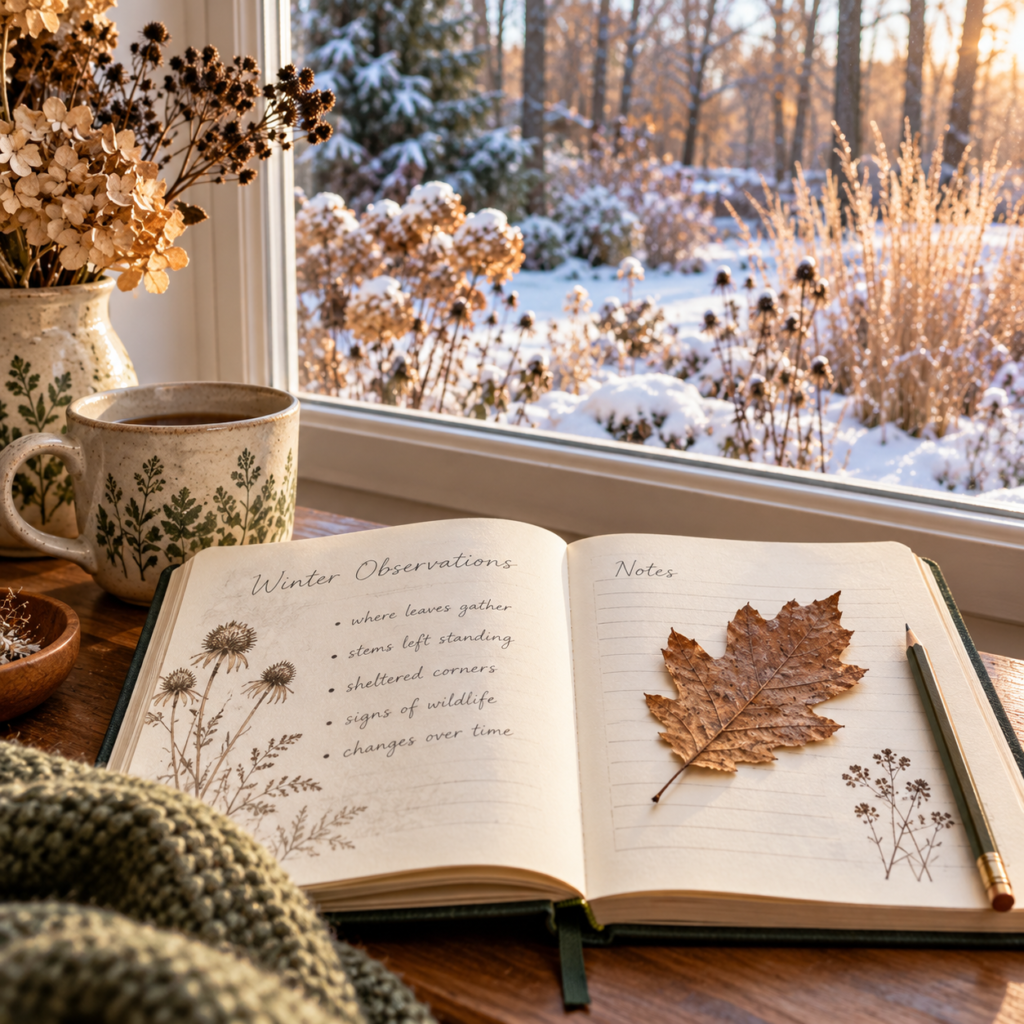
Where do leaves naturally gather? Which stems remain standing? Where are the sheltered corners that receive little disturbance?
These are lovely observations to record in The Michigan Native Garden Journal.
You might even photograph one small garden area during winter and revisit that same spot when butterflies begin appearing in spring.
Over time, these simple observations help us understand that our gardens are connected across every season.
COMPLIMENTARY FIRST MONTH
The Michigan Native Garden Journal
Observe • Discover • Wonder • Grow
↓ GET YOUR COPY ↓
Visit the Michigan Garden Design Resources page
Keep Exploring
If you’re curious about how your garden can support wildlife throughout the changing seasons, these related Michigan Garden Design articles offer more opportunities to discover what nature needs.
- How to Create Spaces Where Wildlife Feels Safe — Discover how shelter, vegetation, and thoughtful garden design help wildlife feel protected.
- Learning How to Trust Your Native Garden — Explore why allowing natural processes to unfold can sometimes be more valuable than constant intervention.
- How to Let Your Native Garden Fill in Naturally — Learn how giving plants and natural processes room to develop can create a more connected garden.
For additional guidance, the Xerces Society’s Leave the Leaves resource offers helpful information about protecting overwintering insects.
What’s Next
The next time you walk through your garden on a winter day, look for one small place you might leave undisturbed.
Perhaps it is a gathering of leaves beneath a shrub, a few standing perennial stems, or a sheltered corner beside a tree.
You don’t need to know whether a butterfly is actually resting there.
Simply recognizing that the space might have value is a wonderful beginning.
And when spring returns, take another look.
You may discover that the quietest parts of your winter garden have some of the most interesting stories to tell.
Coming Next in Nature Notes
Nature’s Winter Pantry: Feeding Birds Naturally
Butterflies aren’t the only creatures whose survival stories continue long after our gardens appear to have gone to sleep.
For Michigan’s winter birds, dried seed heads, berries, and native vegetation can become valuable sources of nourishment when food is harder to find.
In our next Nature Notes article, we’ll explore how the garden becomes a natural winter pantry. and why some of the plants we leave standing may offer far more than we realize.