
Why You Should Leave Fall Leaves in Your Garden
A Moment Before We Begin
There is a familiar sound that arrives in Michigan neighborhoods every autumn. Leaf blowers begin humming, rakes scrape across lawns, and bags of fallen leaves appear along the curb.
For generations, this has been part of our seasonal routine. The trees shed their leaves, and we clean them up. A tidy yard feels like a garden properly prepared for winter.
But what if those fallen leaves aren’t something the garden needs us to remove?
What if they are exactly what the garden has been waiting for?
Beneath the gold of a sugar maple leaf or the deep brown of an oak, something remarkable is happening. The garden is preparing for another season of life, even as the growing season comes to an end.
And much of that preparation depends on what we choose to leave behind.
The Garden Doesn’t See Fallen Leaves as Waste
Walk through a Michigan woodland in October, and you’ll notice something interesting.
No one is raking beneath the trees.
Leaves settle across the forest floor, gathering around fallen branches, collecting between plants, and slowly becoming part of the earth beneath them.
Nature has been managing this process long before we began tending gardens.
As leaves break down, fungi, bacteria, and other decomposers help return nutrients to the soil. Earthworms and other soil organisms participate in this process, gradually transforming fallen plant material into organic matter.
But decomposition is only part of the story.
A layer of fallen leaves also helps protect the soil from temperature extremes, reduces erosion, and provides a sheltered environment for countless small organisms.
What appears to be the end of one season is actually the beginning of another important process.
This is one reason I find the ideas behind How to Prepare Michigan Native Plants for Winter so valuable. Preparing a garden for winter doesn’t always mean removing everything that has finished growing.
Sometimes preparation means recognizing what should remain.
A Hidden World Beneath the Leaves
The wildlife we rarely notice
When we think about wildlife in our gardens, we often picture the obvious visitors: butterflies moving between flowers, bees gathering pollen, or birds searching for seeds.
But there is another community living much closer to the ground.
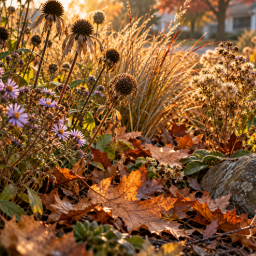
Some moths and butterflies spend part of their life cycles sheltered among fallen leaves. Depending on the species, they may overwinter as eggs, caterpillars, pupae, or adults.
Other small creatures, including spiders, beetles, and various beneficial insects, use leaf litter and the spaces beneath it for protection.
Not every insect spends winter in fallen leaves, of course. Some shelter in stems, soil, wood, or other protected places.
Still, leaf litter is an important part of the habitat that allows many of these creatures to survive seasonal changes.
According to the Xerces Society, protecting overwintering habitat is an important part of supporting pollinators and other beneficial insects.
And here’s something worth considering.
When we remove every fallen leaf from our gardens, we may also be removing shelter for creatures we spent the summer trying to attract.
The butterfly that delighted us in July may depend on a very different kind of habitat during the colder months.
That’s one of the fascinating things about gardening for wildlife. What looks beautiful to us in summer may serve an entirely different purpose in winter.
Learning to Recognize a Different Kind of Beauty
There is something comforting about a freshly cleaned garden. The edges are visible, the beds look orderly, and everything seems ready for the season ahead.
But perhaps our understanding of a beautiful autumn garden can become a little more generous.
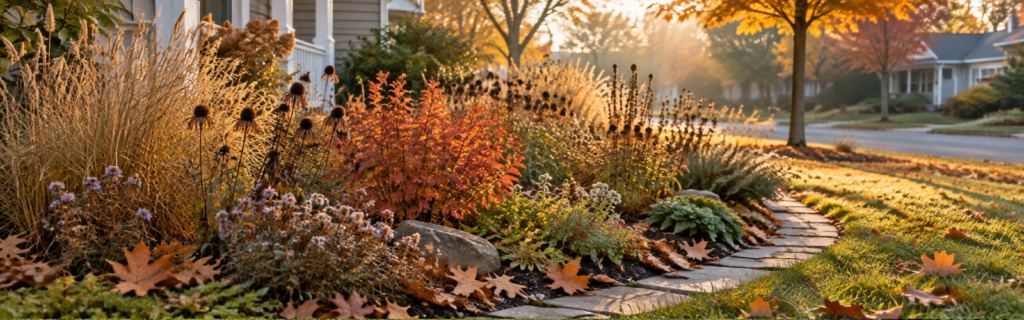
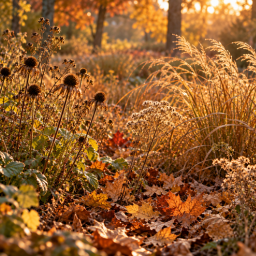
Imagine fallen oak leaves resting beneath a native shrub. A few golden leaves have settled among the stems of little bluestem. Seed heads stand above the soft, uneven covering of the garden floor.
Nothing looks abandoned.
Instead, the garden feels settled, protected, and connected to the season.
This is part of what we explored in Learning How to Trust Your Native Garden: understanding that a healthy garden doesn’t always follow our expectations of how a maintained landscape should look.
Leaving leaves doesn’t mean surrendering the garden to disorder.
It means learning to distinguish between what genuinely needs our attention and what nature is already managing beautifully.
And for those of us who have spent years believing that a spotless garden is a well-cared-for garden, that can be a surprisingly meaningful change in perspective.

A Small Change With a Larger Purpose
Perhaps the most encouraging part of leaving fall leaves is that supporting nature doesn’t always require adding something new.
We don’t necessarily need another garden bed, another plant, or another weekend project.
Sometimes we can make a difference simply by doing less.
Of course, that doesn’t mean every leaf must remain exactly where it falls. Lawns, walkways, drainage areas, and delicate plantings may still need attention.
The opportunity is to become more thoughtful about where leaves are removed, where they are relocated, and where they can remain undisturbed.
A garden can be both welcoming to people and supportive of wildlife.
And when we begin looking at fallen leaves as part of the garden rather than something separate from it, autumn starts to feel a little different.
Instead of seeing only the work that needs to be done, we begin noticing the life that is preparing to continue.
A More Thoughtful Approach to Fall Cleanup
Once we begin recognizing fallen leaves as part of the garden’s natural cycle, a practical question follows.
What do we actually do with them?
For Michigan homeowners accustomed to clearing every leaf before winter, the idea of leaving them behind can feel unfamiliar. Perhaps even a little uncomfortable.
But supporting wildlife doesn’t require allowing leaves to collect everywhere.
The goal is to make thoughtful choices about where they can do the most good, while keeping the garden attractive, accessible, and healthy.
And surprisingly, some of the best places to leave them are already part of our landscapes.
Let Your Garden Beds Become Winter Shelter
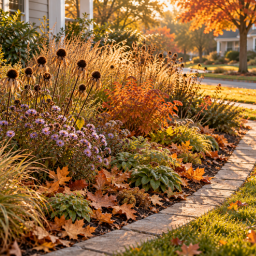
One of the simplest changes is to allow fallen leaves to settle naturally among established native plants.
Beneath shrubs, between perennial stems, and around the outer edges of garden beds, leaves can create the protective covering that occurs naturally in woodlands.
They also provide benefits that gardeners often purchase mulch to achieve.
A modest layer of leaves can help retain soil moisture, moderate soil temperature changes, and gradually contribute organic matter as decomposition takes place.
For a garden filled with native plants, this can be an especially natural approach.
Picture the copper-colored leaves of an oak resting beneath a stand of woodland plants, or golden maple leaves gathering around the base of native shrubs.
Rather than looking messy, these areas can become beautiful seasonal transitions.
The Xerces Society’s Leave the Leaves guidance recommends allowing leaves to remain in garden beds or moving them into suitable areas where they can provide winter habitat.
The important distinction is to avoid burying small, low-growing plants beneath heavy, compacted piles. A natural covering is different from a dense mound that blocks air and light.
What About All Those Leaves on the Lawn?
For many Michigan homeowners, this is where the real challenge begins.
A few scattered leaves across the grass are one thing. A thick layer of wet maple leaves covering the entire lawn is quite another.
Dense leaf accumulation can smother turfgrass, particularly when leaves become matted after autumn rains.
Fortunately, there is a middle ground.
Leaves that collect heavily on the lawn can be gently raked into nearby garden beds, beneath shrubs, or into a designated habitat area.
This is especially useful when you have mature trees producing more leaves than the lawn can comfortably accommodate.
You may have heard recommendations to run over leaves with a lawn mower, chopping them into smaller pieces that break down more quickly.
While this can benefit lawn management, it presents a different consideration for wildlife.
Whole leaves provide better shelter, and shredding may harm insects or eggs already present among them. For wildlife habitat, gently relocating intact leaves is the better choice.
It’s a small distinction, but one worth understanding.
Give Fallen Leaves a Place to Belong
A garden doesn’t have to look wild to function naturally.
Sometimes the secret is simply deciding where a little untidiness belongs.
Consider the sheltered areas beneath established trees, the back of a perennial border, or the space between shrubs where leaves naturally gather.
These locations can become quiet winter refuges without changing the overall appearance of the landscape.
Meanwhile, walkways, entrances, drainage areas, and frequently used lawn spaces can remain clear.
Defined garden edges can also help. A neat border or maintained pathway provides a visual contrast to the softer, more natural textures inside the planting.
In this way, the garden still communicates care and intention.
It’s a principle that fits beautifully with creating a landscape where wildlife feels welcome: the garden doesn’t need to look untouched to offer meaningful habitat.
Resist the Urge to Start Over in Spring
There is one more important consideration.
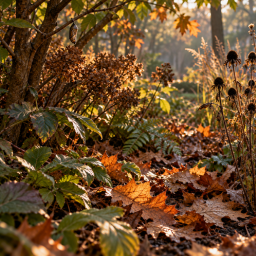
Leaving leaves through winter is helpful, but removing them too early in spring can undo some of that protection.
Michigan’s first warm days are not necessarily a signal that every overwintering insect has emerged.
Some remain sheltered well into spring, even after the earliest flowers begin blooming.
Whenever practical, allow leaves to remain and gradually decompose where they are.
If cleanup is necessary, wait until later in spring and disturb established habitat areas as little as possible. There is no single safe calendar date for every insect or every Michigan garden.
After all, the purpose isn’t merely to protect wildlife during the coldest months.
It’s to give those small lives an opportunity to continue when warmer weather returns.
Sometimes the Most Helpful Thing We Can Do Is Less
Autumn has a way of making us feel that everything must be finished before winter arrives.
The garden beds should be cleaned, the leaves gathered, the tools put away, and the landscape returned to some version of order.
But nature doesn’t approach the changing seasons with quite the same urgency.
In a woodland, fallen leaves remain where the wind carries them. Plants settle into dormancy. Small creatures find shelter, and the quiet work of decomposition continues beneath the surface.
Nothing is being wasted.
Perhaps that’s one of the most meaningful lessons an autumn garden can teach us.
Caring for a garden doesn’t always require doing more. Sometimes it requires understanding which processes are already taking place and allowing them to continue.
That doesn’t mean abandoning the garden or ignoring genuine maintenance needs.
It means recognizing that a garden can be cared for without being completely cleaned up.
And when we begin making that distinction, we create room for a different relationship with the natural world.
One built less around controlling every seasonal change and more around understanding why those changes matter.
Barbara’s Observation
I’ve been thinking about how much our ideas of a beautiful garden are shaped by what we’ve always been taught to do.
For years, autumn cleanup seemed like the natural conclusion to a growing season. The leaves came down, and our job was to make them disappear.
But the more I learn about the relationships between plants, soil, and wildlife, the more I realize that a garden doesn’t stop being useful simply because its flowers have faded.
There is life in the things we once considered finished.
I find something deeply reassuring about that.
A layer of fallen leaves may not attract the same attention as a garden filled with summer flowers, but it has a beauty of its own.
It’s a reminder that not everything valuable in a garden needs to be visible.
And perhaps autumn is inviting us to appreciate what remains, rather than concentrating so much on what has fallen away.
Continue the Discovery With Your Michigan Native Garden Journal
Before the season changes completely, take a moment to notice where leaves are naturally collecting in your garden.
Are they gathering beneath shrubs? Along the edges of a planting bed? Around the stems of native perennials?
Consider photographing one of these areas and recording what you observe.
When spring arrives, return to that same place. Notice how the leaves have changed, what plants are emerging, and whether you discover any signs of wildlife activity.
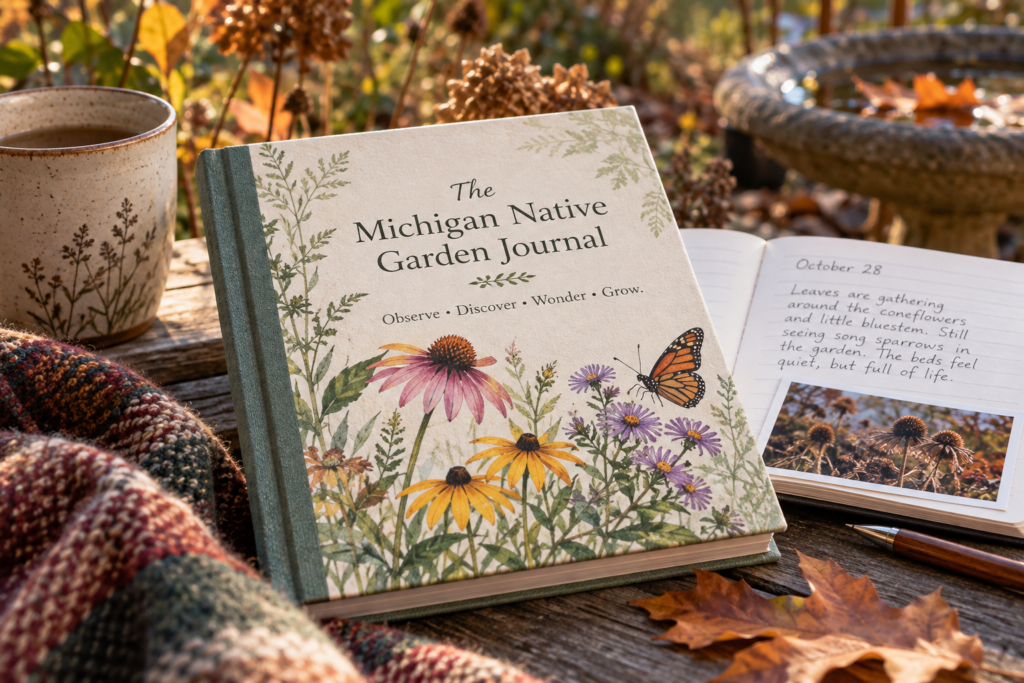
The Michigan Native Garden Journal offers a quiet place to capture these seasonal observations and begin recognizing the patterns unfolding in your own landscape.
COMPLIMENTARY FIRST MONTH
The Michigan Native Garden Journal
Observe • Discover • Wonder • Grow
↓ GET YOUR COPY ↓
Keep Exploring
If you’re beginning to see your autumn garden differently, these resources offer more opportunities to explore:
- How to Prepare Michigan Native Plants for Winter — Discover how thoughtful fall care can help your native garden move naturally into winter.
- Learning How to Trust Your Native Garden — Explore what happens when we become more comfortable allowing natural garden processes to unfold.
- How to Create Spaces Where Wildlife Feels Safe — Learn why shelter and protected spaces are just as important as flowers and food sources.
- Leave the Leaves — Xerces Society — A helpful conservation resource explaining how fallen leaves and other garden materials provide overwintering habitat.
What’s Next?
Before reaching for the rake this autumn, choose one small area of your garden where fallen leaves can remain.
It might be beneath a shrub, at the back of a perennial border, or somewhere that naturally collects leaves each year.
Allow that space to settle into winter without unnecessary disturbance.
Then make a mental note to visit it again in spring.
You may discover that one of the most interesting things about your garden is what happens when you decide to leave something alone.
Coming Next in Nature Notes
Where Do Butterflies Go in Winter?
We enjoy watching butterflies drift through our Michigan gardens during the warmer months. But when temperatures drop and the flowers disappear, where do those beautiful creatures go?
Some travel remarkable distances. Others remain surprisingly close to the gardens where we last saw them, hidden in forms we might never recognize.
In our next Nature Notes article, Where Do Butterflies Go in Winter?, we’ll explore the fascinating ways butterflies survive the colder months and discover why the quiet corners of our gardens may be more important than we ever imagined.
Because sometimes, the wildlife we believe has disappeared is simply waiting for spring.