
What Happens in Your Garden When the Sun Goes Down
The Garden Doesn’t Go to Sleep
As the sun begins to sink below the trees, many gardeners head inside.
The watering can is put away.
The tools are returned to the garage.
One last glance at the flower beds, and the day feels complete.
But the garden isn’t finished.
In many ways, it’s only beginning.
As daylight fades across Michigan, an entirely different shift quietly takes place.
The buzzing of bees slowly gives way to the gentle flutter of moths.
Goldfinches settle into nearby shrubs.
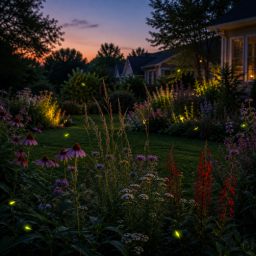
Fireflies begin their silent conversation across the lawn.
Some flowers fold their petals for the evening, while others release a fragrance that wasn’t noticeable just an hour before.
If you’ve ever lingered outside just a little longer than usual, you’ve probably sensed it.
The garden changes.
Not dramatically.
Not all at once.
Just enough to remind us that nature follows its own rhythm, one that continues long after we’ve gone inside.
A Different Kind of Wildlife
During the day, it’s easy to notice butterflies drifting from flower to flower or native bees busily collecting pollen.
But as evening approaches, many daytime visitors quietly make way for another group of remarkable creatures.
Tiny native moths begin searching for nectar.
Bats emerge overhead, catching mosquitoes and other flying insects with astonishing precision.
Tree frogs begin calling from nearby ponds or wooded edges.
Katydids and crickets add their voices to the evening air until the garden feels almost alive with music.
Most of these nighttime visitors go unnoticed.
Not because they’re rare.
Because we’re usually no longer watching.
One of the greatest joys of spending time outdoors at dusk is realizing just how much life has been there all along.
If you enjoyed Common Garden Pests and Helpful Insects in Michigan, you’ll recognize that many of the insects active after sunset are just as important to a healthy garden as those we see during the day.
The Quiet Shift in Light
Perhaps the greatest transformation isn’t the wildlife.
It’s the light itself.
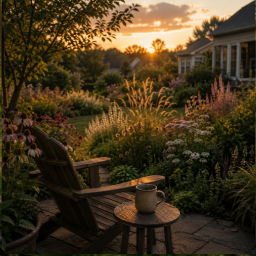
Bright midday sunshine softens into warm gold.
Native grasses begin to glow as sunlight catches their seedheads.
Spider webs, nearly invisible all afternoon, suddenly shimmer with tiny threads of silver.
Purple Coneflowers seem richer in color.
The feathery plumes of Prairie Dropseed catch the breeze.
Even familiar garden paths feel different.
Everything becomes quieter.
Slower.
More peaceful.
It’s one of the reasons dusk has become my favorite time to simply sit and observe.
When we stop rushing from one task to the next, the garden often rewards us with moments we would have otherwise missed.
You Don’t Need a Large Garden
One of the wonderful things about these evening discoveries is that they aren’t reserved for country meadows or nature preserves.
A small suburban garden can be just as full of life.
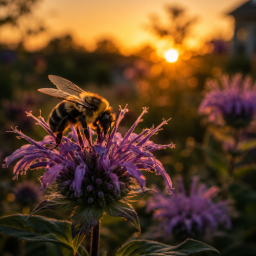
A single patch of Wild Bergamot may still host a late bumble bee making one final visit before nightfall.
A cluster of native grasses may become a resting place for goldfinches.
A quiet corner near a Serviceberry or Ninebark may offer shelter for birds preparing for the night.
Even a modest patio can become the perfect place to watch the day’s final visitors.
Nature doesn’t ask how large your garden is.
It simply responds to the habitat you provide.
The Night Shift Begins
By the time the last glow of sunset fades, your garden has quietly changed hands.
The butterflies have settled beneath leaves or tucked themselves safely into nearby shrubs.
Most native bees have returned to their nests.
Songbirds grow quiet as they prepare for the night.
But while one shift ends, another is just beginning.
Some of Michigan’s most fascinating wildlife waits for dusk before becoming active.
Not because they’re hiding.
Because nighttime is when they thrive.
Moths: The Pollinators We Rarely Notice
When people think about pollinators, butterflies usually come to mind first.
Yet many native moths spend the evening doing much of the same important work.
Drawn to pale or lightly colored flowers that remain visible in low light, they move from bloom to bloom collecting nectar while carrying pollen with them.
Unlike butterflies, most moths fly quietly and often go unnoticed.
Yet they help pollinate many native plants while also providing an important food source for birds and bats.
It’s a gentle reminder that some of nature’s most important work happens when very few people are watching.
Tiny Lights Across the Lawn
On warm summer evenings, another familiar visitor may appear.
One…
Then another.
Soon dozens of tiny lights blink on and off across the grass.
Fireflies.
Or more accurately, lightning bugs, a type of beetle that has fascinated children and adults for generations.
Those flashing lights aren’t random.
They’re part of an extraordinary conversation.
Each species has its own unique flashing pattern, allowing males and females to find one another in the growing darkness.
A healthy population of fireflies often suggests a healthy landscape.
They thrive where pesticides are limited, leaf litter is left undisturbed, and natural areas provide places for their young to develop.
In many ways, a garden that welcomes fireflies is also welcoming countless other forms of life.
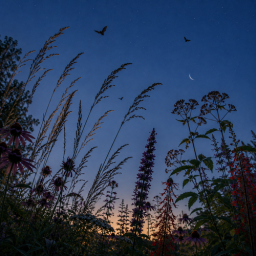
Silent Hunters Above
Just as the fireflies begin their evening display, another remarkable hunter often appears overhead.
At first, you may mistake it for a bird.
Then you notice the swift, looping flight.
A bat.
Michigan’s native bats emerge at dusk to feed on flying insects, consuming astonishing numbers of mosquitoes, moths, beetles, and other nighttime insects as they patrol the evening sky.
Despite old myths, bats are shy, highly beneficial animals that want nothing to do with people.
For gardeners, they’re valuable partners.
Every pass they make across the yard helps maintain the natural balance of insects that healthy ecosystems depend on.
If you enjoyed learning how beneficial insects support your garden in Common Garden Pests and Helpful Insects in Michigan, bats remind us that helpful wildlife comes in many forms, and some of the hardest-working members of the garden don’t begin their day until ours is ending.
Listening Changes Everything
If you stand quietly for just five minutes after sunset, something unexpected happens.
Your eyes begin adjusting to the fading light.
But your ears begin noticing even more.
Crickets.
Katydids.
The soft rustle of grasses.
Perhaps the distant call of a tree frog.
A breeze moving through Little Bluestem.
The flutter of unseen wings.
It’s a different way of experiencing a garden.
Not by looking harder.
But by listening more carefully.
And once you’ve noticed these evening sounds, it’s almost impossible not to hear them every time you step outside after sunset.
How to Welcome the Night Shift
The wonderful thing about an evening garden is that it doesn’t require special equipment or expensive additions.
Most of the nighttime visitors we’ve met are simply looking for the same things as daytime wildlife:
Food.
Shelter.
A safe place to rest.
By planting native flowers, shrubs, grasses, and trees, you’re already creating many of those opportunities.
A few thoughtful choices can make your garden even more inviting after sunset.
Leave native grasses and seedheads standing through fall and winter.
Allow a few leaves to remain beneath shrubs where beneficial insects can overwinter.
Choose native flowers that bloom from spring through autumn so nectar remains available throughout the growing season.
And when possible, reduce unnecessary outdoor lighting.
Dark skies make it easier for moths, fireflies, and many other nighttime creatures to navigate naturally.
The best evening gardens aren’t perfectly tidy.
They’re comfortably alive.
Sometimes the Greatest Discovery Is Simply Staying Outside
You don’t need to identify every moth.
You don’t need to know the name of every cricket or tree frog.
Simply noticing them is enough.
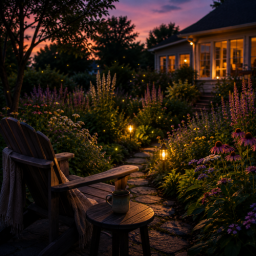
This evening, consider staying outside just ten minutes longer than usual.
Take a comfortable chair into the garden.
Leave your phone inside.
Listen before you speak.
Watch before you move.
You may notice a bat gliding silently overhead.
A hummingbird making one final visit before settling for the night.
A firefly drifting across the lawn.
Or perhaps nothing at all, except the quiet peace that settles over a garden at day’s end.
And sometimes, that’s the greatest gift nature offers us.
Barbara’s Gentle Reminder
One of the reasons I love native gardens is that they continue giving long after we’ve finished working in them.
The flowers don’t stop blooming because we’ve put away our tools.
The wildlife doesn’t disappear because the sun has set.
Life simply changes its rhythm.
Some of my favorite moments in the garden have happened when there was almost nothing left to see.
The colors softened.
The breeze cooled.
The sounds grew richer.
For just a little while, I stopped thinking about what still needed to be done and simply enjoyed being there.
That’s my hope for you, too.
Not that you’ll create the perfect garden.
But that you’ll discover the quiet joy of spending a few unhurried moments in it.
Happy gardening,
Barbara Fleury
Founder, Michigan Garden Design
Continue Growing
If this evening walk through the garden inspired you, you may also enjoy these articles from Michigan Garden Design:
- How to Create a Pollinator Habitat in Michigan: It’s More Than Just Flowers
- Why Native Bees Are the Garden’s Most Important Pollinators
- How to Help Monarch Butterflies During Migration in Michigan
- The Best Native Plants for Hummingbirds in Michigan
- Common Garden Pests and Helpful Insects in Michigan
Coming Next in Nature Notes
Nature Notes: Why Morning Dew Is One of the Garden’s Greatest Gifts
Before the first bee begins its day and long before the summer sun grows warm, another quiet transformation takes place. Join us as we explore the beauty, science, and surprising importance of morning dew in a Michigan garden.
Continue Exploring
If you’d like to learn more about Michigan’s remarkable nighttime wildlife and the habitats that support it, these trusted organizations offer excellent resources:
- Michigan State University Extension — Gardening for pollinators, wildlife habitat, and native plants.
- Michigan Department of Natural Resources — Michigan wildlife, bats, amphibians, and conservation.
- Xerces Society for Invertebrate Conservation — Moths, fireflies, beneficial insects, and pollinator conservation.
- Bat Conservation International — The fascinating lives of bats and how they benefit ecosystems.
- National Wildlife Federation — Creating wildlife-friendly gardens and backyard habitats.