
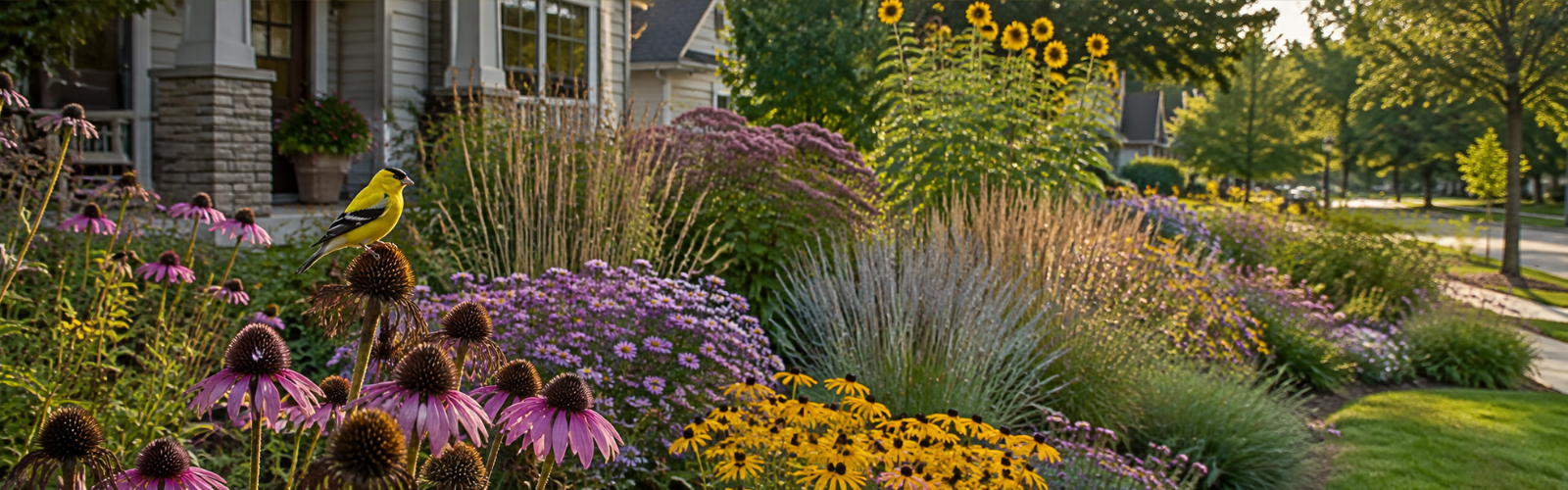
The Best Native Plants That Feed Goldfinches
There are few garden visitors quite as cheerful as an American Goldfinch.
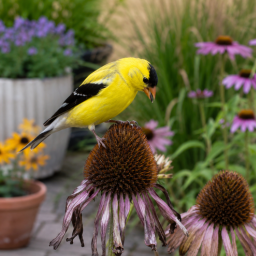
That flash of bright yellow moving between flowers can stop you in your tracks, especially when a goldfinch lands on a seed head and begins feeding only a few feet away.
But if you want goldfinches to spend more time in your Michigan garden, flowers alone are not enough.
What matters is what those flowers become.
Seeds.
Goldfinches are especially drawn to plants that produce the small seeds they naturally eat, which means some of the best plants for attracting them are the same plants we are often tempted to cut down once the blooms begin fading.
That is where a wildlife-friendly garden starts to look a little different.
Goldfinches Follow the Seeds
Goldfinches are primarily seed eaters.
They are especially associated with seed-producing plants in the sunflower and thistle families, along with a variety of other herbaceous plants that provide small, accessible seeds.
That makes native gardens particularly valuable.
Many Michigan native wildflowers produce exactly the kind of seed heads goldfinches can cling to, pick through, and revisit as summer moves into fall.
A garden filled with native flowers may attract pollinators while those plants are blooming.
Then, if the seed heads remain standing, some of those same plants begin serving birds.
One plant can support the garden in more than one season.
That is one of the reasons I encourage gardeners to think beyond bloom time when choosing plants for a pollinator-friendly Michigan garden. One of our recent articles, How To Prepare Your Garden for Fall Pollinators, includes helpful tips for plant selection.
The story does not end when the petals fall.
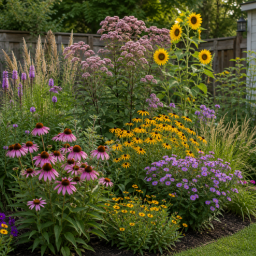
Late Summer Is an Important Time
Goldfinches are especially noticeable in Michigan during late summer.
While many songbirds begin nesting much earlier, goldfinches often wait until later in the season, when thistles and other seed-producing plants are abundant.
That timing makes late-summer native gardens particularly valuable.
Plants that bloom in July and August may still be flowering while earlier plants are beginning to form seed.
The garden suddenly offers both.
There may be nectar for pollinators, insects moving among the foliage, and developing seeds for birds, all within the same planting.
This is one of the reasons a garden with a long season of bloom can support so much more life than a landscape designed only for spring color.
Resist the Urge to Deadhead Everything
Deadheading can encourage additional flowers on some plants and keep a garden looking tidy.
But if your goal is to support goldfinches, it is worth leaving at least some seed heads intact.
Purple Coneflower is a perfect example.
Once the petals fade, the center cone remains.
To us, that plant may appear finished.
To a goldfinch, it may just be becoming useful.
The same is true of many asters, sunflowers, coreopsis, Black-eyed Susans, and other seed-producing native flowers.
You do not need to stop deadheading altogether.
Instead, think selectively.
Leave some seed heads where birds can reach them, particularly toward the middle and back of planting beds where a slightly looser appearance feels natural.
That approach also works beautifully with the ideas in How to Prepare Michigan Native Plants for Winter, letting useful stems and seed heads remain part of the garden rather than removing everything at once.
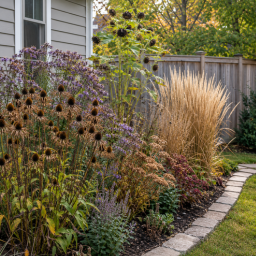
Native Plants Provide More Than Seed
When you plant for goldfinches, you are rarely helping only goldfinches.
The same native plants may provide:
- pollen and nectar while flowering
- insects and shelter within their foliage
- seeds after blooming
- standing stems through fall and winter
- nesting material as the season progresses
That layering of benefits is what makes native plants so valuable.
A single planting can serve pollinators, birds, and other wildlife at different times of year.
And when those plants are combined with grasses, shrubs, and a dependable source of water, like the simple ideas in How To Create Small Water Features for Wildlife, the garden begins functioning as a much more complete habitat.
Think Like a Goldfinch
If you want to know whether your garden is likely to attract goldfinches, look at it from their perspective.
Are there seed heads available?
Can birds perch directly on the plants while feeding?
Are there several seed-producing species rather than just one?
Do some remain standing late into the season?
And are there nearby shrubs or trees where birds can retreat between visits?
Those questions shift the focus from simply choosing pretty flowers to creating a garden that provides something useful.
That is where wildlife gardening becomes especially rewarding.
Instead of asking only,
“What will bloom here?”
we begin asking,
“Who might this plant feed after it blooms?”
And once you start thinking that way, a dried seed head can become every bit as interesting as a flower.
Some native plants become especially valuable because goldfinches can perch directly on the stems and feed from the seeds as they mature.
The best approach is not to plant one “goldfinch plant.”
It is to create a small community of seed-producing natives that mature at slightly different times.
Here are several excellent choices for Michigan gardens.
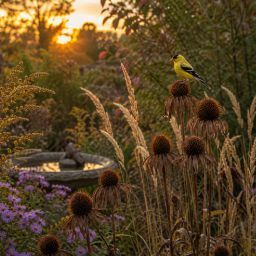
Purple Coneflower
Echinacea purpurea
Purple Coneflower is one of the easiest plants to recognize when goldfinches begin feeding.
After the petals fade, the raised center cone remains filled with seeds.
Goldfinches can perch directly on the sturdy stems and work their way through the seed heads.
Purple Coneflower also earns its place earlier in the season by supporting bees, butterflies, and other pollinators while it is blooming.
That makes it a wonderful example of a plant serving multiple roles throughout the year.
Plant it in sunny areas alongside grasses or other flowering natives, and resist the temptation to remove every faded bloom.
Leaving even a portion of the seed heads standing can turn a familiar garden plant into a late-season food source.
Black-Eyed Susan
Rudbeckia hirta
Black-Eyed Susan brings a long stretch of bright summer color, followed by dark seed heads that remain useful after flowering.
Its seeds may attract goldfinches and other seed-eating birds, while the flowers support pollinators earlier in the season.
Black-Eyed Susan is particularly useful in newer native gardens because it can establish relatively quickly and help fill spaces while slower-growing perennials mature.
It also works beautifully with many of the plants featured in Best Native Plants for Pollinators, allowing one planting area to support both pollinators and birds.
Native Sunflowers
Michigan has several native sunflower species, and they deserve special attention in a bird-friendly garden.
Their large flower heads eventually produce abundant seeds that are attractive to goldfinches and other birds.
Depending on the species, native sunflowers may range from manageable garden plants to taller, spreading plants better suited to larger borders or naturalized areas.
They are especially valuable where you have room for a looser, more abundant planting.
Use them toward the back of a sunny bed or along a property edge where their height and seed production can become an asset rather than a challenge.
Native Asters
Asters are often celebrated for their late-season flowers, and for good reason.
They provide valuable nectar when many other plants have stopped blooming.
But once flowering ends, their usefulness continues.
As the seed heads mature, they can provide another source of food for small birds.
Asters are especially helpful because they extend the garden’s productivity later into the year.
If you are already using asters to create [late-season pollinator habitat], leaving some seed heads in place gives those plants one more job.
Coreopsis
Several native coreopsis species can contribute small seeds that appeal to seed-eating birds.
Their lighter, airier form also provides a different texture from coneflowers and sunflowers.
Coreopsis works well in sunny garden beds, particularly where you want a native plant that feels loose and natural without adding a great deal of bulk.
Allow some of the flower heads to mature fully instead of deadheading every stem.
Those small seeds can become another piece of the late-summer food supply.
Joe-Pye Weed
Eutrochium species
Joe-Pye Weed is usually associated with butterflies, but it can also contribute to a bird-friendly garden after bloom.
Its large clusters of flowers mature into seed heads later in the season, adding food and structure at a time when the garden is beginning to transition toward fall.
Because Joe-Pye Weed can become tall, it works best toward the rear of a border or in a larger planting.
Paired with native grasses, asters, and coneflowers, it helps create the layered habitat discussed in How to Use Native Grasses in Your Michigan Garden.
Native Thistles
This one may surprise some gardeners.
Goldfinches have a close relationship with thistles, using both their seeds for food and the soft plant material for nesting.
The key distinction is native thistle.
Native species can provide tremendous wildlife value without being the same troublesome plants many gardeners picture when they hear the word thistle.
If you have the right space and are comfortable with a more naturalistic look, native thistles can be exceptionally valuable plants for goldfinches.
They may not belong beside every front walkway, but in a meadow-style planting or wildlife garden, they can be worth considering.
Leave the Seed Heads Where Birds Can Use Them
Choosing the right plants is only half the equation.
The other half is allowing them to complete their life cycle.
If every flower is cut down immediately after blooming, much of the food you planted for birds disappears before they ever have a chance to use it.
Instead, try leaving groups of seed heads standing.
You might keep the front edge of a bed slightly tidier while allowing plants farther back to remain intact.
That creates a garden that still feels intentional while providing food and structure into fall.
This is one of the simplest ways to make a native landscape work harder without adding another plant.
Plant for a Sequence of Seeds
Think about bloom time—but also think about seed time.
Coneflowers and Black-Eyed Susans may begin producing seed while asters are still flowering.
Later, asters and sunflowers take over.
Native grasses and other plants continue adding structure around them.
The result is not one short feeding window.
It is a succession.
And that is much more useful to wildlife.
Designing a Garden Goldfinches Can Use
A goldfinch-friendly garden does not need to be large.
What matters more is creating several things birds need within the same general area: food, places to perch, nearby shelter, and water.
Plant in Groups
One coneflower can produce seed.
A group of coneflowers creates a feeding area.
Rather than scattering individual seed-producing plants throughout the landscape, repeat them in small drifts or clusters where space allows.
Combine plants that mature at different times, perhaps Black-Eyed Susan and Purple Coneflower through summer, followed by asters and native sunflowers later in the season.
That succession gives goldfinches more opportunities to return.
Give Birds Somewhere to Retreat
Goldfinches may feed out in the open, but nearby shrubs and small trees provide places to perch, rest, and watch the garden before returning to the seed heads.
You do not need dense vegetation directly around every plant.
Think instead about creating layers.
Seed-producing flowers can occupy the sunny garden bed, while native shrubs or trees farther back provide structure and shelter.
Native grasses can help connect those layers while adding movement and additional cover.
Add Water Nearby
Food becomes even more useful when water is available too.
A shallow birdbath or small basin placed within the larger habitat gives birds another reason to remain in the garden.
As we explored in How To Create Small Water Features for Wildlife, even a very simple source of clean, shallow water can add another important habitat element without requiring a pond.
Let Fall Look Like Fall
Perhaps the most important design decision comes after the flowers fade.
Do not feel that every stem must disappear.
Leave groups of seed heads standing, particularly in the middle and back of beds.
Keep pathways and edges defined if you prefer a tidier appearance, but allow the plants themselves to complete their seasonal cycle.
The result can still feel intentional.
And now the fading garden has another purpose.
It is feeding birds.
🌿 Barbara’s Observation
There is something wonderful about watching a goldfinch balance on a dried seed head.
The flower may have stopped blooming weeks ago, yet the plant is still very much part of the life of the garden.
That moment changes the way we see what is “finished.”
A seed head is not simply the remains of a flower.
It may be someone’s next meal.
And once we begin noticing those connections, leaving a little more of the garden standing feels less like neglect and more like hospitality.
Your Garden Has a Story. Start Recording It.🌿
Which plants are the goldfinches visiting?
When do they arrive?
Which seed heads disappear first?
Those are exactly the kinds of small discoveries that become easy to forget from one season to the next.
The complimentary first month of The Michigan Native Garden Journal gives you a place to record what is blooming, feeding, visiting, and changing in your own landscape.
COMPLIMENTARY FIRST MONTH
The Michigan Native Garden Journal
↓GET YOUR COPY ↓
Observe • Discover • Wonder • Grow.
Keep Exploring
Continue creating a garden that supports birds and other wildlife:
- How To Create Small Water Features for Wildlife
- How to Use Native Grasses in Your Michigan Garden
- Why Native Bees Are the Garden’s Most Important Pollinators
- Best Native Plants for Bees and Butterflies
For additional information about American Goldfinches and bird-friendly landscapes, explore trusted resources from Audubon, Cornell Lab of Ornithology, and Michigan State University Extension.
What’s Next
You do not need to redesign your garden for goldfinches.
Start by leaving a few more seed heads.
Add one native plant that produces the kind of seed birds naturally seek.
Watch what happens.
Over time, you may discover that one of the easiest ways to invite more wildlife into your garden is simply to let the plants finish what they started.
Coming Next
Vines can do much more than climb a trellis or soften a fence.
In the next Michigan Garden article, The Best Michigan Native Vines for Pollinators, we’ll look at native vines that provide flowers, shelter, and valuable habitat while adding vertical interest to the garden.
You may be surprised by how much wildlife support can grow in a very small footprint.