
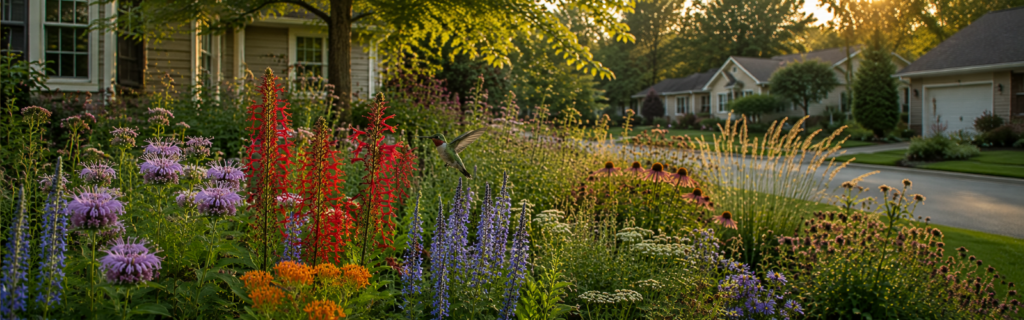
The Best Native Plants for Hummingbirds in Michigan
A Flash of Emerald and Ruby
There are some moments in the garden that happen so quickly you almost wonder if you imagined them.
You’re watering a flower bed on a warm July morning.
The air is still.
Native grasses sway gently in the breeze.
Then, out of the corner of your eye, something darts past.
It hovers effortlessly beside a cluster of Wild Bergamot, pauses for only a second, then disappears as quickly as it arrived.
A hummingbird.
For many Michigan gardeners, that first hummingbird of the season is unforgettable.
Its wings beat so rapidly they seem invisible.
Its movements are precise, almost weightless.
And despite being one of the smallest birds in North America, it carries an energy that seems larger than life.
It’s no surprise that hummingbirds capture our attention.
But what often surprises people is that our gardens can become places they return to again and again.
Not because we hung a feeder.
Because we planted the right flowers.
Michigan’s Tiny Flying Jewel
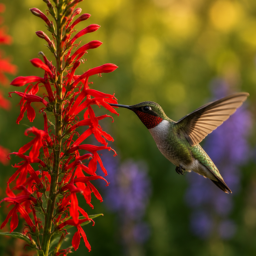
Michigan is home to one regular hummingbird species: the Ruby-throated Hummingbird (Archilochus colubris).
Every spring, these remarkable birds return after spending the winter far to the south, many traveling hundreds or even thousands of miles to reach their breeding grounds.
By late spring and throughout summer, they’ll begin searching for exactly what every healthy native garden can provide:
Fresh nectar.
Tiny insects for protein.
Safe places to perch.
Shelter among shrubs and trees.
When those needs are met, a garden becomes much more than a collection of beautiful flowers.
It becomes habitat.
And like monarch butterflies, hummingbirds don’t recognize property lines.
They simply move from one welcoming garden to the next.
It’s About More Than Feeders
Many people associate hummingbirds with bright red feeders.
And while feeders can provide supplemental nectar when they’re kept clean and properly maintained, they’re only one small piece of the picture.
Native flowers offer something no feeder can fully replace.
They provide naturally balanced nectar.
They attract the tiny insects hummingbirds depend on for protein.
They bloom throughout the season, creating a landscape that supports not only hummingbirds, but bees, butterflies, moths, and countless other pollinators.
That’s one of the beautiful things about planting natives.
A single flower rarely helps just one species.
Every bloom becomes part of a much larger community.
If you’ve already explored How To Create a Pollinator Friendly Garden In Michigan, you’ve seen how food, shelter, water, and seasonal diversity work together to create healthy habitat. Hummingbirds are another wonderful example of why every piece of that habitat matters.
A Garden Worth Returning To
One hummingbird visiting your garden is exciting.
Watching that same hummingbird return day after day is something altogether different.
It means your garden has become part of its routine.
A dependable place to find food.
A place to rest.
A place worth remembering.
And the wonderful news is that creating a hummingbird-friendly garden doesn’t require a large property or dozens of different plants.
With a thoughtful selection of Michigan native flowers, you can create a landscape that welcomes these remarkable little birds while also supporting butterflies, native bees, and countless other beneficial wildlife.
If you’ve enjoyed learning how native gardens support migrating monarchs in How to Help Monarch Butterflies During Migration in Michigan, you’ll discover that many of the very same plants become favorites of hummingbirds as well. One thoughtfully designed garden can provide habitat for an astonishing variety of wildlife.
What Hummingbirds Are Really Looking For
To us, a garden is a collection of flowers.
To a hummingbird, it’s a series of opportunities.
Every stop is a chance to find nectar, catch tiny insects, avoid predators, and conserve precious energy.
Because hummingbirds burn an incredible amount of energy each day, they spend much of their time searching for reliable food sources.
When they discover a garden filled with blooming native flowers, they often remember it.
If the nectar remains plentiful, they’ll return again and again throughout the season.
That’s one reason a thoughtfully planted native garden can become a favorite destination year after year.
Nature Designed These Flowers Together
Take a close look at many of Michigan’s native wildflowers, and you’ll begin to notice something remarkable.
Their blossoms aren’t just beautiful.
They’re beautifully designed.
Long, tubular flowers such as Wild Bergamot (Monarda fistulosa), Cardinal Flower (Lobelia cardinalis), and Great Blue Lobelia (Lobelia siphilitica) are especially attractive to hummingbirds because their slender bills and long tongues allow them to reach nectar that many other visitors cannot.
As they feed, pollen brushes against their heads and bills.
When they visit the next flower, they unknowingly carry that pollen with them.
The flower receives help reproducing.
The hummingbird receives another meal.
It’s a partnership that has developed over thousands of years.
One depends on the other.
More Than Nectar Alone
Many people are surprised to learn that hummingbirds don’t live on nectar alone.
Tiny insects and spiders provide much of the protein they need, especially during nesting season when they’re raising hungry young.
That’s another advantage of planting native species.
Native flowers support healthy insect populations.
Those insects become food for birds.
And the birds help maintain a balanced garden ecosystem.
Everything is connected.
If you’ve read Why Native Bees Are the Garden’s Most Important Pollinators, you’ve already seen how native plants support an astonishing diversity of insects. Hummingbirds are one more reason those thriving insect communities matter.
Color Matters—But It Isn’t the Whole Story
Hummingbirds are naturally drawn to bright colors, particularly shades of red, orange, and deep pink.
That’s one reason Cardinal Flower often becomes the star of a late-summer hummingbird garden.
But color alone doesn’t tell the whole story.
Bloom time matters.
Nectar production matters.
Plant health matters.
A garden that provides flowers from late spring through early autumn offers something far more valuable than a single spectacular bloom.
It offers consistency.
And consistency is exactly what encourages hummingbirds to return.
If you’re looking for native flowers that provide long-lasting color while supporting a wide variety of wildlife, you’ll enjoy The Best Native Plants That Bloom All Summer in Michigan, where you’ll find many species that hummingbirds visit throughout the growing season.
A Garden They Learn to Trust
Imagine you’re a hummingbird crossing a Michigan neighborhood.
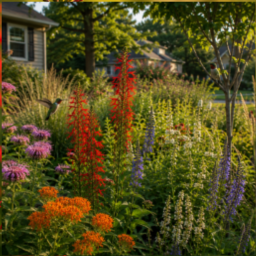
You find one yard filled with blooming native flowers.
The next yard offers another patch of nectar.
A third has shrubs where you can perch safely for a few moments before flying on.
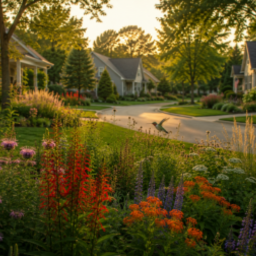
Without realizing it, several neighboring gardens have created something much larger than any one homeowner intended.
They’ve created connected habitat.
It’s one of the reasons I encourage gardeners to think beyond individual plants.
When we choose native species, we’re not simply adding color to our landscapes.
We’re creating places that wildlife learns to trust.
Michigan’s Best Native Plants for Hummingbirds
One of the wonderful things about gardening for hummingbirds is that you don’t need dozens of different plants.
A thoughtfully chosen collection of Michigan native species can provide nectar from late spring through early autumn while creating a garden that’s alive with movement, color, and birdsong.
Here are some of the best native plants to consider.
Cardinal Flower (Lobelia cardinalis)
If hummingbirds could choose a favorite Michigan wildflower, Cardinal Flower would almost certainly be near the top of the list.
Its brilliant scarlet blossoms bloom during mid to late summer, just when many other flowers begin to fade.
The long, tubular flowers are perfectly shaped for hummingbirds, making this one of the most dependable nectar sources you can grow.
It thrives in consistently moist soil and appreciates full sun to partial shade.
Wild Bergamot (Monarda fistulosa)
Wild Bergamot has become one of the signature plants of Michigan native gardens—and for good reason.
Its lavender blooms attract hummingbirds, butterflies, native bees, and countless other pollinators throughout much of the summer.
It’s also one of the easiest native perennials to grow, thriving in sunny locations with average, well-drained soil.
If you’ve noticed hummingbirds lingering in a garden, there’s a good chance Wild Bergamot was part of the reason.
Great Blue Lobelia (Lobelia siphilitica)
Often blooming just as summer begins to give way to autumn, Great Blue Lobelia provides another valuable source of nectar late in the growing season.
Its striking blue flower spikes pair beautifully with Cardinal Flower, creating one of Michigan’s most beautiful late-season native combinations.
Butterfly Weed (Asclepias tuberosa)
Although best known as a host plant for monarch butterflies, Butterfly Weed also produces nectar-rich flowers that hummingbirds occasionally visit.
It’s a wonderful example of how one native plant can benefit many different kinds of wildlife.
If you’ve already explored How to Help Monarch Butterflies During Migration in Michigan, you’ve seen how Butterfly Weed supports one of nature’s most remarkable journeys. Here, it reminds us that the same garden can welcome many different visitors.
Jewelweed (Impatiens capensis)
Growing naturally along woodland edges and streambanks, Jewelweed’s bright orange, trumpet-shaped flowers seem almost custom-made for hummingbirds.
If your property includes moist, lightly shaded areas, this cheerful native annual can become a favorite late-summer feeding stop.
A Garden Designed for the Entire Season
Rather than planting only one hummingbird favorite, think about creating a sequence of blooms.
As one plant finishes flowering, another begins.
That continuous display keeps nectar available from spring through early autumn while adding changing colors and textures to your landscape.
It also benefits butterflies, native bees, moths, and countless other pollinators that share the same habitat.
One thoughtfully designed garden becomes a place where wildlife can thrive throughout the season.
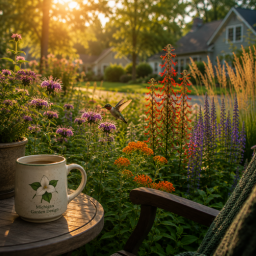
🌿 Barbara’s Gentle Reminder
The first hummingbird you notice each spring may stay only a few seconds.
The next might return tomorrow.
Before long, you’ll find yourself pausing whenever a tiny shadow zips past your window, wondering if your little visitor has come back once again.
That’s one of the quiet gifts of gardening with native plants.
You don’t simply create a beautiful landscape.
You create a place that living things remember.
Every flower you plant becomes an invitation.
Every season offers another opportunity to welcome life into your garden.
And sometimes, the greatest reward isn’t the garden you’ve created.
It’s the moment a hummingbird chooses to call it part of its journey.
Happy gardening,
Barbara Fleury
Founder, Michigan Garden Design
🌿 Continue Growing
If you enjoyed learning about hummingbirds, these articles will help you create an even richer habitat for wildlife throughout the year.
- How To Create a Pollinator Friendly Garden In Michigan
- How to Help Monarch Butterflies During Migration in Michigan
- Why Native Bees Are the Garden’s Most Important Pollinators
- The Best Native Plants That Bloom All Summer in Michigan
- How to Design a Simple Native Garden in Michigan
Coming Next:
How to Prepare Your Garden for Fall Pollinators
As summer begins to fade, your garden still has important work to do. Discover simple ways to support migrating monarchs, late-season native bees, hummingbirds, and other pollinators by providing nectar, shelter, and seedheads that carry wildlife through autumn—and into the seasons ahead.
Continue Exploring
If you’d like to learn more about hummingbirds and the native plants they depend on, these trusted organizations are excellent resources:
- Michigan State University Extension — Gardening advice, native plants, and pollinator-friendly landscapes.
- Audubon Great Lakes — Bird conservation, habitat restoration, and bird-friendly gardening.
- Cornell Lab of Ornithology — Hummingbird identification, behavior, and habitat resources.
- Pollinator Partnership — Regional planting guides and pollinator conservation resources.