
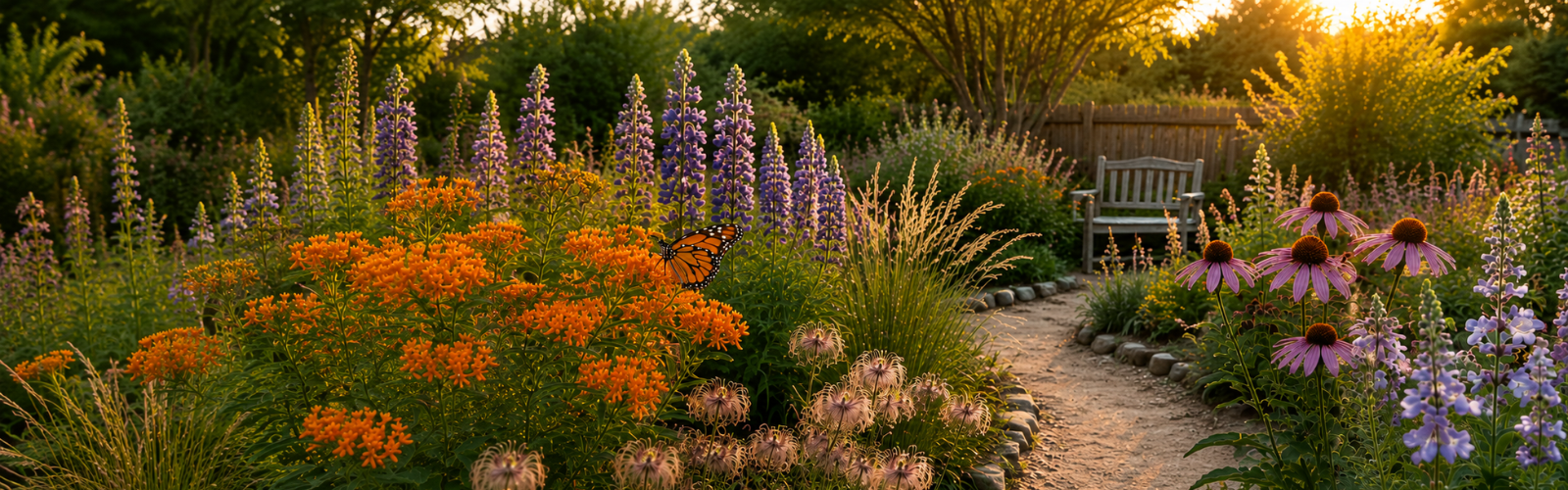
The Best Native Plants for Summer Color
Create a Michigan garden that stays vibrant from early summer into fall with native plants that bloom in succession.
Have you ever noticed how some gardens seem to peak in June?
By July, the flowers have faded. By August, the landscape feels tired. What was once full of color has become mostly green leaves and empty stems.
Many homeowners assume that’s simply the way summer gardens are.
Fortunately, it doesn’t have to be.
One of the greatest advantages of gardening with Michigan native plants is that you can create a landscape that changes beautifully throughout the season. Instead of relying on a single burst of bloom, native gardens offer something new to discover every few weeks—different flowers, different pollinators, different textures, and even different colors as the months unfold.
The secret isn’t planting more flowers.
It’s planting the right flowers together.
Summer Color Is About Timing, Not Quantity
One of the biggest mistakes gardeners make is choosing plants that all bloom at the same time.
The result is spectacular—for about two weeks.
After that, the garden can feel surprisingly quiet.
Nature works differently.
Walk through one of Michigan’s native prairies in June, July, or September and you’ll notice that something is always coming into bloom while something else is beginning to fade. Every plant has its season, creating a landscape that feels constantly alive.
That same principle can transform a home garden.
Instead of asking, “What’s the prettiest flower?” try asking:
“What will be blooming next?”
That simple shift in thinking creates gardens with months of continuous interest instead of a single moment of peak color.
Michigan’s Native Gardens Never Stand Still
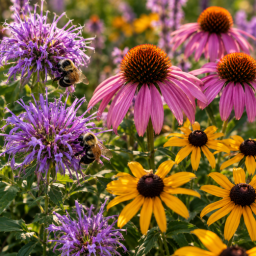
One of my favorite things about native gardens is that they refuse to stay the same.
June brings soft purples and bright oranges.
July introduces vibrant pinks, deep blues, and sunny yellows.
By late summer, rich shades of lavender, rose, and gold begin taking center stage.
Even after many flowers have finished blooming, ornamental grasses catch the light while seed heads feed songbirds and add beautiful texture to the landscape.
A native garden isn’t designed to look identical every day.
It’s designed to tell the story of the season.
Choosing Plants That Bloom in Succession
Rather than thinking about individual flowers, imagine your garden as a relay team.
As one plant finishes blooming, another quietly takes its place.
By combining early-, mid-, and late-season bloomers, you create a landscape that always has something happening—whether it’s flowers, butterflies, native bees, or birds feeding on seed heads.
If you’re just beginning your native gardening journey, this approach also makes planning much easier.
Instead of filling every empty space with whatever catches your eye at the garden center, you’re intentionally building a garden that unfolds over time.
If you’re designing your first native planting, you may also enjoy How to Design a Simple Native Garden in Michigan, where we explore how to combine plants into beautiful, natural-looking communities rather than isolated specimens.
Seven Native Plants That Keep Summer Color Going
Wild Bergamot (Monarda fistulosa)
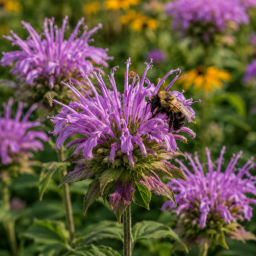
If I could recommend one native perennial that truly captures the spirit of a Michigan summer, Wild Bergamot would be high on the list.
Its soft lavender flowers resemble tiny fireworks bursting above fragrant foliage, creating an informal beauty that feels perfectly at home in both cottage gardens and naturalistic landscapes.
Throughout July, the blossoms become magnets for native bees, butterflies, hummingbirds, and countless other pollinators. On warm evenings, it’s not unusual to see multiple species visiting the flowers at the same time.
Wild Bergamot also offers something many gardeners appreciate—its pleasant fragrance. The leaves release a minty aroma when gently brushed, adding another sensory layer to the garden experience.
Because it thrives in full sun and tolerates a wide range of soils, it’s often one of the easiest native perennials to incorporate into existing landscapes.
Best for:
- Full sun
- Pollinator gardens
- Prairie-style plantings
- Fragrant gardens
Bloom Time: July–August
Helpful Tip: Curious about which pollinators are visiting your garden? The Xerces Society offers excellent identification guides and practical information about creating habitat for native bees, butterflies, and other beneficial insects.
Purple Coneflower (Echinacea purpurea)
Few native flowers have become as iconic as Purple Coneflower—and for good reason.
Its large rosy-purple blooms provide dependable color for much of the summer while supporting an astonishing variety of pollinators.
But what makes Purple Coneflower truly exceptional is that its beauty doesn’t end when flowering is over.
As autumn approaches, the petals gradually fade, leaving behind sturdy seed heads that become favorite feeding stations for American Goldfinches and other songbirds. Even dusted with snow, those seed heads continue adding structure and life to the winter garden.
It’s one of those rare plants that offers something beautiful during nearly every season.
Best for:
- Beginner gardeners
- Pollinator gardens
- Bird-friendly landscapes
- Cut flower gardens
Bloom Time: July–September
Butterfly Weed (Asclepias tuberosa)
No list of Michigan native plants for summer color would be complete without Butterfly Weed.
Its brilliant orange flowers seem to glow in the summer sunshine, creating one of the brightest displays found in any native landscape.
Yet the flowers are only part of the story.
Butterfly Weed serves as an important host plant for monarch butterflies, whose caterpillars rely on milkweed species as their sole food source. Throughout summer, you’ll often find adult monarchs visiting the flowers while searching for places to lay their eggs.
This remarkable relationship reminds us that the most beautiful gardens often become the most valuable ones as well.
If you’re interested in creating a garden that supports wildlife throughout the season, you’ll also enjoy How to Create a Pollinator-Friendly Garden in Michigan: It’s More Than Just Flowers, where we explore the many ways gardens can provide food, shelter, and nesting habitat for pollinators.
Best for:
- Full sun
- Dry to average soil
- Monarch habitat
- Prairie gardens
Bloom Time: June–July
Blue Vervain (Verbena hastata)
If your garden could use a little height and elegance, Blue Vervain is an outstanding choice.
Tall, slender stems rise above neighboring plants, each topped with graceful spikes of tiny violet-blue flowers that bloom gradually from the bottom upward. This extended flowering habit means the display lasts for weeks rather than days.
Blue Vervain is especially attractive to native bees, butterflies, and beneficial insects, adding constant movement to the garden throughout midsummer.
Although it naturally grows in moist meadows and along stream edges, it adapts well to average garden conditions once established, particularly where it receives plenty of sunlight.
Its vertical form also creates a beautiful contrast with rounded flowers like Purple Coneflower and Black-eyed Susan.
Best for:
- Sunny gardens
- Rain gardens
- Naturalistic borders
- Pollinator habitat
Bloom Time: July–September
Helpful Tip: If you’d like to learn more about Blue Vervain and thousands of other North American native plants, the Lady Bird Johnson Wildflower Center maintains one of the most comprehensive native plant databases available.
Black-eyed Susan (Rudbeckia hirta)
There are few flowers that say “Michigan summer” quite like Black-eyed Susan.
Its cheerful golden-yellow petals surrounding a rich chocolate-brown center brighten the garden just as many spring flowers begin fading. Large drifts create waves of sunshine that seem to glow in the afternoon light.
For pollinators, those flowers are much more than beautiful.
Native bees, butterflies, and numerous beneficial insects visit them throughout the growing season, while birds enjoy the seed heads later in the year.
Black-eyed Susan also pairs exceptionally well with native grasses, whose soft texture balances the bold, daisy-like blooms.
This is one of those plants that brings joy to both gardeners and wildlife.
Best for:
- Sunny borders
- Prairie gardens
- Beginner gardeners
- Pollinator gardens
Bloom Time: July–September
Marsh Blazing Star (Liatris spicata)
Every garden benefits from a plant that makes people stop and look.
Marsh Blazing Star does exactly that.
Its tall spikes of brilliant purple flowers bloom from the top down—just the opposite of many flowering plants—and create dramatic vertical accents that can be seen from across the garden.
During peak bloom, the flower spikes seem almost alive with butterflies. Monarchs, swallowtails, painted ladies, and countless native bees all visit the blossoms throughout the day.
Although naturally associated with moist prairies, Marsh Blazing Star performs beautifully in average garden soils that don’t remain excessively dry.
Planting several together creates one of the most memorable displays of late summer color you’ll ever experience.
Best for:
- Sunny borders
- Pollinator gardens
- Rain gardens
- Cut flowers
Bloom Time: July–August
Designing a Garden That Blooms All Summer
One of the most satisfying moments in gardening comes when you realize that your landscape no longer has a “best week.”
Instead, every week offers something different.
One flower begins blooming.
Another quietly fades.
A third reaches its peak just as butterflies become more abundant.
By thinking in terms of succession rather than individual plants, your garden becomes an ever-changing experience instead of a single display.
That is exactly how Michigan’s native plant communities have evolved.
A Simple Summer Bloom Timeline
Here’s one example of how the featured plants work together to create continuous color.
| Plant | June | July | August | September |
| Butterfly Weed | 🌼 | 🌼 | ||
| Wild Bergamot | 🌼 | 🌼 | ||
| Purple Coneflower | 🌼 | 🌼 | 🌼 | |
| Blue Vervain | 🌼 | 🌼 | 🌼 | |
| Black-eyed Susan | 🌼 | 🌼 | 🌼 | |
| Marsh Blazing Star | 🌼 | 🌼 |
Notice how the garden never depends on a single plant.
As one finishes, another begins.
This overlapping rhythm creates landscapes that remain colorful for months instead of weeks.
Plant Communities Create Better Color
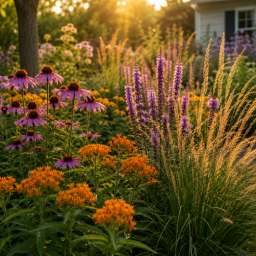
One of the biggest surprises for many gardeners is that a colorful native garden doesn’t require dozens of different species.
Instead, repeating a handful of carefully chosen plants often creates a stronger visual impact.
Imagine broad drifts of Black-eyed Susan weaving through graceful Little Bluestem.
Clusters of Purple Coneflower rising beside Wild Bergamot.
Tall spikes of Marsh Blazing Star catching the afternoon sun while Blue Vervain provides soft vertical accents nearby.
Rather than competing with one another, each plant contributes its own moment.
Together, they create a landscape that feels balanced, peaceful, and unmistakably Michigan.
If you’re still deciding how to arrange these plants, you may also enjoy How to Design a Simple Native Garden in Michigan, where we explore layering, repetition, and naturalistic planting techniques in greater detail.
🌿 Barbara’s Garden Observation
One of the things I enjoy most about visiting established native gardens is that they never ask for your attention all at once.
Instead, they invite you back.
A flower that wasn’t blooming last week suddenly catches your eye.
A patch of grasses begins glowing in the evening light.
Goldfinches arrive where butterflies gathered only days before.
That’s one of the greatest gifts of gardening with native plants.
The garden always has another story waiting to unfold.
Keeping Summer Color Going
One of the most common questions I hear is:
“How do I keep my garden blooming all summer?”
The answer usually isn’t adding more plants.
It’s helping the plants you already have thrive.
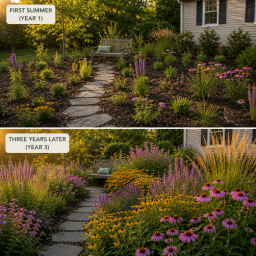
Native plants have evolved to flourish in Michigan’s climate, but even they appreciate thoughtful care during their first few growing seasons.
Deep watering during extended dry periods, allowing plants enough space to mature, and resisting the temptation to over-fertilize all contribute to healthier plants with longer-lasting blooms.
Just as important is leaving room for the garden to evolve.
Many native perennials become fuller and more impressive with each passing year.
Patience really is one of the most valuable gardening tools you can own.
If you’re looking for seasonal care recommendations throughout the growing season, Michigan State University Extension provides outstanding research-based guidance for Michigan gardeners.
Color Beyond Flowers
One of the biggest surprises for gardeners who embrace native plants is realizing that flowers are only part of the story.
As blooms begin to fade, something equally beautiful takes their place.
Purple Coneflower develops sculptural seed heads that attract American Goldfinches.
Little Bluestem gradually shifts from blue-green to rich copper.
Prairie Dropseed catches the evening light with graceful golden seed heads.
Even dried flower stalks become places where native bees spend the winter and songbirds find food.
In a native garden, beauty doesn’t disappear when the flowers fade.
It simply changes.
That may be one of nature’s greatest lessons.
Frequently Asked Questions
Will native plants bloom all summer?
No individual native plant blooms continuously from June through September.
Instead, beautiful summer gardens are created by combining species that bloom one after another throughout the season.
Can I mix native plants with existing landscape flowers?
Absolutely.
Many gardeners begin by adding a few native plants to existing perennial beds before gradually expanding over time.
This is often one of the easiest ways to introduce more pollinator habitat without redesigning the entire landscape.
Which native plant attracts the most pollinators?
It’s difficult to choose just one.
Wild Bergamot, Purple Coneflower, Marsh Blazing Star, Butterfly Weed, and Blue Vervain all attract an impressive variety of native bees and butterflies.
The greatest benefit comes from planting several species together.
Should I deadhead native flowers?
That depends on your goals.
Removing spent blooms may encourage additional flowering on some species.
Leaving seed heads in place provides food for birds and supports wildlife well into winter.
Many gardeners choose a balance of both.
🌿 Continue Growing
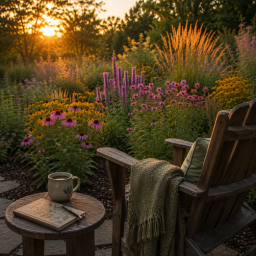
One of the things I appreciate most about native gardens is that they never ask us to chase perfection.
Instead, they invite us to notice.
The first bloom of Wild Bergamot.
A monarch drifting through Butterfly Weed.
The soft glow of Prairie Dropseed in the evening light.
A goldfinch balancing on a Purple Coneflower seed head.
Each week brings something new, not because we forced it to happen, but because we planted a garden that follows the rhythm of Michigan’s seasons.
Color isn’t simply something we create.
It’s something we learn to notice.
Happy gardening,
Barbara Fleury 🌿
Michigan Garden Design
Coming Next:
Common Native Garden Mistakes (and How to Avoid Them)
Even experienced gardeners occasionally work against nature without realizing it. Next, we’ll explore a few common habits that may be preventing your native garden from reaching its full potential, and how small changes can make a remarkable difference.