
How to Keep Native Plants Healthy During Summer Heat
Simple Ways to Help Your Michigan Garden Thrive Through Hot, Dry Weather
Summer has finally arrived in Michigan.
The days are longer, gardens are bursting with color, pollinators are busy from sunrise to sunset, and everything seems full of life.
Then the forecast appears.
Several days in the 90s.
Little or no rain.
Suddenly, many gardeners begin asking the same questions:
“Should I water today?”
“Why are my plants drooping?”
“Are they dying?”
“Did I choose the wrong plants?”
If you’ve found yourself asking those questions, you’re certainly not alone.
The good news is that healthy native plants are remarkably resilient. They evolved right here in Michigan, adapting over thousands of years to periods of heat, drought, heavy rain, and everything in between.
The Michigan Natural Features Inventory is an excellent resource for learning more about the native plants and natural communities that make Michigan’s landscapes so unique.
That doesn’t mean they never need a helping hand—especially during their first year—but it does mean they often need less intervention than we think.
One of the greatest gifts native gardening offers is learning to trust the remarkable resilience of the plants themselves.
Let’s explore how to help your garden stay healthy while allowing nature to do what it does best.
Newly Planted vs. Established Native Plants
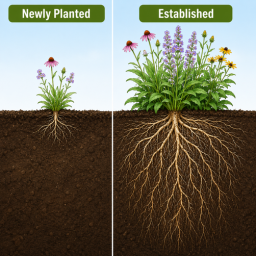
Perhaps the most important thing to understand is that not all native plants need the same level of care.
A newly planted native perennial is still developing its root system.
An established native plant may already have roots extending several feet into the soil, reaching moisture that never appears at the surface.
That’s why two plants growing only a few feet apart can respond very differently during the same hot afternoon.
Newly Planted Native Plants
Plants installed this spring—or even last fall—benefit from a little extra attention during extended periods of heat.
Watch for:
- Consistent wilting that doesn’t improve by evening
- Dry soil several inches below the surface
- Prolonged periods without rainfall
During these times, a slow, deep watering once or twice each week is usually far more beneficial than a quick sprinkle every day.
Deep watering encourages roots to grow downward in search of moisture, helping plants become stronger and more drought tolerant over time.
Established Native Plants
Once established, many Michigan native plants become surprisingly self-sufficient.
It’s completely normal for some species to look a little tired during the hottest part of the afternoon.
Many naturally reduce moisture loss by allowing their leaves to droop temporarily.
Take another look in the evening or early the following morning.
You’ll often discover they’ve perked back up without any help at all.
Learning the difference between temporary heat stress and true drought stress is one of the most valuable skills a native gardener can develop.
🌿 Garden Tip
Before reaching for the hose, check the soil instead of the leaves.
Push your finger two or three inches into the soil near the base of the plant.
If it’s still cool and slightly moist beneath the surface, your plant is probably doing just fine—even if it looks a little wilted during the afternoon heat.
Healthy roots matter far more than temporarily drooping leaves.
Water Less Often…But Water Well
One of the most common mistakes gardeners make during summer is watering too often.
Frequent, shallow watering encourages roots to remain near the surface, where the soil dries out quickly.
Instead, aim for deep, thorough watering that allows moisture to soak well into the root zone.
In general:
- Water early in the morning whenever possible.
- Water slowly so the soil has time to absorb moisture.
- Allow the top layer of soil to dry slightly before watering again.
- Avoid watering during the hottest part of the day, when much of the moisture is lost to evaporation.
A good soaking every several days is usually far healthier than a light sprinkle every evening.
Your plants—and their roots—will thank you.
For additional guidance on watering landscapes during Michigan’s summer weather, Michigan State University Extension offers practical, research-based recommendations for home gardeners.
Mulch: Your Garden’s Best Friend During Summer
If I could recommend just one thing to help your garden through a hot Michigan summer, it would be this:
Mulch.
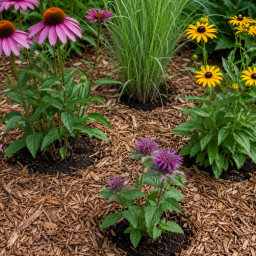
A two- to three-inch layer of natural mulch helps:
- Keep soil temperatures cooler.
- Reduce moisture loss from evaporation.
- Suppress weeds that compete for water.
- Protect developing root systems.
- Improve soil as it naturally breaks down over time.
Wood chips, shredded bark, and chopped leaves all make excellent choices for most native gardens.
Just remember to keep mulch a few inches away from the crowns of perennials and the trunks of trees and shrubs to reduce the risk of rot.
Think of mulch as nature’s blanket.
In a healthy woodland, fallen leaves quietly protect the soil year-round.
Mulch simply allows us to mimic one of nature’s oldest gardening techniques.
🌿 Garden Tip
Bare soil is almost never found in healthy natural ecosystems.
Whenever possible, let mulch or living groundcovers protect the soil from the summer sun.
When Should You Actually Worry?
One of the hardest things for new native gardeners is learning when to step in…and when to simply observe.
Native plants are remarkably resilient.
Some even respond to intense heat by slowing down for a while.
That doesn’t necessarily mean something is wrong.
In fact, it’s often part of their natural survival strategy.
Usually Normal
- Leaves drooping during the hottest part of the afternoon
- A few older leaves turning yellow
- Slower growth during prolonged dry weather
- Flowers fading a little sooner than expected
Many of these plants recover beautifully after cooler temperatures or a good soaking rain.
Worth Investigating
On the other hand, it’s time to take a closer look if you notice:
- Plants remaining wilted overnight or into the following morning
- Crispy, brown leaf edges spreading rapidly
- Newly planted perennials collapsing completely
- Soil that remains dry several inches below the surface
- Extended periods of extreme heat without meaningful rainfall
These are signs your plants may appreciate a little extra support.
Four Common Summer Mistakes
Sometimes our desire to help actually creates more stress for our plants.
Here are four mistakes I see most often.
1. Watering Every Day
Frequent shallow watering encourages shallow roots.
Deep watering encourages resilient plants.
2. Fertilizing During Heat Waves
When plants are already stressed by heat, fertilizer often encourages tender new growth that’s even more vulnerable.
Save fertilizing for more favorable growing conditions.
3. Pruning Too Much
Removing large amounts of healthy foliage during hot weather reduces the plant’s ability to shade its own roots.
Wait until temperatures moderate before doing significant pruning.
4. Assuming Every Wilted Plant Needs Water
This may be the most common mistake of all.
Many native plants naturally wilt during hot afternoons, then recover completely once temperatures cool.
Always check the soil before assuming water is the answer.
🌿 Garden Tip
Observe first.
Water second.
Healthy gardening begins with careful observation, not automatic action.
Native Plants That Thrive in Michigan’s Summer Heat
One of the joys of gardening with native plants is discovering just how well many of them handle Michigan summers once they’re established.
Some of my favorites include:
- Butterfly Weed (Asclepias tuberosa)
- Little Bluestem (Schizachyrium scoparium)
- Prairie Dropseed (Sporobolus heterolepis)
- Purple Coneflower (Echinacea purpurea)
- Black-eyed Susan (Rudbeckia hirta)
- Wild Bergamot (Monarda fistulosa)
- Hairy Beardtongue (Penstemon hirsutus)
These plants have evolved under the same summer conditions we experience today.
Deep root systems, efficient water use, and remarkable adaptability help them thrive even when rainfall becomes scarce.
That doesn’t mean they’re indestructible.
But it does mean they’re often far more resilient than many traditional garden plants.
One of the greatest rewards of planting natives is discovering that, year after year, your garden gradually becomes easier to care for—not because you’re doing more…
but because nature is doing more of the work.
If you’d like to learn more about any of these native species, the Lady Bird Johnson Wildflower Center’s Native Plant Database provides detailed information on bloom times, growing conditions, and plant characteristics.
🌿 A Simple Summer Garden Checklist
When temperatures begin climbing, here’s a quick reminder to help your native garden thrive.
☐ Water newly planted natives deeply when needed.
☐ Check the soil before watering established plants.
☐ Keep a 2–3 inch layer of mulch around plants, avoiding direct contact with stems and trunks.
☐ Resist fertilizing during prolonged heat.
☐ Allow native plants to respond naturally to short periods of drought.
☐ Spend a few quiet moments observing your garden before deciding something needs to be fixed.
Sometimes the best thing we can do is simply watch nature at work.
🌿 Continue Growing
Ready to learn more?
These Michigan Garden articles are a perfect next step:
• The Best Native Michigan Plants That Bloom All Summer
• Beautiful Ground Covers That Thrive in Michigan
• How to Create a Pollinator Friendly Garden in Michigan
• The Best Native Plants for Pollinators in Michigan
• What’s Blooming Across Michigan Right Now (Nature Notes)
🌿 Coming Next in Michigan Garden
A healthy garden doesn’t simply happen because we choose the right plants.
How we arrange them matters too.
In our next Michigan Garden article, we’ll explore how thoughtful layering creates gardens that are beautiful, low-maintenance, and welcoming to pollinators, birds, and other wildlife throughout the seasons.
Coming Next:
The Best Native Grasses for Michigan Gardens
🌿 A Final Thought
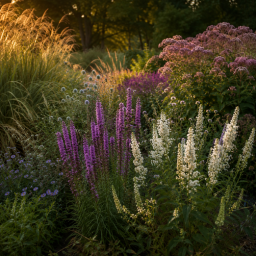
One of the greatest surprises people discover when they begin gardening with native plants is that success often comes from doing less, not more.
Less watering.
Less fertilizing.
Less worrying.
More observing.
More patience.
More trust in the remarkable resilience of plants that have called Michigan home for thousands of years.
Every season teaches us something new.
Summer reminds us that even during periods of heat and drought, nature is remarkably capable of adapting when we give it the opportunity.
I hope this article gives you the confidence to care for your garden with a little more understanding—and a little less worry.
Happy gardening,
Barbara 🌿
Michigan Garden Design