
What Is the Best Formula for Watering Native Plants?
A Simple Guide to Helping Michigan Native Plants Develop Deep, Healthy Roots
One of the questions I hear most often is:
“How often should I water my native plants?”
It’s an understandable question.
After all, many gardeners have spent years caring for annual flowers, vegetable gardens, or traditional landscape plants that require frequent watering.
Native plants are different.
But they’re not magic.
They still need water—especially during their first year.
The difference isn’t whether you water.
It’s how you water.
Understanding that simple distinction can mean the difference between a garden that merely survives and one that becomes healthier and more resilient with every passing season.
Why Native Plants Don’t Need Constant Water
One of the greatest strengths of native Michigan plants is that they’ve spent thousands of years adapting to our climate.
They’ve evolved through spring rains, summer dry spells, autumn cooling, and Michigan winters.
Many species naturally develop extensive root systems that reach far below the soil surface.
Those deeper roots allow plants to access moisture long after the top few inches of soil have dried.
That’s one reason established native gardens often require far less supplemental watering than traditional landscapes.
However…
Those remarkable root systems don’t appear overnight.
A newly planted native perennial still needs your help while those roots become established.
🌿 Garden Tip
The first year is about growing roots.
The years that follow are about enjoying the results.
The Formula Is Surprisingly Simple
When people ask me how often they should water native plants, I don’t usually answer with a number of days.
Instead, I encourage them to remember one simple idea:
Water deeply. Water less often.
That’s the formula.
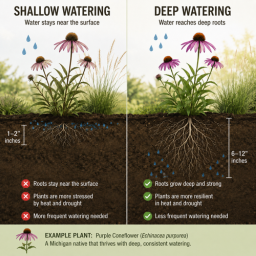
Deep watering encourages roots to grow downward in search of moisture.
Frequent shallow watering encourages roots to remain near the soil surface.
And shallow roots are much more vulnerable to heat and drought.
In other words…
We aren’t simply watering today’s plant.
We’re helping build tomorrow’s root system.
Deep Roots Create Resilient Gardens
Imagine two gardens.
The first receives a light sprinkle every evening.
The soil surface stays damp.
The roots remain shallow.
The second garden receives a slow, thorough soaking once or twice each week, depending on rainfall.
Water moves several inches into the soil.
The roots follow.
By midsummer, those two gardens often look very different.
The deeply watered plants are generally better equipped to handle periods of heat and dry weather because their roots have learned where to find moisture.
That’s exactly what we want native plants to do.
Every Garden Is Different
No article can tell you to water every three days or once a week because every landscape is unique.
Several factors influence how quickly soil dries:
- Sandy soil
- Clay soil
- Full sun
- Partial shade
- Wind exposure
- Slope
- Newly planted versus established gardens
A planting surrounded by reflective pavement may dry much faster than one growing beneath the filtered shade of mature trees.
Learning to observe your own garden is far more valuable than following a fixed schedule.
Let the Soil Be Your Guide
Instead of watering by the calendar, water according to the soil.
An easy way to check is to gently push your finger two to three inches into the ground near the base of the plant.
If the soil still feels cool and moist, watering can usually wait.
If it feels dry several inches down, it’s time to water deeply.
The Michigan State University Extension offers excellent guidance on understanding soil moisture and watering practices that encourage healthier root systems, especially during plant establishment.
Paying attention to the soil rather than the calendar helps you respond to what your garden actually needs.
Watering Is Temporary
One of my favorite things about native gardening is that many of the tasks become easier over time.
Watering is one of them.
During the first season, your role is to help plants become established.
As roots grow deeper, your job gradually changes.
Instead of providing frequent assistance, you’re simply supporting plants during extended periods of drought.
That’s one reason native gardens become lower maintenance as they mature.
They’re designed to become more self-sufficient, not more dependent.
And that’s a beautiful thing.
How to Water Native Plants the Right Way
Knowing when to water is important.
Knowing how to water is just as important.
The goal isn’t to wet the leaves or simply dampen the surface of the soil.
Instead, aim to water slowly enough that moisture has time to soak several inches into the ground where developing roots can reach it.
A gentle stream from a watering wand, soaker hose, or drip irrigation system is often more effective than a quick spray from a hose nozzle.
Slow watering allows the soil to absorb moisture instead of letting it run off the surface—especially in sloped gardens or areas with compacted clay soil.
When you’re finished watering, imagine what happened beneath the surface.
If the water only reached the top inch of soil, the roots have little reason to grow deeper.
If moisture reaches six inches or more, the roots naturally follow.
That’s exactly what we’re trying to encourage.
Morning Is Usually the Best Time to Water
Whenever possible, water early in the morning.
Morning watering gives plants time to absorb moisture before the heat of the day arrives while allowing leaves to dry quickly.
Watering late in the evening isn’t always harmful, but prolonged moisture on foliage overnight can sometimes encourage fungal diseases in susceptible plants.
Fortunately, many native Michigan plants have evolved with excellent natural disease resistance.
Even so, watering the soil rather than the leaves is always a good habit.
🌿 Garden Tip
Water the roots—not the leaves.
The roots are where your effort makes the greatest difference.
Don’t Be Afraid of Dry Soil
This may sound surprising…
Healthy native gardens aren’t supposed to stay constantly moist.
In fact, allowing the upper layer of soil to dry slightly between deep waterings encourages stronger, deeper root growth.
Many gardeners worry the moment the soil surface begins to look dry.
But the surface doesn’t tell the whole story.
Just a few inches below, there may still be plenty of moisture available.
That’s why checking the soil with your finger is often one of the simplest and most reliable ways to decide whether watering is actually needed.
Rain Counts Too
One of the biggest mistakes gardeners make is watering by habit instead of paying attention to the weather.
A slow soaking rain can provide far more benefit than a sprinkler running for a few minutes.
After a good rainfall, pause before reaching for the hose.
Take a moment to feel the soil.
Your plants may already have everything they need.
Learning to make the most of natural rainfall benefits both your garden and Michigan’s water resources. The Michigan Department of Environment, Great Lakes, and Energy (EGLE) offers helpful information about protecting water quality and using water wisely in the landscape.
Newly Planted vs. Established Native Plants
It’s helpful to think of native gardens in two stages.
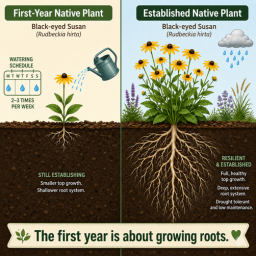
First-Year Plants
These are still developing their root systems.
They benefit from regular observation and occasional deep watering whenever the soil begins to dry several inches below the surface.
Established Plants
After one or two growing seasons, many native plants become remarkably resilient.
Their extensive root systems often allow them to withstand normal summer dry periods with very little supplemental watering.
That doesn’t mean you’ll never water again.
Extended droughts can still stress even mature native gardens.
But instead of watering every week, you may find yourself watering only when nature truly needs a helping hand.
Nature Is Still the Best Teacher
One of the greatest rewards of native gardening is learning to trust the plants.
As you spend time observing your garden, you’ll begin to recognize the subtle signs that plants are thriving.
You’ll notice which areas stay moist longer.
You’ll discover where sandy soil dries quickly or where clay holds water after a rain.
Over time, your watering routine becomes less about following instructions and more about understanding your landscape.
That’s when gardening begins to feel less like a chore—and more like a conversation with nature.
Healthy soil absorbs and stores water more effectively, which is one reason improving soil structure benefits both plants and the environment. The USDA Natural Resources Conservation Service provides an excellent introduction to the principles of soil health.
Common Watering Mistakes (and How to Avoid Them)
Even experienced gardeners occasionally struggle with watering.
The good news is that native plants are remarkably forgiving.
A few simple adjustments can make a tremendous difference.
Mistake #1: Watering Too Often
The most common mistake isn’t forgetting to water.
It’s watering too frequently.
Frequent shallow watering encourages roots to remain near the soil surface, where they become more vulnerable to summer heat and dry weather.
Instead, allow the soil to dry slightly between deep waterings.
Your plants will reward you by developing stronger, deeper root systems.
Mistake #2: Assuming Every Plant Needs the Same Amount of Water
Not all native plants have identical moisture needs.
For example:
- Butterfly Weed thrives in well-drained, drier soils.
- Buttonbush naturally grows in moist locations.
- Wild Bergamot appreciates average moisture but tolerates dry periods once established.
- Blue Flag Iris enjoys consistently moist soil.
That’s one reason choosing the right plant for the right place is so important.
When a plant is growing where it naturally wants to be, watering becomes much simpler.
Mistake #3: Watering on a Schedule Instead of Observing
Calendars don’t know whether it rained yesterday.
Your garden does.
One week may bring several inches of rain.
The next may be hot, sunny, and windy.
Instead of watering because it’s “Tuesday,” take a moment to observe your garden.
Check the soil.
Look at the weather.
Notice how your plants are responding.
Those observations will tell you far more than a fixed schedule ever could.
When Native Plants Look Wilted
One of the most common concerns I hear is:
“My native plants are drooping. Do they need water?”
Maybe.
But not always.
Many native plants temporarily wilt during the hottest part of a summer afternoon as a natural response to heat.
It’s their way of conserving moisture.
As temperatures cool in the evening, they often perk right back up.
Before reaching for the hose, wait until early evening or the following morning.
If the plant has recovered, there’s usually no cause for concern.
If it’s still wilted and the soil several inches below the surface is dry, it’s time for a deep watering.
Learning this difference helps prevent unnecessary watering while building confidence as a gardener.
A Garden That Teaches Patience
One of my favorite things about native gardening is that success isn’t measured by how much work you do.
It’s measured by how well you understand the landscape you’re creating.
Each season teaches you something.
You’ll begin to recognize which areas dry quickly after a rain.
You’ll notice where morning dew lingers.
You’ll discover which plants ask for a little extra help during extended drought—and which quietly carry on without it.
Little by little, watering becomes less about maintenance and more about stewardship.
You’re not trying to force the garden to grow.
You’re simply helping it become what it was designed to be.
🌿 Coming Next
Why Native Bees Are the Garden’s Most Important Pollinators
When we think about pollinators, honey bees often come to mind first.
But Michigan is home to hundreds of native bee species, many of which are more efficient pollinators than honey bees.
In our next article, we’ll explore why native bees are essential to healthy gardens, how they differ from honey bees, and simple ways to create a landscape that supports them throughout the growing season.
Continue Growing
If you enjoyed this article, you may also enjoy:
- Creating a Beautiful Native Garden with Layers
- Best Native Shrubs for Privacy and Wildlife
- Do You Really Need Fertilizer? A Michigan Perspective
- The Best Native Grasses for Michigan Gardens
- How to Keep Native Plants Healthy During Summer Heat
A Final Thought
The best formula for watering native plants isn’t complicated.
Water deeply.
Water thoughtfully.
Observe often.
Then trust the remarkable adaptations that native Michigan plants have developed over thousands of years.
As those roots grow deeper, you’ll likely find yourself reaching for the watering can less often.
And that’s one of the greatest rewards of gardening with native plants.
The goal isn’t to create plants that depend on you forever.
It’s to help them become healthy enough that one day, they hardly need you at all.
Happy Gardening,
Barbara 🌿
Michigan Garden Design