
Simple Garden Tips for Michigan Gardeners That Actually Work
Creating a low-maintenance garden in Michigan is often much easier than people expect.
The secret is not doing more.
It is choosing plants and garden practices that work with nature instead of constantly fighting against it.
When you begin with native Michigan plants, group them thoughtfully, water with intention, and allow the garden to evolve naturally over time, you can create a beautiful space that requires less watering, fewer chemicals, and far less long-term upkeep.
A low-maintenance native garden is not about neglect.
It is about designing a garden that becomes stronger, healthier, and more self-sustaining with each passing season.
If you are just beginning your Michigan gardening journey, these simple tips will help you create a peaceful, pollinator-friendly garden that actually works.
Quick Answer: What Are the Best Low-Maintenance Garden Tips for Beginners?
The best low-maintenance garden tips for beginners are to start small, choose plants that naturally grow well in your region, group plants with similar sunlight and water needs, mulch with intention, water deeply instead of constantly, avoid unnecessary chemicals, and let your garden fill in naturally over time.
For Michigan gardeners, native plants are especially helpful because they are adapted to local climate, soil, rainfall patterns, pollinators, and wildlife.
That means your garden can become easier to care for while also supporting bees, butterflies, birds, frogs, toads, and beneficial insects.
Why Native Gardens Are Lower Maintenance in Michigan
Native plants are plants that evolved naturally in a specific region over time.
In Michigan, native plants are already adapted to many of our local growing conditions, including cold winters, spring temperature swings, summer heat, changing rainfall, and a wide variety of soil types.
That is one of the reasons native plants can be such a beautiful choice for low-maintenance Michigan gardens.
When native plants are placed in the right conditions, they often require less watering, less fertilizer, and fewer long-term inputs than many traditional ornamental plants.
They also support the living world around them.
A native garden can provide nectar and pollen for pollinators, seeds and insects for birds, shelter for beneficial insects, and healthier habitat for frogs, toads, and small wildlife.
For Michigan-specific native plant guidance, Michigan State University Extension native plant resources are a wonderful place to learn how native plants support pollinators and beneficial insects.
Start Small So You Do Not Get Overwhelmed
One of the most helpful low-maintenance garden tips for beginners is also one of the simplest.
Start small.
You do not need to redesign your entire yard in one season.
Choose one small area you can realistically care for and observe. This could be a corner of your yard, a narrow garden bed, the edge of a walkway, a sunny patch near your porch, or an area where lawn grass is already struggling.
Starting small allows you to learn what works before investing too much time, money, or energy.
It also gives you a chance to watch how sunlight, moisture, soil, and plants interact throughout Michigan’s changing seasons.
A small native garden can still make a meaningful difference for pollinators and wildlife.
It can also help you build confidence as a gardener.
Choose Plants That Want to Grow Where You Plant Them
The easiest way to reduce garden maintenance is to choose plants that naturally fit your space.
Before buying anything, take a little time to observe your garden area.
Notice how much sunlight the space receives. Does it get full sun, part sun, part shade, or mostly shade?
Notice the soil. Does it stay dry? Does it hold moisture? Does water collect after rain?
Notice the exposure. Is the area protected or windy? Is it close to the house, a fence, or trees?
Once you understand the space, you can choose native plant species that are more likely to thrive there.
This matters because a plant in the wrong place will usually need more attention.
It may need extra watering, extra pruning, extra protection, or constant problem-solving.
A plant in the right place can begin to take care of itself.
The Lady Bird Johnson Wildflower Center Native Plant Database is a helpful resource for researching native plant species, bloom times, soil preferences, sunlight needs, and growing conditions.
Use Beginner-Friendly Native Michigan Plants
When you are new to native gardening, choose plants known for being dependable, beautiful, and relatively easy to grow.
You do not need a complicated plant list to create a lovely garden.
A few well-chosen native plants can create color, texture, movement, and habitat.
Beginner-friendly native Michigan plants to consider include little bluestem, prairie dropseed, butterfly weed, wild bergamot, black-eyed Susan, foxglove beardtongue, smooth blue aster, wild columbine, and purple coneflower.
If your space is sunny and dry, plants like butterfly weed, little bluestem, prairie dropseed, and black-eyed Susan may be good options.
If your space has part shade, wild columbine and some woodland-friendly native plants may be a better fit.
If your soil holds more moisture, you may want to look for native plants that naturally tolerate wetter conditions.
The goal is not to pick plants only because they are pretty.
The goal is to choose plants that are beautiful and suited to the place where they will grow.
Group Plants With Similar Needs
Another simple way to make your garden easier to maintain is to group plants with similar needs.
Place sun-loving plants together.
Place moisture-loving plants together.
Place drought-tolerant plants together.
This makes watering, mulching, and general care much easier.
It also helps the garden feel calmer and more intentional.
In nature, plants often grow in communities. A low-maintenance native garden can borrow from that same idea.
Instead of scattering one plant here and one plant there, try planting in small groups or drifts.
Grouped plants are easier for pollinators to find, and they create stronger visual impact in the garden.
This is especially helpful in pollinator gardens, where clusters of flowers can attract bees, butterflies, moths, and hummingbirds more effectively than isolated single plants.
For regional pollinator plant ideas, the Xerces Society Great Lakes native pollinator plant list is an excellent resource.
Mulch With Intention
Mulch is one of the simplest tools for creating a lower-maintenance garden.
It helps hold moisture in the soil, reduce weeds, protect plant roots, and improve the garden’s appearance while plants are getting established.
For native gardens, natural-looking mulch often works best.
Shredded leaves, leaf mold, pine fines, wood chips, or natural bark mulch can blend beautifully into the landscape while supporting healthier soil over time.
The key is not to pile mulch too deeply against plant crowns or stems.
A light, thoughtful layer is often enough.
Mulch is especially helpful during the first year or two while native plants are establishing their root systems.
As the garden matures and plants begin to fill in, they can shade the soil naturally and reduce the need for as much mulch over time.
Water Deeply Instead of Constantly
Many beginner gardeners water too often but not deeply enough.
Light daily watering can encourage shallow roots, which makes plants more dependent on constant attention.
A better approach is to water deeply when needed, especially during the first growing season.
Deep watering encourages roots to grow downward, which helps plants become stronger and more resilient.
Once established, many native Michigan plants need far less supplemental watering than traditional ornamental plants.
That does not mean you never water.
It means you learn to water with purpose.
During dry stretches, especially in the first year, check the soil and water deeply when needed.
Over time, a well-planted native garden can often handle normal Michigan weather patterns with less intervention.
Keep Weeding Simple and Consistent
Weeding is much easier when you stay ahead of it.
You do not need to spend hours every week in the garden, but a few minutes of regular attention can prevent weeds from taking over.
In a new native garden, it is especially important to recognize the difference between your planted species, volunteer seedlings, and weeds.
Using plant markers during the first season can help.
Taking photos of your garden after planting can also help you remember what is supposed to be there.
As native plants mature and fill in, they often shade the soil and leave less open space for weeds to grow.
This is one of the reasons patience matters.
A native garden may look a little sparse in the beginning, but over time it can become fuller, softer, and easier to care for.
Let Your Garden Fill In Naturally
One of the most beautiful parts of native gardening is watching the garden evolve.
Native plants may spread slowly, reseed gently, form larger clumps, or soften the edges of a bed over time.
This is not a problem.
It is part of the beauty.
A low-maintenance native garden does not need to be constantly redesigned or replanted to feel full and alive.
Instead, it becomes more layered and natural with each season.
Some plants may surprise you.
Some may move a little.
Some may need dividing after a few years.
But much of the time, the garden becomes stronger as it settles in.
Patience is one of the most important tools in low-maintenance gardening.
Embrace a Slightly Wild Look
A native garden is not meant to look perfectly manicured.
It is meant to feel alive.
That does not mean it has to look messy.
You can still create clean edges, thoughtful groupings, and a beautiful design.
But native gardens often look best when they are allowed to move, soften, and change through the seasons.
Leaving seed heads through fall and winter can provide food for birds and visual interest for you.
Leaving some leaves in garden beds can protect insects and enrich the soil.
Allowing grasses to stand through winter can create movement, shelter, and structure.
A slightly wild garden can still be beautiful.
It can also be far easier to maintain than a garden that requires constant trimming, deadheading, spraying, and controlling.
Avoid Unnecessary Fertilizer
Many native plants do not need heavy fertilizing.
In fact, too much fertilizer can sometimes encourage weak, floppy growth or create conditions that favor weeds.
If your native plants are matched well to your soil and sunlight, they often do not need much extra feeding.
Instead of relying on synthetic fertilizers, focus on building healthier soil naturally.
Let leaves break down in garden beds.
Use natural mulch.
Avoid disturbing the soil more than necessary.
Choose plants that are suited to the conditions you already have.
Low-maintenance gardening becomes much easier when we stop trying to force the soil to be something it is not.
Reduce Pesticides Whenever Possible
A low-maintenance native garden should support life, not work against it.
Many pesticides can harm more than the pest you are trying to control.
They may also affect bees, butterflies, beneficial insects, birds, frogs, toads, and other small creatures that are part of a healthy backyard ecosystem.
Native gardens often become more balanced over time because they attract beneficial insects and natural predators.
That does not mean you will never have insect damage.
You probably will.
But a few chewed leaves are not always a sign of failure.
Sometimes they are a sign that your garden is becoming habitat.
For more information on supporting pollinators and beneficial insects, MSU Extension’s native plant and ecosystem services resources are especially helpful.
Create Habitat for Pollinators
A low-maintenance garden can also be a pollinator garden.
To support bees, butterflies, moths, and other pollinators, choose a variety of native flowers that bloom at different times of the season.
Early blooms help pollinators emerging in spring.
Summer flowers provide energy during the busiest part of the season.
Late-season flowers are especially important as pollinators prepare for migration, overwintering, or the end of their life cycle.
Planting in groups, avoiding pesticides, including native host plants, and leaving some natural material in the garden can all help.
Pollinator gardens do not need to be complicated.
They simply need to offer food, shelter, and safety.
Create Bird Habitat With Native Plants
Native plants are also incredibly valuable for birds.
Birds depend on native plants for seeds, berries, insects, nesting places, and shelter.
Even a small garden can help.
Native grasses can provide seeds and cover.
Flowering perennials can attract insects that birds feed to their young.
Shrubs and small trees can offer structure, protection, and seasonal food.
If you want your garden to support birds, think beyond flowers alone.
Think about layers.
A bird-friendly garden can include perennials, grasses, shrubs, small trees, leaf litter, seed heads, and places to perch and shelter.
The Audubon Native Plants Database is a wonderful tool for finding native plants that help support birds in your area.
Make Your Garden More Amphibian-Friendly
Frogs and toads may not be the first creatures people think about when designing a garden, but they are an important part of a healthy landscape.
They also benefit from many of the same choices that make a garden lower maintenance.
Amphibian-friendly gardens often include moisture, shelter, leaf litter, insects for food, and fewer chemicals.
You can help frogs and toads by avoiding unnecessary pesticides, leaving some natural cover, creating shaded protected areas, and offering a shallow water source if it fits your space.
Even a small area with native plants, mulch, leaves, and shelter can become more welcoming to amphibians than a bare, overly tidy landscape.
The garden does not have to be perfect.
It simply has to be safer and more supportive than it was before.
Leave Some Seed Heads and Leaves
One of the easiest low-maintenance garden tips is to stop cleaning everything up too quickly.
In traditional gardening, fall cleanup often means cutting everything down and removing every leaf.
But in a native garden, some of that natural material has value.
Seed heads can feed birds.
Stems can provide overwintering places for beneficial insects.
Leaves can protect soil, shelter small creatures, and break down into organic matter.
You do not have to leave everything exactly as it falls.
You can still keep walkways clear and maintain a tidy front edge.
But allowing some natural material to remain in garden beds can support wildlife and reduce work at the same time.
That is one of the quiet gifts of native gardening.
Less work can actually mean more life.
Use Edges to Keep the Garden Looking Intentional
If you are worried that a native garden will look too wild, focus on the edges.
A clean edge can make even a natural garden look intentional.
You might use a simple spade-cut edge, stones, a defined border, a mowed path, or a curved bedline.
This creates structure without requiring the garden itself to be overly controlled.
Inside the bed, plants can move and soften.
Around the bed, the edge communicates care.
This is one of my favorite ways to balance beauty, habitat, and low-maintenance design.
A Simple Low-Maintenance Native Garden Example
If you are beginning with a small sunny garden bed in Michigan, you might start with a simple combination like this:
Little bluestem for texture, movement, and winter interest.
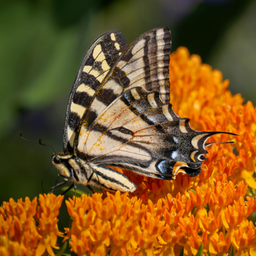
Butterfly weed for bright summer color and monarch support.
Wild bergamot for pollinators and a soft natural look.
Black-eyed Susan for cheerful blooms and beginner-friendly success.
Smooth blue aster for late-season flowers when pollinators still need food.
This combination offers color, texture, seasonal interest, and habitat value without becoming overwhelming.
You can always add more later.
The best native gardens are often built slowly.
A Garden That Works With You
A low-maintenance garden is not a garden you ignore.
It is a garden you design with care so it can become more self-supporting over time.
It is a garden that asks you to pay attention, but not constantly interfere.
It is a garden that teaches patience.
When you choose native Michigan plants, group them thoughtfully, water with intention, avoid unnecessary chemicals, and allow the garden to evolve, your landscape becomes more resilient and more alive.
Pollinators begin to visit.
Birds begin to notice.
Frogs and toads may find shelter.
Beneficial insects begin doing quiet work behind the scenes.
And somewhere along the way, gardening begins to feel less like a chore and more like a relationship.
That is the beauty of a low-maintenance native garden.
It works with you because it works with nature.
Frequently Asked Questions About Low-Maintenance Native Gardens
Are native gardens really lower maintenance?
Yes, many native gardens become lower maintenance once established because native plants are adapted to local climate, soil, rainfall, and seasonal conditions. They still need care in the beginning, especially watering and weeding, but they often require less long-term intervention than many traditional ornamental gardens.
What are the easiest native plants to grow in Michigan?
Beginner-friendly native Michigan plants include little bluestem, prairie dropseed, butterfly weed, wild bergamot, black-eyed Susan, wild columbine, foxglove beardtongue, and smooth blue aster. The best choice depends on your sunlight, soil, and moisture conditions.
Do native gardens attract pollinators?
Yes. Native plants can support bees, butterflies, moths, hummingbirds, and other pollinators by providing nectar, pollen, host plants, and shelter throughout the growing season.
How often should I water a native garden?
New native gardens usually need regular watering during the first growing season while roots become established. After that, many native plants need less supplemental watering, especially when they are matched to the right site conditions.
Do native gardens help birds?
Yes. Native gardens can provide seeds, insects, berries, shelter, and nesting areas for birds. Adding native grasses, flowering perennials, shrubs, and small trees can make your garden more bird-friendly over time.
Do native gardens help frogs and toads?
Yes. Native gardens can support frogs and toads by providing shelter, insects for food, moisture, leaf litter, and fewer chemical inputs. A more natural garden is often a safer garden for amphibians.
What is the easiest way to make a garden low maintenance?
The easiest way is to choose plants that match your existing conditions. Start small, group plants with similar needs, mulch thoughtfully, water deeply, reduce pesticide use, and allow plants to fill in naturally over time.
Coming Next
Best Native Plants for Michigan Pollinator Gardens
If you are just beginning your native gardening journey, you may also enjoy:
Pingback: The Best Native Michigan Plants for Wet Areas - michigangardendesign.com