
The Best Native Plants for Fall and Winter Interest
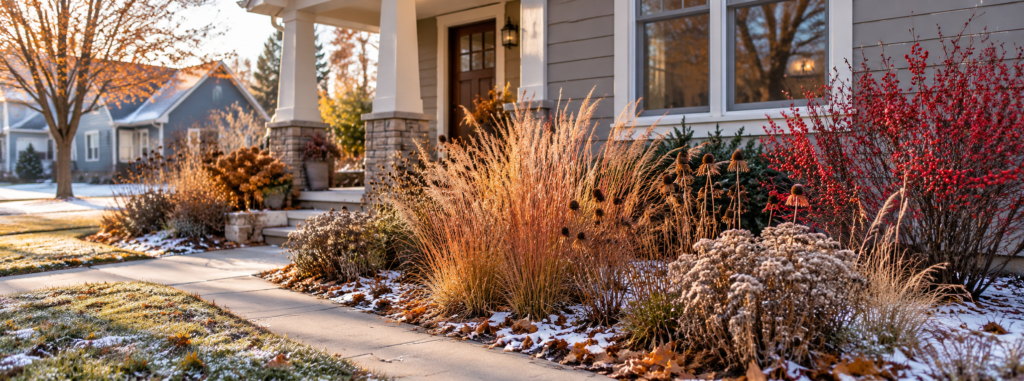
There is a moment in every Michigan garden when the bright colors of summer begin to fade, the days grow shorter, and the landscape starts preparing for winter.
For many gardeners, this is when the garden begins to feel finished.
Flowers disappear. Leaves change color and eventually fall. Plants that once filled the garden with movement and life begin to dry, bend, or settle toward the ground.
But what if we looked at this season differently?
What if the fading flowers, golden grasses, textured seed heads, and bare branches weren’t signs that the garden was coming to an end, but the beginning of an entirely different kind of beauty?
A thoughtfully planted native garden doesn’t have to lose its beauty when the blooming season ends. It simply changes the way that beauty is expressed.
And some of Michigan’s most interesting native plants have just as much to offer in November, January, and February as they do in June.
Fall and Winter Interest Is About More Than Color
When we think about choosing plants for our gardens, we often begin with flowers.
What color will they be? When will they bloom? How long will those blooms last?
Those are worthwhile questions, but they only tell part of the story.
A garden that remains interesting throughout Michigan’s colder months relies on characteristics that are sometimes overlooked during the growing season.
Consider the possibilities:
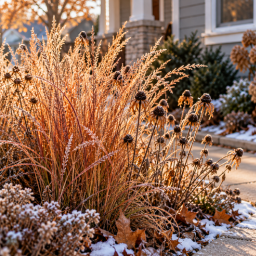
- Seed heads that remain standing after flowers have faded, creating delicate shapes against snow.
- Native grasses that turn shades of copper, gold, and bronze before catching winter frost.
- Berry-producing shrubs that introduce welcome color into an otherwise quiet landscape.
- Interesting bark and branching patterns that become more noticeable after the leaves have fallen.
- Evergreen foliage that provides a sense of permanence when much of the garden is dormant.
These features create what garden designers call seasonal interest, visual qualities that make a landscape appealing at different times of the year.
And they don’t require an elaborate landscape or a large property.
Even a small native planting beside a walkway, near a window, or along the edge of a patio can become something beautiful to observe throughout winter.
The key is choosing plants for what they become, not simply how they look in bloom.
A Winter Garden Can Still Be a Living Garden
One of the most rewarding aspects of using Michigan native plants is discovering how their value extends beyond appearance.
A standing seed head may be beautiful when covered in frost, but it may also provide food for visiting birds.
Dried stems can create overwintering habitat for certain insects, while native grasses and shrubs contribute cover and protection within a larger wildlife-friendly landscape.
Michigan State University Extension encourages gardeners to consider leaving seeds and stems standing through winter because of their value to birds, pollinators, and other wildlife.
This is an important shift in how we think about seasonal garden care.
Rather than viewing every faded plant as something that needs to be removed, we can begin asking what purpose it might still serve.
We explored a related idea in How to Prepare Michigan Native Plants for Winter, where the goal is not to make the garden completely tidy, but to understand what truly needs attention.
A native garden can remain thoughtfully maintained while allowing nature to continue its work.
The Beauty of Seeing a Garden in Every Season
Michigan winters can be long, and the appearance of our landscapes can vary considerably depending on where we live.
Along the Lake Michigan shoreline, winter may bring periods of heavy lake-effect snow. Farther inland, gardens may experience stretches of exposed ground, freezing temperatures, or repeated changes between snow and thaw.
No plant can be expected to remain perfectly upright and beautiful through every winter storm.
But a garden with a variety of forms, heights, and textures has more opportunities to remain visually interesting as conditions change.
This is one reason I encourage gardeners to think beyond individual flowers and consider how plants work together.
A garden filled only with summer-blooming perennials may look spectacular in July but feel surprisingly empty by December.
By combining native plants that offer different seasonal characteristics, we can create a landscape that continues to hold our attention long after the last flower fades.
The same layered thinking appears in The Best Native Plants for Attracting Birds in Michigan, where grasses, shrubs, and trees contribute different qualities to a welcoming habitat.
And perhaps the most appealing part is that winter interest doesn’t necessarily require more garden maintenance.
Sometimes it simply requires choosing plants with a longer seasonal presence—and allowing them to remain.
Michigan Native Plants That Shine Beyond the Growing Season
Some of the most beautiful moments in a Michigan garden happen after the flowers are gone.
A native grass catches the late afternoon sunlight. A cluster of bright berries stands out against fresh snow. The dried seed heads of summer flowers create interesting silhouettes in an otherwise quiet landscape.
Choosing plants that offer these qualities allows us to enjoy our gardens well beyond the traditional growing season.
Here are six Michigan native plants worth considering, each offering something different as the seasons change.
1. Little Bluestem — Beautiful Color and Winter Movement
Little Bluestem (Schizachyrium scoparium)
Full sun | Dry to medium soil | Typically 2–3 feet tall
Little bluestem is one of my favorite examples of a plant that becomes increasingly beautiful as the seasons change.
Its blue-green summer foliage gradually turns copper, rust, and warm reddish bronze in autumn. Delicate, fluffy seed structures catch the sunlight, and the upright stems often remain attractive into winter.
Little bluestem is particularly useful in sunny, well-drained gardens where its relatively compact, clumping habit can soften garden edges or add movement among flowering perennials.
For gardeners interested in natural beauty without an overly formal appearance, this grass is an excellent starting point.
2. Black-Eyed Susan — Seed Heads Worth Keeping
Black-Eyed Susan (Rudbeckia hirta)
Full sun to partial shade | Dry to medium soil | Typically 1–3 feet tall
Most gardeners recognize black-eyed Susans for their cheerful yellow summer flowers. But their dark central seed heads deserve attention long after the petals disappear.
When left standing, those seed heads create small, rounded shapes that contrast beautifully with finer grasses. They can also provide seeds for birds.
Black-eyed Susan is often short-lived, behaving as an annual, biennial, or short-lived perennial depending on conditions. It can maintain its presence by reseeding where conditions are favorable.
Rather than cutting every stem down in fall, consider leaving a few groups standing where you can enjoy their winter silhouettes.
3. Michigan Holly — Brilliant Winter Berries
Michigan Holly (Ilex verticillata)
Full sun to partial shade | Moist to wet, preferably acidic soil | Often 6–10 feet tall
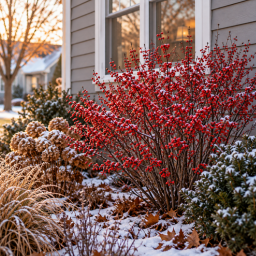
Few Michigan native shrubs create a more striking winter display than Michigan holly, also known as winterberry.
Unlike evergreen hollies, this shrub loses its leaves in autumn, revealing clusters of bright red berries along its branches.
The berries may persist into winter and offer food for birds, although wildlife activity can affect how long the display lasts.
Michigan holly is especially attractive near a window or along a naturalized garden border. For fruit production, female plants need pollen from a compatible male winterberry that blooms at the same time.
4. Common Ninebark — Bark That Becomes the Attraction
Common Ninebark (Physocarpus opulifolius)
Full sun to partial shade | Adaptable to varied soils | Typically 6–9 feet tall
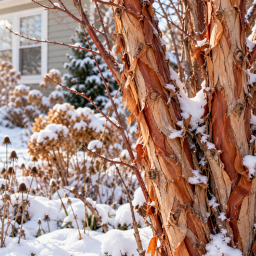
Common ninebark offers something a little different: its greatest winter feature isn’t a flower, berry, or seed head. It’s the bark.
As the shrub matures, older stems develop layers of peeling, textured bark that become especially noticeable after the leaves fall.
Ninebark is a versatile shrub for larger residential borders and informal screens. Give it adequate room to develop its natural shape rather than relying on frequent, tight pruning.
Its branching and bark provide visual interest even during winters with little snow.
5. Red-Osier Dogwood — Color Without Flowers
Red-Osier Dogwood (Cornus sericea)
Full sun to partial shade | Medium to wet soil | Often 6–9 feet tall or more
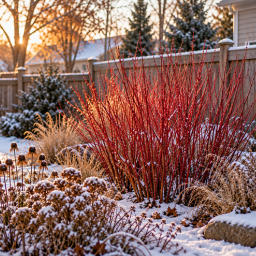
Red-osier dogwood offers winter color in an unexpected place; its stems.
Once the leaves fall, its reddish branches can become particularly vivid against snow, evergreen foliage, or a pale winter sky.
This spreading native shrub is best suited to areas where it has room to grow, especially moist garden edges and naturalized plantings.
Its younger stems generally provide the strongest color, making thoughtful renewal pruning useful as the shrub matures.
For homeowners with limited space, its eventual width and spreading tendency deserve consideration before planting.
6. Black Gum — A Tree for Autumn Color and Winter Character
Black Gum (Nyssa sylvatica)
Full sun to partial shade | Moist, well-drained to periodically wet soils | Often 30–40 feet tall in landscapes
For gardeners with room for a tree, black gum offers one of Michigan’s most memorable autumn displays.
Its glossy green leaves transform into brilliant combinations of scarlet, orange, and red.
After the leaves fall, its branching pattern and textured bark continue providing winter interest. Its fruits are also eaten by birds and other wildlife.
Black gum is a long-term landscape choice, so consider its eventual size and location carefully. It can make a beautiful focal point where its autumn color is visible from the home.
Choosing Plants for the Garden You Actually Have
Not every beautiful native plant belongs in every Michigan garden.
Before choosing from this group, consider how much sunlight your planting area receives, how moisture moves through the soil, and how much space each plant will have at maturity.
A sunny, sandy garden might be an excellent home for little bluestem, while a consistently moist location may provide better conditions for Michigan holly or red-osier dogwood.
Remember that winter interest doesn’t depend on having all six plants. A combination of just two or three, chosen thoughtfully for your conditions, can create a rewarding seasonal display.
For additional guidance on matching native species to regional conditions, Michigan State University Extension is a helpful starting point.
Let Your Garden’s Winter Beauty Remain
Choosing native plants with interesting seed heads, colorful stems, berries, and graceful grasses is a wonderful beginning.
But there is one more consideration that can make a remarkable difference in how your garden looks throughout Michigan’s colder months.
We need to give those plants an opportunity to show us what they become.
For many years, traditional gardening advice encouraged us to cut everything back in autumn, remove fallen leaves, and prepare the landscape for winter by making it as tidy as possible.
Yet some of the most beautiful features of a winter garden are the very things we have been taught to remove.
The seed heads of black-eyed Susans, the copper-colored stems of little bluestem, and the natural shapes of dormant perennials can all contribute to a landscape that remains interesting long after flowering has ended.
Rather than cutting everything down, consider a more selective approach.
Leave sturdy stems and seed heads standing where practical. Allow fallen leaves to remain in suitable planting beds, away from areas where they may create drainage or safety concerns. Remove diseased plant material when appropriate, and give special attention to keeping walkways and entrances clear.
This approach can preserve winter beauty while providing habitat for some of the wildlife that shares our gardens.
It also reinforces an important lesson from Learning How to Trust Your Native Garden: sometimes the most helpful gardening decision is knowing when not to intervene.
Think About What You’ll See From Indoors
We often design gardens while standing outside, imagining how plants will look along a walkway, patio, or garden border.
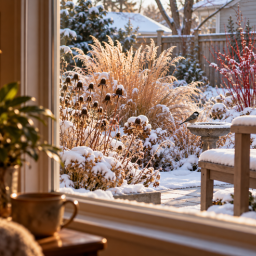
But in Michigan, we spend a considerable portion of the colder months enjoying our landscapes from inside our homes.
Before choosing where to plant, consider the views from your favorite windows.
Could a group of native grasses catch the low afternoon sunlight? Would the bright berries of Michigan holly provide a welcome splash of color outside a kitchen window? Might a beautifully branched shrub become an unexpected focal point after snowfall?
Small decisions about placement can make winter interest feel like an intentional part of your garden rather than a seasonal accident.
And remember, not every plant needs to make a dramatic statement.
Sometimes the contrast between a soft grass, a textured seed head, and a snow-covered evergreen is all a garden needs.
Barbara’s Observation
I’ve come to appreciate that a garden doesn’t have to be colorful to be beautiful.
There is something especially peaceful about a Michigan garden after the growing season has ended. The details that were once hidden behind flowers and foliage begin to reveal themselves.
I notice the graceful bend of a grass, the shape of a seed head, or the way frost transforms an ordinary stem into something extraordinary.
These quieter moments have reminded me that a garden’s beauty is not limited to the months when everything is growing and blooming.
Sometimes we simply need to look a little closer to recognize what is already there.
And perhaps that’s one of the greatest gifts a native garden offers us, the opportunity to discover something worth appreciating in every season.
Continue Discovering With Your Michigan Native Garden Journal
Fall and winter are wonderful seasons for noticing details that might otherwise go overlooked.
Choose one area of your garden and photograph it as autumn gives way to winter. Record which plants remain standing, where birds visit, and how the landscape changes after frost or snowfall.
These observations can become surprisingly helpful when making planting decisions next spring.
The Michigan Native Garden Journal was created to encourage exactly this kind of discovery, learning from the garden you already have.
COMPLIMENTARY FIRST MONTH
The Michigan Native Garden Journal
Observe • Discover • Wonder • Grow.

The Michigan Native Garden Journal
Keep Exploring
If you’re thinking about extending your garden’s beauty and ecological value beyond summer, these Michigan Garden Design articles offer additional ideas.
– How to Prepare Michigan Native Plants for Winter — Learn what truly needs attention before winter arrives and what can remain undisturbed.
– How to Create Garden Rooms with Native Plants — Explore how different plant heights, shapes, and groupings can make your garden feel more inviting throughout the year.
– Learning How to Trust Your Native Garden — Discover why allowing natural changes to unfold can become one of the most rewarding parts of native gardening.
– The Best Native Plants That Feed Goldfinches — Learn how seed-producing native plants can contribute to a garden that welcomes birds beyond the blooming season.
What’s Next?
Before making plans for next year’s garden, spend a few minutes looking at what remains in your landscape right now.
Notice which plants still contribute something interesting.
Perhaps it’s the shape of a dried flower, the movement of an ornamental grass, or a shrub whose branches are becoming more noticeable as the leaves disappear.
Then ask yourself one simple question:
What would I enjoy seeing from this same spot in the middle of January?
Your answer may help you identify exactly where a thoughtfully chosen Michigan native plant could make a difference.
You don’t need to redesign your garden all at once. Sometimes adding just one plant with an interesting winter feature is enough to begin changing how you experience the colder months.
Coming Next: How to Add Winter Structure to Your Native Garden
Now that we’ve explored native plants that bring beauty to Michigan gardens in fall and winter, let’s take the idea one step further.
Our next Michigan Garden article, How to AddWinter Structure to Your Native Garden, will explore how to arrange plants so their shapes, heights, and branching patterns work together, even when flowers and leaves are no longer part of the picture.
We’ll look at how thoughtful placement can create a garden that feels balanced, welcoming, and interesting throughout the winter months.
Because a beautiful winter garden isn’t necessarily one with more plants.
Sometimes it’s simply one where every plant has a purpose.