
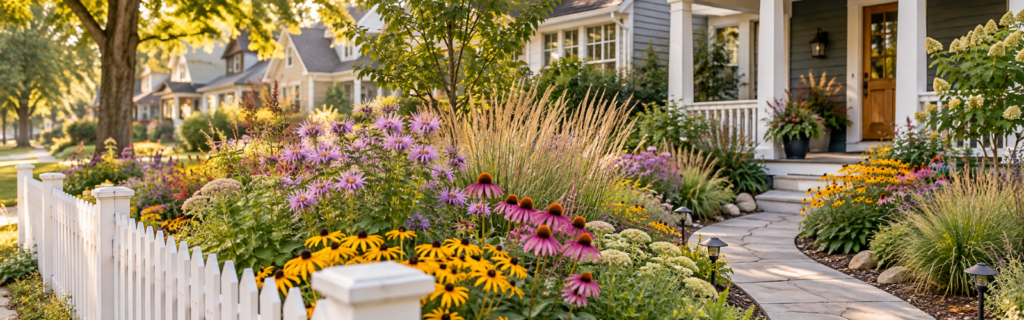
How to Plan a Pollinator Garden for Next Year
The best pollinator gardens begin with thoughtful planning, an understanding of your landscape, and a little patience.
There is something wonderfully hopeful about planning a garden for a season that hasn’t arrived yet. Even as Michigan’s growing season winds down, we can imagine what might be possible when spring returns—more flowers, more movement, and more opportunities to welcome butterflies, bees, and other beneficial insects into our landscapes.
But creating a successful pollinator garden involves more than choosing beautiful flowers.
A thoughtfully designed garden considers what pollinators need throughout the growing season, how plants work together, and how the landscape can provide food, shelter, and places for the next generation of insects to develop.
And perhaps the most encouraging part? You don’t need a large property or an elaborate landscape plan to make a meaningful difference.
Whether you’re beginning with a small garden bed, transforming a section of lawn, or expanding an established native planting, the quieter months ahead offer a wonderful opportunity to plan.
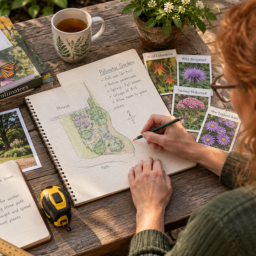
Why Fall Is a Good Time to Begin Planning
When spring arrives, it’s easy to become excited by everything blooming at the garden center. Beautiful plants catch our attention, and before long, we’re bringing home flowers without necessarily knowing where they’ll fit or how they’ll contribute to the larger garden.
Planning ahead changes that experience.
Instead of making decisions based primarily on what’s available or flowering at the moment, you can begin with a clearer understanding of what your garden actually needs.
Consider the areas of your landscape that receive morning sunlight, afternoon shade, or remain moist after rainfall. Notice where existing plants are thriving and where something seems to be missing.
These observations can help you make better choices when planting season arrives.
If you’re considering converting an area of lawn into native habitat, our article Why Fall Is One of the Best Times to Plant Michigan Native Plants offers additional insight into the benefits of seasonal planting.
Even if you don’t plant anything this fall, the time you spend observing and preparing can be valuable.
Think Beyond Flowers: What Pollinators Really Need
A pollinator garden should offer more than a beautiful display during the peak of summer.
Different pollinators become active at different times, and their needs extend beyond finding nectar.
Native bees depend on suitable flowers for pollen and nectar, but many also require appropriate nesting locations. Butterflies need nectar sources as adults, while their caterpillars depend on specific host plants for food.
Some beneficial insects spend winter in fallen leaves, standing stems, or other protected places within the landscape.
The Xerces Society’s pollinator gardening guidance emphasizes the importance of providing flowers throughout the growing season, suitable nesting habitat, and protection from pesticides.
This broader understanding can change how we approach garden design.
Instead of asking only, “Which flowers will attract butterflies?” we might begin asking, “How can this space support pollinators through more of their life cycle?”
That’s an important distinction.
Our previous article, How to Design a Native Garden for Year-Round Wildlife, explores a similar principle: the most useful gardens offer resources beyond a single season.
Plan for a Succession of Blooms
One of the most valuable considerations when planning a pollinator garden is ensuring that something is flowering across as much of the growing season as practical.
A garden filled with summer flowers may look spectacular in July but offer fewer resources during early spring or late autumn.
Michigan native plants provide opportunities to build a progression of blooms, with different species contributing at different times.
Early-flowering plants can provide food as pollinators become active in spring. Summer bloomers help maintain those resources, while late-season flowers continue providing nectar and pollen as autumn approaches.
Michigan State University Extension encourages gardeners to consider flowering plants from early spring through fall rather than concentrating blooms into one short period.
The goal isn’t to have every plant blooming simultaneously.
It’s to create a garden where one season of flowers gradually gives way to another.
This approach can also make the landscape more interesting, giving gardeners something new to enjoy as the months unfold.

Start With the Garden You Already Have
Before drawing a new garden bed or creating a plant shopping list, take a closer look at your existing landscape.
You may already have native flowers, shrubs, or trees contributing to pollinator habitat. Perhaps there’s an area where additional spring flowers would be helpful, or a sunny border that could accommodate more late-season blooms.
Sometimes, improving a pollinator garden means adding a few well-chosen plants rather than starting over.
And sometimes, as we explored in How to Let Your Native Garden Fill in Naturally, allowing existing plants more time and space can be just as important as introducing something new.
A thoughtful plan begins by recognizing what’s already working.
The beauty of planning during the quieter season is that there’s no need to rush. You have time to consider the possibilities, evaluate your growing conditions, and imagine how your garden might develop over the coming years.
A successful pollinator garden isn’t simply a collection of flowers.
It’s a living landscape designed to offer something useful through changing seasons.
Choose a Location That Works With Your Landscape
Once you begin thinking about what pollinators need, the next step is deciding where your garden will grow.
Start with sunlight. Many flowering Michigan native plants perform best in locations receiving at least six hours of direct sunlight, but there are also wonderful choices for gardens with partial shade.
Pay attention to moisture, too. A sunny area with sandy, fast-draining soil will support a different combination of plants than a low spot that remains moist after rainfall.
Rather than trying to change every characteristic of your landscape, look for plants naturally suited to the conditions you already have.
You might begin with a small border along a walkway, an unused corner of the lawn, or a planting area near a patio where you can enjoy watching visiting pollinators.
A manageable beginning often leads to a more successful garden than attempting to transform the entire landscape at once.
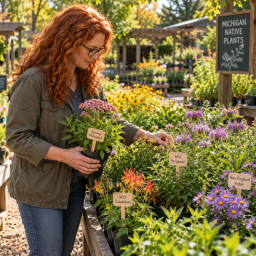
Select Michigan Native Plants for Different Seasons
One of the pleasures of designing a pollinator garden is choosing plants that complement one another while extending the flowering season.
Instead of purchasing a large assortment, begin with a few dependable Michigan native species suited to your growing conditions.
Here are several possibilities worth considering.
Spring — Wild Columbine (Aquilegia canadensis)
Its delicate red-and-yellow flowers bring early color to gardens with partial shade or sun. Wild columbine is especially attractive to hummingbirds and provides a lovely transition into the growing season.
Summer — Wild Bergamot (Monarda fistulosa)
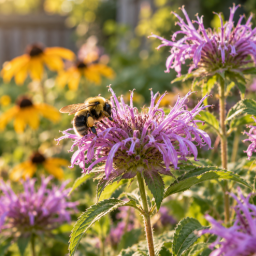
With its soft lavender blooms and aromatic foliage, wild bergamot is frequently visited by bees and butterflies. It works beautifully in sunny plantings with moderately dry to average soil and can gradually spread to form colonies.
Summer — Swamp Milkweed (Asclepias incarnata)
An excellent choice for consistently moist areas, swamp milkweed produces clusters of pink flowers that attract nectar-feeding insects. Its foliage also serves as a larval host for monarch butterflies.
Late Summer into Fall — New England Aster (Symphyotrichum novae-angliae)
Its abundant purple flowers provide late-season nectar and pollen resources. This taller native can be particularly effective toward the back of a border or in a more naturalistic garden setting.
These are starting points rather than a complete planting list. The U.S. Fish & Wildlife Service’s Midwest pollinator plant guide offers additional seasonal choices.
U.S. Fish & Wildlife Service+1
Design With Groups Rather Than Scattered Plants
How you arrange your plants can be nearly as important as which species you choose.
Instead of placing one of each flower throughout the garden, consider planting several of the same species together.
These repeating groups create more noticeable displays of color and make floral resources easier for foraging pollinators to locate. The Xerces Society recommends clustering flowers of the same species where space allows.
xerces.org
This approach also brings a sense of order to the landscape.
Place taller plants where they won’t overwhelm shorter neighbors, and repeat a few colors or plant combinations to create visual continuity.
Remember to account for mature plant sizes. Young native plants may appear small when first installed, but many develop fuller shapes or spread over time.
Our article How to Let Your Native Garden Fill in Naturally explores why giving plants room to develop can be such a valuable part of garden design.
Include Habitat Beyond the Flowers
A pollinator garden can provide more than pollen and nectar.
Consider leaving some standing plant stems through winter, maintaining a few undisturbed areas of soil for ground-nesting native bees, and allowing fallen leaves to remain in suitable garden areas.
These simple decisions create opportunities for shelter and nesting habitat without requiring elaborate structures.
Not every corner of the garden needs to be perfectly tidy.
The Xerces Society’s guidance on nesting sites explains how natural features such as bare soil, hollow stems, and dead wood can support different native bee species.
Xerces Society
Avoiding unnecessary pesticide applications is another important part of protecting the insects you’re hoping to welcome.

Plan for Growth, Not Instant Perfection
A newly planted pollinator garden may look sparse during its first season.
That’s perfectly normal.
Native perennials often spend considerable energy developing their root systems before producing the fuller growth we imagine when designing the garden.
Think of your first planting as the foundation rather than the finished landscape.
Leave room for plants to mature, observe which species thrive, and be willing to make adjustments as you learn more about your particular site.
A garden that develops gradually can become more rewarding with each passing year.
Prepare Now for a More Enjoyable Spring
One of the greatest benefits of planning a pollinator garden during fall and winter is removing some of the pressure that often accompanies spring gardening.
Instead of rushing to select plants when the weather warms, you can approach the new growing season with a thoughtful plan and a clearer understanding of what you want to accomplish.
Begin by identifying the area you’d like to plant. Take a few photographs, note its approximate dimensions, and consider how the space connects with the rest of your landscape.
Winter is also a wonderful time to explore Michigan native plant nurseries, learn about available species, and decide whether you’d prefer to begin with seeds, plugs, or larger plants.
If you’re starting small, that’s perfectly fine.
A modest garden filled with thoughtfully selected native plants can offer valuable resources for pollinators while giving you an opportunity to learn what works best in your landscape.
Let the First Year Be a Learning Experience
When your pollinator garden begins growing next spring, resist the temptation to judge its success too quickly.
Some plants may bloom during their first season, while others need more time to become established. Weather conditions, soil moisture, and the maturity of your plants will all influence what you see.
Pay attention to which flowers attract visitors, which plants appear especially comfortable in their locations, and where additional seasonal interest might be useful.
You may discover that one area needs more early-season flowers or that a particular combination works especially well.
These observations can guide future additions without requiring you to redesign the entire garden.
The goal is not to create a perfect landscape in one growing season.
It’s to begin building a healthy, beautiful garden that becomes more interesting and useful over time.
Barbara’s Observation
I’ve come to appreciate that some of the most important gardening decisions happen long before anything is planted.
There’s something satisfying about looking at a quiet piece of ground and imagining what it might become—not simply how beautiful the flowers will look, but what life they might welcome.
A butterfly moving among the blossoms, a bumblebee working its way through a cluster of flowers, or the gentle movement of native grasses on a summer afternoon.
These are the moments that make a garden feel alive.
And they remind me that thoughtful garden design isn’t about controlling every detail.
It’s about creating the conditions for nature to participate.
Your Pollinator Garden Begins With a Good Foundation
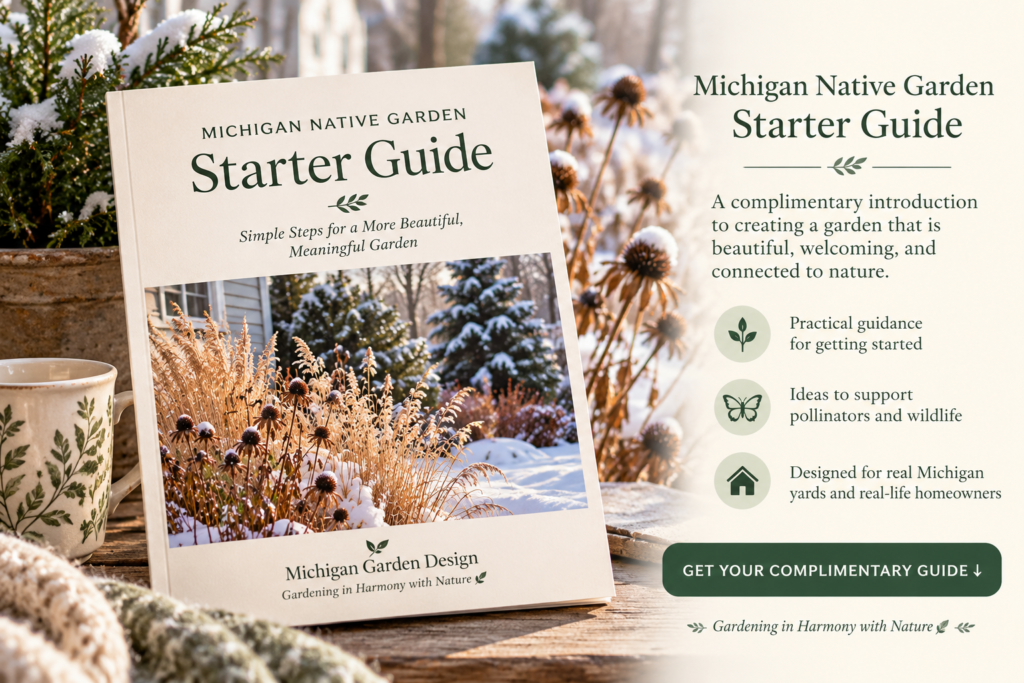
If you’re thinking about starting a pollinator garden next year but aren’t quite sure where to begin, the Michigan Native Garden Starter Guide is a wonderful companion to your planning process.
The complimentary Sample Edition introduces the fundamentals of gardening with Michigan native plants and helps you approach your landscape with greater confidence.
Whether you’re creating your first native planting or expanding an existing garden, it’s a practical place to begin exploring the possibilities.
COMPLIMENTARY SAMPLE EDITION
The Michigan Native Garden Starter Guide
A thoughtful beginning for a garden that grows in harmony with nature.
Gardening in Harmony with Nature 🌿
Keep Exploring
Continue planning your Michigan native garden with these related articles:
- How to Design a Native Garden for Year-Round Wildlife — Discover how thoughtful planting can provide food and shelter throughout the seasons.
- Why Fall Is One of the Best Times to Plant Michigan Native Plants — Explore the advantages of establishing native plants during the cooler growing season.
- How to Let Your Native Garden Fill in Naturally — Learn why patience and understanding plant growth can lead to a more balanced landscape.
- How to Use Native Grasses in Your Michigan Garden — See how native grasses can contribute structure, movement, and habitat to your planting design.
What’s Next?
Choose one area of your landscape that could become a pollinator garden next year.
Take a photograph, consider its sunlight and moisture conditions, and begin imagining how a few carefully selected native plants might transform the space.
You don’t need to make every decision today.
Simply identifying where you’d like to begin is a meaningful first step.
Coming Next: The Best Native Trees for Michigan Landscapes
Pollinator gardens often begin with flowers, but the larger landscape plays an important role in supporting wildlife, too.
Michigan’s native trees can provide shade, seasonal beauty, nesting opportunities, and valuable resources for birds and pollinators.
In our next Michigan Garden article, The Best Native Trees for Michigan Landscapes, we’ll explore how to choose native trees that complement your property, contribute to a healthier landscape, and offer benefits that extend far beyond their appearance.