
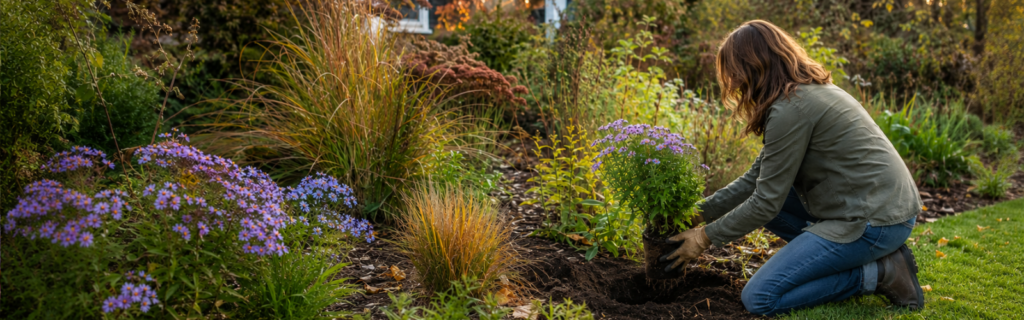
Why Fall Is One of the Best Times to Plant Michigan Native Plants
Spring may receive most of the gardening attention, but it is not the only season for new beginnings.
By early fall, the garden has already revealed a great deal.
You can see where a plant disappeared, where neighboring plants never quite filled an opening, and where the garden could use more structure, color, or habitat value. The intense heat of summer begins to ease, yet the soil still holds warmth from the months behind it.
For many Michigan native perennials, this creates an especially useful planting window.
Fall planting gives us an opportunity to strengthen the garden we have been observing all season, and gives new plants time to begin settling in before winter arrives.
While the Garden Slows Down, Roots Can Still Grow
As the days shorten and temperatures cool, we naturally begin thinking of the garden as finished for the year.
But aboveground change does not tell the whole story.
Even when a newly planted perennial is no longer producing much visible growth, its roots may continue developing while the soil remains warm enough. Michigan State University Extension identifies spring and early fall as the best times to establish rooted perennial plants.
That early root development matters.
A plant that begins forming connections with the surrounding soil in fall does not have to wait until spring to start becoming established. When growth resumes, it may already be better prepared to take in moisture and nutrients and respond to the warming season.
The plant may look quiet above ground.
Below it, the work of becoming part of the garden has already begun.
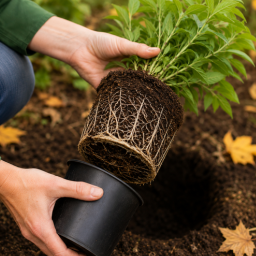
Cooler Weather Can Reduce Transplant Stress
Planting in summer can be demanding for both plants and gardeners.
Hot sunlight, warm soil surfaces, drying winds, and inconsistent rainfall can cause newly installed plants to lose moisture quickly. Their limited root systems may not yet be able to replace that moisture as fast as the foliage uses it.
Fall usually brings cooler air and shorter days, reducing some of that pressure.
New plants still need to be watered carefully, especially during a dry autumn. Native does not mean a plant can be placed in the ground and forgotten. Until its roots extend beyond the original root ball, it remains dependent on the moisture immediately around it.
But when fall planting is timed well, gardeners may spend less time helping plants through extreme heat. Cooler conditions allow the plant to direct more of its energy toward establishment rather than simply surviving a hot afternoon.
Fall Gives Plants a Head Start on Spring
Spring can change quickly in Michigan.
Cool, wet weather may suddenly give way to warm days, strong sun, and drying soil. A newly planted perennial must begin establishing roots at the same time it is producing stems and leaves, and possibly preparing to bloom.
A fall-planted native enters that first full growing season differently.
Once the soil warms, the plant can resume growth from a root system that has already had some time in its new surroundings. That does not guarantee a larger plant or immediate flowers. Native perennials still establish at different rates, and many devote much of their first year to root growth.
As we explored in Why Your Native Garden Gets Better Every Year, the most important development is not always the part we can see.
Fall planting simply allows some of that early development to begin sooner.
The Garden Is Easier to Read in Fall
There is another advantage that has little to do with temperature.
By fall, you know more.
You have seen which areas remained dry, where water collected, how shade moved through the landscape, and which plants leaned into their neighbors. You can distinguish between a temporary opening in a young planting and a space that truly needs attention, a difference that becomes especially important when you are letting a native garden fill in naturally.
Instead of planting from springtime imagination alone, you can plant from a season of observation.
You are not simply asking, “Where can I fit another plant?”
You can ask:
What has this garden shown me that it needs?
That question makes fall planting more than a seasonal task. It becomes an informed response to the garden as it actually exists.
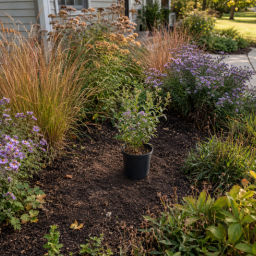
Fall Planting Still Depends on Timing
Fall is one of the best times to plant, but that does not mean every day of fall is equally suitable.
Michigan’s planting window varies by region, weather, and the type of plant being installed. A gardener near the lakeshore may experience different conditions than someone in the Upper Peninsula or an inland frost pocket.
The goal is not to squeeze plants into cold soil at the last possible moment. It is to plant early enough for roots to begin establishing before the ground freezes.
Making the Most of the Fall Planting Window
Fall planting succeeds when three things come together:
- the right plant
- the right place
- enough time for the roots to begin establishing
The goal is not to plant as late as the soil can be dug. It is to give each plant a gentle transition into the garden before winter.
Choose Plants That Match the Site
Fall does not change what a native plant needs.
A sun-loving prairie plant will not adapt to deep shade simply because temperatures are cooler. A moisture-loving species will still struggle in dry, sandy soil. Before choosing a plant, consider the light, moisture, available space, and competition surrounding its new location.
Healthy, container-grown native perennials, grasses, and sedges are often good fall candidates because their roots are already growing within the pot and can move directly into the surrounding soil.
A sunny, well-drained area might be ready for Little Bluestem (Schizachyrium scoparium). A sunny location with average to moist soil may suit New England Aster (Symphyotrichum novae-angliae). Golden Alexanders (Zizia aurea) can add earlier flowers to a garden already filled with summer and fall bloom.
These are only examples. The best choice is the plant that fills a real garden need while matching the conditions already present.
Fall can also be a good time to plant many native deciduous trees and shrubs, although their mature size, root condition, and species-specific needs deserve careful consideration. Bare-root plants and dormant roots should be handled according to the grower’s instructions because their planting requirements may differ from those of container-grown plants.
Plant Early Enough for Roots to Respond
Michigan does not have one universal fall planting deadline.
Conditions near Lake Michigan may differ from those farther inland, and the planting window becomes shorter as you move north. Soil type, rainfall, exposure, and the arrival of sustained cold all influence how much establishment time remains.
Rather than waiting for the first prediction of snow, aim to plant several weeks before the ground is likely to freeze. Earlier fall planting gives roots more time to move into the surrounding soil and reduces the risk of frost heaving later.
If you are uncertain whether there is enough time, look beyond the calendar.
Ask:
- Is the soil still workable and reasonably warm?
- Is the plant healthy and well rooted in its container?
- Can I continue watering it until the ground freezes?
- Is there enough time for the disturbed soil to settle around the roots?
The later you plant, the less margin there is for unusually early cold.
Prepare the Planting Area Thoughtfully
Dig a hole wide enough to spread or loosen the outer roots, but avoid making it unnecessarily deep. The top of the root ball should remain level with the surrounding soil rather than sitting in a depression or rising noticeably above it.
If roots are circling tightly inside the container, gently loosen them before planting so they are encouraged to grow outward.
Backfill with the soil removed from the planting hole unless a soil test or a plant’s particular needs indicate otherwise. Creating a pocket of heavily amended soil can discourage roots from moving into the surrounding ground.
Press the soil gently to remove large air pockets, but do not compact it firmly around the roots.
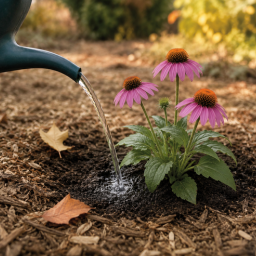
Then water thoroughly.
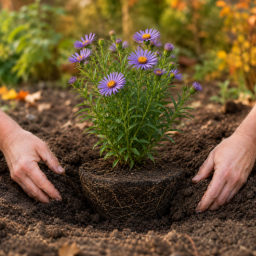
Do Not Let Cooler Weather Hide Dry Soil
Cool air can make it seem as though newly planted natives no longer need much attention.
The soil may tell a different story.
Autumns can be dry, especially beneath mature trees or near building foundations. A newly installed plant still has a limited root system and cannot yet reach moisture farther from its original root ball.
Check the soil rather than relying on the temperature. Water deeply when needed so moisture reaches the full depth of the roots. Continue monitoring new plantings until the ground freezes.
A light layer of mulch can help moderate soil temperature and retain moisture. Keep it a few inches away from plant crowns, stems, and woody trunks rather than piling it directly against them.
Allow the Plant to Become Quiet
A fall-planted native may not look impressive.
Its leaves may yellow. Stems may lean or die back. A flowering plant may finish blooming soon after it enters the garden.
That does not mean the planting failed.
The purpose of fall planting is not to produce immediate top growth. It is to place the plant where it belongs, give its roots time to begin responding, and allow it to move naturally toward dormancy.
Avoid fertilizing in an attempt to encourage fresh growth. New tender foliage is not what the plant needs as winter approaches. A well-matched plant, properly installed and consistently watered, has already been given the most useful beginning.
Give Fall-Planted Natives Time to Settle In
Once a native plant has been placed correctly, watered thoroughly, and protected with a light layer of mulch, there is little benefit in trying to keep it actively growing.
Fall planting is about establishment, not immediate performance.
The plant may lose its leaves or disappear almost entirely above ground. Allow that seasonal change to happen. Its job now is to settle into the soil and move toward dormancy.
Protect the Roots Without Burying the Plant
A two- to three-inch layer of mulch can help moderate soil temperature and reduce repeated freezing and thawing around newly planted roots.
Spread mulch over the surrounding soil, but leave space around the plant’s crown or woody stems. Mulch piled directly against a plant can hold excess moisture where it is not wanted.
Check the plant occasionally until the ground freezes. If the root ball begins rising above the surrounding soil, gently press it back into place. Newly disturbed soil can settle, and repeated freeze-and-thaw cycles may lift shallow-rooted plants.
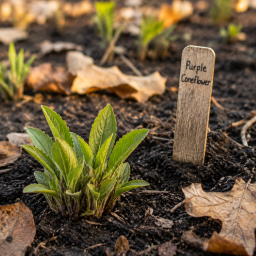
A simple plant marker can also be helpful. Some native perennials emerge slowly in spring, and marking their locations prevents them from being mistaken for empty spaces.
Let Spring Reveal the Results
When spring arrives, resist the urge to judge a fall planting too quickly.
Different native plants wake at different times. Cool-season sedges may appear early, while warm-season grasses such as Little Bluestem may remain quiet until the soil warms more fully. Some perennials begin with small growth at the crown before producing noticeable stems.
Look closely before deciding that a plant did not survive.
Watch for:
- small buds near the crown
- new shoots emerging at the soil line
- flexible, living tissue beneath the surface of a woody stem
- gradual growth as temperatures become more consistent
Continue checking soil moisture during the plant’s first full growing season. Fall planting gives roots an earlier start, but it does not make a young plant instantly established.
The reward may not be dramatic at first.
It may simply be a plant that returns, begins growing, and looks increasingly at home in the garden around it.
Barbara’s Observation
There is something hopeful about planting in fall.
The rest of the garden is beginning to quiet. Flowers are fading, leaves are changing, and the growing season appears to be closing.
Yet we place a new plant in the soil and trust that something important can begin before winter.
We may not see the roots extending or the plant settling into its new surroundings. We simply give it what it needs and allow the season to do the rest.
Then spring arrives, and a small green shoot reminds us that not every beginning is visible when it happens.
Record What You Plant This Fall
Fall plantings can be easy to forget once the garden disappears beneath winter.
Record what you planted, where you placed it, the conditions it received, and when it went into the ground. In spring, you can return to those notes and compare which plants emerged early, which took longer, and how well each location worked.
The complimentary first month of The Michigan Native Garden Journal gives you a place to begin recording those changes.
COMPLIMENTARY FIRST MONTH
The Michigan Native Garden Journal
↓ GET YOUR COPY ↓
Observe • Discover • Wonder • Grow.
Keep Exploring
Continue preparing your native garden for the season ahead:
- How to Plan for Your Fall Native Plantings
- How to Prepare Michigan Native Plants for Winter
- How to Let Your Native Garden Fill in Naturally
- Why Your Native Garden Gets Better Every Year
What’s Next
Choose one area where a new plant would solve a genuine need.
Confirm the light and moisture conditions, select a Michigan native suited to that location, and decide whether enough planting time remains in your part of the state.
One carefully chosen plant can strengthen the garden more than several added simply because they were available.
Coming Next
Choosing the right plants is only part of creating a garden that feels inviting.
In the next Michigan Garden article, How to Create Garden Rooms with Native Plants, we’ll explore how native trees, shrubs, grasses, and perennials can define spaces, shape views, and create a sense of enclosure without making the garden feel closed in.
Even a modest landscape can become a series of places to pause, explore, and experience nature differently.