
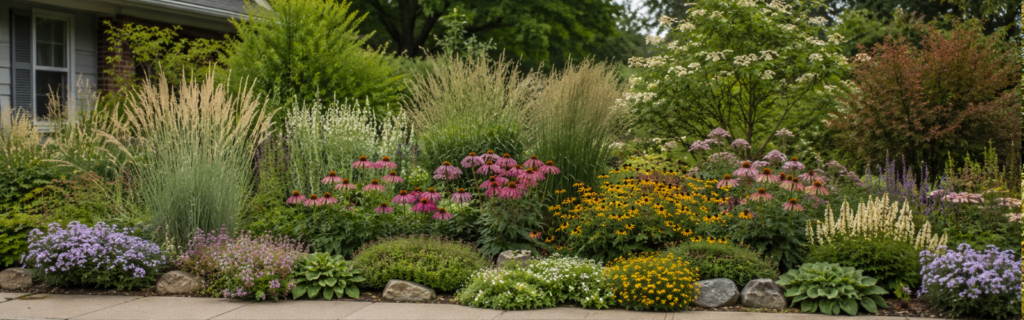
Creating a Beautiful Native Garden with Layers
How to Add Depth, Structure, and Year-Round Beauty to Your Michigan Landscape
Have you ever visited a garden that felt peaceful, balanced, and effortlessly beautiful?
Perhaps nothing in particular stood out.
There wasn’t one spectacular flower demanding attention.
No dramatic focal point.
And yet the garden felt complete.
More often than not, the secret isn’t the individual plants.
It’s the layers.
Nature rarely grows in a single flat plane.
Walk through a woodland, prairie, or natural shoreline in Michigan and you’ll notice plants growing at different heights and in different roles.
The Michigan Natural Features Inventory provides fascinating information about Michigan’s native plant communities and the natural ecosystems that inspire many native garden designs.
Tall trees create a canopy overhead.
Shrubs fill the middle layer.
Perennials weave throughout the landscape.
Groundcovers soften the soil below.
Each layer contributes something important to the overall experience.
Together, they create depth, texture, habitat, and beauty.
The same principle applies to home gardens.
When we borrow this idea from nature, even a modest planting can feel richer, more natural, and more visually interesting.
The good news?
Creating layers is often easier than gardeners think.
What Does Layering Mean?
Layering simply means arranging plants at different heights and depths so they work together as a complete composition.
Think of a garden as a living painting.
Every plant has a role.
Some provide structure.
Some add seasonal color.
Others soften edges or connect different parts of the landscape.
When all of these pieces work together, the garden feels cohesive and intentional.
Without layers, a garden can sometimes feel flat.
Plants may appear disconnected from one another.
The eye doesn’t know where to travel.
Layering helps guide the eye naturally through the landscape while creating a sense of abundance and harmony.
🌿 Garden Tip
One of the easiest ways to improve an existing garden is not by adding more plants, but by adding more height variation.
Differences in height create interest long before flowers begin blooming.
The Four Basic Layers of a Native Garden
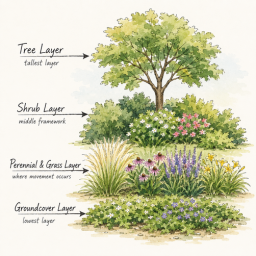
While every garden is unique, most successful native landscapes contain four primary layers.
You don’t need all four in every space, but understanding them helps create more balanced plantings.
Layer One: The Canopy
This is the tallest layer.
In larger landscapes, it may include native trees such as:
- Serviceberry (Amelanchier species)
- Eastern Redbud (Cercis canadensis)
- Pagoda Dogwood (Cornus alternifolia)
- River Birch (Betula nigra)
The canopy provides structure, shade, seasonal interest, and valuable wildlife habitat.
Even a small ornamental tree can serve as a canopy layer in a residential landscape.
Layer Two: Shrubs
Shrubs create the middle framework of a garden.
They help transition between trees and lower-growing plants while providing year-round presence.
Some excellent native choices include:
- Black Chokeberry (Aronia melanocarpa)
- Silky Dogwood (Cornus amomum)
- New Jersey Tea (Ceanothus americanus)
- St. John’s Wort (Hypericum kalmianum)
Shrubs often provide the “bones” of a garden—the structure that remains visible even when flowers are not blooming.
Layer Three: Perennials and Native Grasses
This is where much of the seasonal color and movement occurs.
Plants such as:
- Purple Coneflower
- Butterfly Weed
- Wild Bergamot
- Prairie Blazing Star
- Little Bluestem
- Prairie Dropseed
bring pollinators, texture, and changing seasonal interest.
This layer is often what first captures a visitor’s attention.
But it becomes even more effective when supported by the layers above and below it.
Layer Four: Groundcovers
The lowest layer often receives the least attention.
Yet it may be one of the most important.
Groundcovers help:
- Suppress weeds
- Protect soil
- Retain moisture
- Create visual continuity
Native groundcovers such as:
- Wild Ginger
- Prairie Violet
- Bishop’s Cap
- Wild Strawberry
help tie an entire planting together while creating a finished appearance.
If you’d like to learn more about the growing requirements and characteristics of specific native plants, the Lady Bird Johnson Wildflower Center Native Plant Database is an excellent resource for gardeners and designers alike.
Why Nature Rarely Leaves Bare Ground
One of the most valuable lessons nature teaches us is that empty space is often temporary.
In natural ecosystems, plants work together to fill different niches.
Tall plants capture sunlight.
Mid-sized plants occupy the middle layer.
Groundcovers protect the soil below.
This layered approach benefits both wildlife and the health of the ecosystem itself.
As gardeners, we can borrow this same principle to create landscapes that are not only more beautiful but often easier to maintain as well.
When plants occupy multiple layers, they help shade the soil, reduce weed pressure, and create habitat for a wide variety of beneficial insects and wildlife.
How to Create Layers in Your Own Garden
Understanding the layers of a garden is one thing.
Putting them together is another.
Fortunately, creating layers doesn’t require a large property, a landscape design degree, or hundreds of plants.
It simply requires thinking about how plants relate to one another.
Instead of asking:
“What should I plant here?”
Try asking:
“What layer is missing?”
That simple shift can completely change how you design a garden.
Layering in a Sunny Native Garden
Imagine a sunny garden bed along the edge of your property.
A common approach might be to plant a collection of flowering perennials at roughly the same height.
The result can be colorful…
but somewhat flat.
Instead, think in layers.
Back Layer
- Switchgrass
- Indian Grass
- Joe-Pye Weed
These taller plants create a backdrop and help anchor the planting.
Middle Layer
- Purple Coneflower
- Wild Bergamot
- Prairie Blazing Star
This is where much of the color and pollinator activity occurs.
Front Layer
- Prairie Violet
- Pussytoes
- Wild Strawberry
These lower-growing plants soften the edge of the garden while helping cover the soil.
Suddenly, the garden feels deeper, fuller, and more natural.
🌿 Garden Tip
If every plant in a garden reaches the same height, the eye tends to stop.
Layering encourages the eye to move through the landscape, creating a greater sense of depth and discovery.
Layering in a Woodland Garden
Woodland gardens may be the easiest places to observe layering in nature.
A mature woodland often contains:
Canopy Layer
Trees such as:
- Sugar Maple
- Oak
- Beech
Shrub Layer
Plants such as:
- Pagoda Dogwood
- Spicebush
- Silky Dogwood
Herbaceous Layer
Plants such as:
- Wild Geranium
- Jacob’s Ladder
- Wild Columbine
Ground Layer
Plants such as:
- Wild Ginger
- Bishop’s Cap
- Foamflower
Together, these layers create the rich, immersive feeling we often associate with natural woodlands.
The beauty comes not from a single plant but from the relationship between them.
Forest ecologists have long recognized the importance of layered vegetation, and the USDA Forest Service provides information on how different plant layers work together to create healthy woodland ecosystems.
Small Gardens Can Use Layers Too
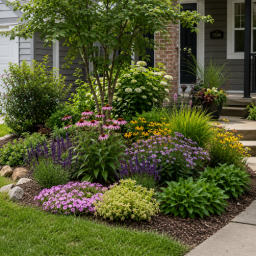
One of the biggest misconceptions in garden design is that layering only works in large landscapes.
In reality, small gardens may benefit from layering even more.
A small front-yard bed might contain:
- One Serviceberry as a small canopy tree
- A grouping of St. John’s Wort shrubs
- Drifts of Purple Coneflower and Little Bluestem
- A carpet of Prairie Violet along the front edge
That’s layering.
And it can fit into a surprisingly modest space.
The goal isn’t to create a forest.
The goal is to create visual depth.
🌿 Garden Tip
Think vertically, not just horizontally.
Many gardeners focus entirely on where plants sit from left to right while overlooking the opportunities created by differences in height.
Repetition Creates Harmony
Another secret of beautiful layered gardens is repetition.
When gardeners visit a nursery, it’s tempting to buy one of everything.
I understand the temptation.
We’ve all done it.
But gardens often become more beautiful when the same plants appear multiple times throughout the landscape.
Repeating a grass.
Repeating a flowering perennial.
Repeating a shrub.
These recurring elements help tie different parts of the garden together.
Instead of feeling like separate collections of plants, the garden begins to feel unified.
That’s one reason natural landscapes feel so harmonious.
Patterns repeat.
And our eyes instinctively respond to those patterns.
Common Layering Mistakes
Layering is one of the simplest ways to improve a garden, but there are a few common mistakes worth avoiding.
Fortunately, they’re all easy to correct.
Planting Everything at the Same Height
This is by far the most common issue I see.
A garden may contain beautiful plants, but if they all mature at roughly the same height, the planting can feel flat and one-dimensional.
When selecting plants, intentionally choose a mix of:
- Taller structural plants
- Mid-sized flowering plants
- Lower-growing groundcovers
The contrast between these layers is what creates depth.
Ignoring Seasonal Changes
A layered garden should look good beyond peak bloom season.
When choosing plants, consider:
- Spring flowers
- Summer color
- Fall foliage
- Winter structure
Native grasses, shrubs, and seed heads help ensure the garden remains interesting long after many flowers have faded.
Creating Layers Without Repetition
A garden filled with one-of-a-kind plants can quickly begin to feel chaotic.
Repeating key plants throughout the landscape creates rhythm and visual unity.
For example:
- Repeat Little Bluestem in several locations.
- Use the same shrub species in multiple areas.
- Carry groundcovers through different sections of the garden.
These repeated elements help connect the entire landscape.
🌿 Garden Tip
If you’re unsure where to start, repeat one plant three times.
You’ll often be surprised by how much more cohesive the garden feels.
Why Layered Gardens Feel More Natural
One reason layered gardens are so appealing is that they mirror the way plants grow in nature.
Natural landscapes rarely consist of a single layer.
Instead, plants occupy different heights and different roles.
Some provide shade.
Some provide structure.
Others protect the soil or support pollinators.
When we mimic these natural relationships, our gardens often feel more comfortable and welcoming.
Visitors may not consciously notice the layers.
But they notice how the garden feels.
And that’s what good design is really about.
A Garden Designer’s Secret
If there’s one lesson I hope readers take away from this article, it’s this:
Beautiful gardens aren’t created by collecting beautiful plants.
They’re created by arranging plants thoughtfully.
The difference may seem subtle.
But it’s often the difference between a garden that feels scattered and a garden that feels complete.
Whether your space is large or small, sunny or shaded, layering helps create the sense of abundance and harmony that many gardeners are trying to achieve.
And once you begin noticing layers, you’ll start seeing them everywhere—in nature, in public gardens, and eventually in your own landscape.
🌿 Coming Next
In our next Michigan Garden article, we’ll look at Best Native Shrubs for Privacy and Wildlife and explore how shrubs can add privacy, structure, seasonal beauty, and valuable habitat to a native Michigan garden.
Shrubs are often the missing middle layer between trees, grasses, and flowering perennials—and once you begin using them intentionally, they can completely change how a garden feels.
Coming Next:
Best Native Shrubs for Privacy and Wildlife
🌿 Continue Growing
If you enjoyed this article, you may also enjoy:
• The Best Native Grasses for Michigan Gardens
• Beautiful Ground Covers That Thrive in Michigan
• How to Create a Pollinator Friendly Garden in Michigan
• How to Keep Native Plants Healthy During Summer Heat
• Do You Really Need Fertilizer? A Michigan Perspective
🌿 A Final Thought
One of the most beautiful things about gardening is that we never stop learning to see.
At first, we notice flowers.
Then we notice pollinators.
Eventually, we begin noticing patterns.
Relationships.
Structure.
Layers.
The gardens that inspire us most are rarely the ones with the greatest number of plants.
They’re the ones where every plant seems to belong.
Nature has been teaching this lesson for thousands of years.
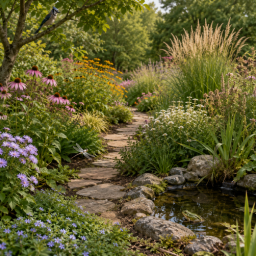
Trees rise above shrubs.
Shrubs blend into perennials.
Perennials weave among grasses and groundcovers.
Each layer contributes something valuable.
Each layer supports the others.
And together, they create something far more beautiful than any single plant could achieve alone.
Happy gardening,
Barbara 🌿
Michigan Garden Design