
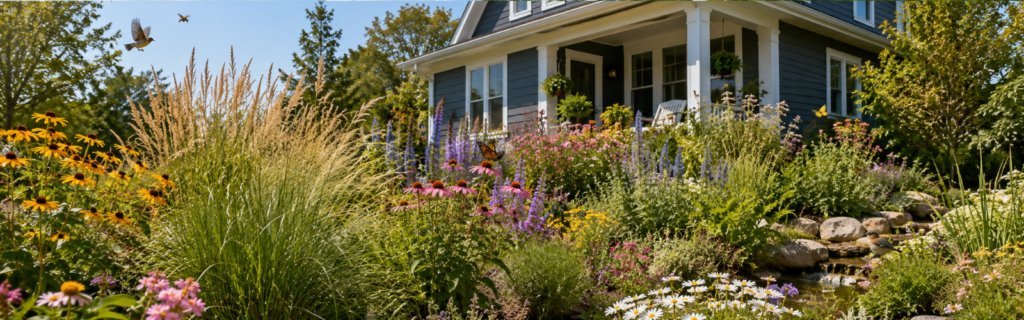
Do You Really Need Fertilizer?
A Michigan Gardener’s Perspective on Feeding Native Plants
Walk into almost any garden center in spring and you’ll find shelves filled with fertilizers promising bigger blooms, faster growth, greener leaves, and healthier plants.
It’s easy to assume that fertilizer is simply part of successful gardening.
After all, if a little fertilizer is good…
more must be better.
Right?
Not necessarily.
In fact, when it comes to many native Michigan plants, fertilizer is often one of the least important things you can add to your garden.
That idea surprises a lot of people.
We’re accustomed to thinking of gardening as a process of constantly improving the soil, feeding plants, and encouraging growth.
Native plants, however, evolved under very different conditions.
For thousands of years, they thrived without bags of fertilizer, carefully measured nutrients, or weekly feeding schedules.
Instead, they adapted to Michigan’s natural soils, seasonal rainfall patterns, and changing weather conditions.
That doesn’t mean fertilizer is always wrong.
But it does mean that many gardeners may be spending money—and doing extra work—without seeing meaningful benefits.
Before reaching for the fertilizer spreader, it’s worth understanding what plants actually need and how healthy native gardens function in nature.
How Nature Fertilizes a Garden
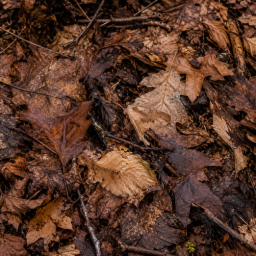
One of the most fascinating things about natural ecosystems is that nobody is out there feeding the plants.
There are no fertilizer schedules in a prairie.
No weekly applications in a woodland.
No bags of plant food being spread through a wetland.
Yet these ecosystems remain healthy, diverse, and remarkably resilient.
Why?
Because nature is constantly recycling nutrients.
Leaves fall.
Plants die back.
Stems decompose.
Microorganisms, fungi, insects, and countless other organisms break that material down and return nutrients to the soil.
It’s a continuous cycle.
Nothing is wasted.
The nutrients that support next year’s growth often come from last year’s leaves and stems.
When we allow some of those natural processes to occur in our own landscapes, we begin building healthier soil over time.
That’s one reason native gardens often become easier to care for as they mature.
Nature gradually takes on more of the work.
🌿 Garden Tip
One of the best fertilizers may already be in your garden.
Fallen leaves, decomposing plant material, and natural mulch slowly return organic matter to the soil while supporting beneficial organisms below the surface.
What Fertilizer Actually Does
To understand whether fertilizer is necessary, it helps to know what it does.
Plants need nutrients to grow.
If you’re unsure whether your soil actually lacks nutrients, Michigan State University Extension recommends beginning with a soil test rather than applying fertilizer blindly.
The three nutrients most commonly found in fertilizers are:
- Nitrogen (N)
- Phosphorus (P)
- Potassium (K)
These nutrients support different functions within the plant.
Nitrogen encourages leafy growth.
Phosphorus supports roots, flowers, and fruit production.
Potassium helps with overall plant health and resilience.
When soil lacks one or more of these nutrients, fertilizer can sometimes help correct the deficiency.
But here’s the important part:
A fertilizer only solves a nutrient problem.
It does not solve every gardening problem.
If a plant is struggling because of:
- Too much shade
- Poor drainage
- Incorrect soil moisture
- Competition from nearby plants
- Improper plant selection
Adding fertilizer won’t fix the underlying issue.
In some cases, it may actually make the problem worse by encouraging weak, rapid growth.
Why Many Native Plants Need Little or No Fertilizer
This is where native plants begin to separate themselves from many traditional garden plants.
Many Michigan natives evolved in soils that were not particularly rich.
Some prairie species developed extraordinarily deep root systems specifically because nutrients and moisture were limited.
Others adapted to sandy soils, rocky areas, woodland edges, or challenging growing conditions where fertilizer simply wasn’t available.
The Michigan Natural Features Inventory provides fascinating information about the diverse habitats where Michigan’s native plants naturally evolved.
As a result, many native plants perform beautifully without supplemental feeding.
In fact, excessive fertilizer can sometimes cause:
- Floppy growth
- Reduced drought tolerance
- Fewer flowers
- Increased susceptibility to disease
- Plants that require more maintenance
Gardeners are often surprised to learn that a heavily fertilized native plant may actually perform worse than one growing in average garden soil.
Sometimes the healthiest thing we can do is resist the urge to improve what nature has already perfected.
When Fertilizer Does Make Sense
After everything we’ve discussed so far, you might be wondering:
“Should I ever use fertilizer?”
The answer is yes.
There are situations where fertilizer can be beneficial.
New vegetable gardens, heavily depleted soils, containers, raised beds, and certain ornamental plantings may all benefit from additional nutrients.
Some flowering annuals are also heavy feeders that perform best with regular fertilization.
The key is understanding that fertilizer should be used to address a specific need—not applied automatically.
When gardeners reach for fertilizer simply because it’s spring, they often skip the most important question:
Does the soil actually need it?
Without knowing the answer, applying fertilizer becomes little more than guesswork.
The Value of a Soil Test
If there’s one tool I wish more gardeners would use, it’s a soil test.
A soil test can reveal:
- Nutrient levels
- Soil pH
- Organic matter content
- Potential deficiencies
Instead of guessing what your garden needs, you can make decisions based on actual information.
In many cases, gardeners discover their soil already contains adequate nutrients.
Other times, they uncover specific deficiencies that can be corrected more effectively than with a general-purpose fertilizer.
A soil test is often one of the least expensive—and most valuable—investments you can make in your garden.
🌿 Garden Tip
Before spending money on fertilizer, consider spending a little on information.
A soil test often saves gardeners from applying products they never needed in the first place.
Feed the Soil, Not the Plant
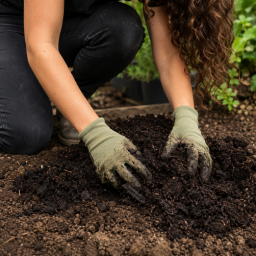
This may be one of the most important concepts in gardening.
Healthy soil is much more than dirt.
It’s a living ecosystem.
Bacteria.
Fungi.
Earthworms.
Insects.
Microorganisms.
Countless organisms are constantly working below the surface, helping make nutrients available to plants.
When we focus exclusively on feeding plants, we sometimes overlook the soil community that supports them.
That’s one reason many gardeners choose to build soil health through:
- Compost
- Shredded leaves
- Natural mulch
- Organic matter
These materials do far more than provide nutrients.
They improve soil structure.
Increase water retention.
Support beneficial organisms.
And gradually create conditions where plants can thrive with less intervention.
In many ways, healthy soil functions like a savings account.
Every year you add organic matter, you’re making a deposit that continues paying dividends for years to come.
Compost: Nature’s Slow-Release Fertilizer
If I had to choose between a bag of fertilizer and a pile of finished compost, I’d choose the compost every time.
Compost provides nutrients slowly and naturally.
Unlike many fertilizers, it doesn’t push rapid growth.
Instead, it supports long-term soil health while improving the overall growing environment.
Compost can help:
- Improve clay soils
- Increase moisture retention in sandy soils
- Support beneficial microorganisms
- Add organic matter
- Gradually release nutrients
It’s one of the closest things we have to mimicking nature’s own nutrient cycle.
And unlike many commercial fertilizers, compost improves the soil itself—not just the plants growing in it.
The USDA Natural Resources Conservation Service offers excellent information on soil health and the role organic matter plays in creating resilient landscapes.
🌿 Garden Tip
Healthy gardens begin below ground.
The more attention you give to building healthy soil, the less you’ll need to worry about constantly feeding your plants.
What About Native Plant Gardens?
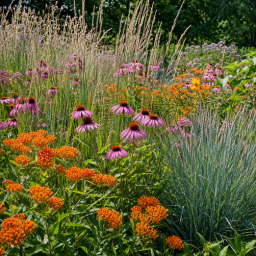
This is where things become especially interesting.
Most established native plant gardens require very little supplemental fertility.
The Lady Bird Johnson Wildflower Center provides detailed information on many native species, including the growing conditions they naturally prefer.
In fact, some native species actually perform best in average or even relatively lean soils.
Overly rich soil can encourage excessive growth, weaker stems, and reduced flowering in certain species.
Plants like:
- Butterfly Weed
- Little Bluestem
- Prairie Dropseed
- Wild Bergamot
- Purple Coneflower
often thrive without regular fertilizer applications once established.
Their deep roots allow them to access nutrients and moisture that many shallow-rooted plants cannot reach.
That’s one of the reasons native gardens often become lower maintenance over time.
As roots deepen and soil health improves, the need for supplemental inputs frequently decreases.
Common Fertilizer Mistakes
Most fertilizer problems don’t come from using the wrong product.
They come from applying fertilizer when it isn’t needed.
Here are a few of the most common mistakes I see.
Fertilizing Automatically Every Spring
Many gardeners apply fertilizer simply because that’s what they’ve always done.
But gardens aren’t all the same.
A mature native garden growing in healthy soil may have very different needs than a newly established vegetable bed.
Before applying fertilizer, ask yourself:
What problem am I trying to solve?
If you don’t know the answer, it may be worth observing your garden a little longer before reaching for a bag of fertilizer.
Applying Too Much
When it comes to fertilizer, more is rarely better.
Excess fertilizer can lead to:
- Weak, floppy growth
- Increased watering needs
- Reduced drought tolerance
- Fewer flowers
- Nutrient runoff into waterways
Healthy growth is the goal—not rapid growth.
Ignoring Soil Health
This may be the most important mistake of all.
Many gardeners focus entirely on feeding plants while overlooking the soil that supports them.
Healthy soil is what allows roots to access nutrients, water, and oxygen.
Without healthy soil, fertilizer often becomes a temporary solution rather than a lasting improvement.
🌿 Garden Tip
If you’re unsure whether a plant needs fertilizer, try improving the soil first.
Compost, mulch, and organic matter often provide greater long-term benefits than additional fertilizer.
A Simple Fertilizer Decision Guide
Before applying fertilizer, ask yourself these questions:
Is the plant newly installed?
If yes, focus on proper watering and root establishment before worrying about fertilizer.
Is the plant growing in the right location?
A plant struggling in deep shade won’t become healthy simply because it’s fertilized.
Have you tested the soil?
If not, consider gathering information before making changes.
Is the plant a Michigan native species?
Many established native plants perform beautifully with little or no supplemental fertility.
Have you added organic matter?
Improving soil health often provides greater benefits than adding nutrients alone.
If you answered “no” to several of these questions, fertilizer may not be the first solution to consider.
Why Native Gardening Often Requires Less
One of the reasons I love native gardening is that it challenges many of the assumptions we’ve inherited about landscape care.
We often hear that successful gardening requires:
- More fertilizer
- More watering
- More spraying
- More maintenance
Yet many native gardens become easier to care for as they mature.
Roots grow deeper.
Soil improves.
Plants adapt.
Natural systems begin supporting themselves.
That doesn’t mean native gardens are completely maintenance-free.
But it does mean they often require fewer inputs than many traditional landscapes.
And for many gardeners, that’s one of the greatest rewards of working with plants that belong here.
🌿 Coming Next
Have you ever visited a garden that felt full, natural, and effortlessly beautiful, and wondered why?
The secret often isn’t more plants.
It’s how those plants are arranged.
In our next Michigan Garden article, we’ll explore how to use layers of trees, shrubs, grasses, and flowering perennials to create native gardens that feel balanced, inviting, and alive throughout the seasons.
Once you understand layering, you’ll start seeing gardens through an entirely new lens.
Coming Next:
Creating a Beautiful Native Garden with Layers
🌿 Continue Growing
If you enjoyed this article, you may also enjoy:
• How to Keep Native Plants Healthy During Summer Heat
• The Best Native Grasses for Michigan Gardens
• The Best Native Michigan Plants That Bloom All Summer
• Beautiful Ground Covers That Thrive in Michigan
• How to Create a Pollinator Friendly Garden in Michigan
🌿 A Final Thought
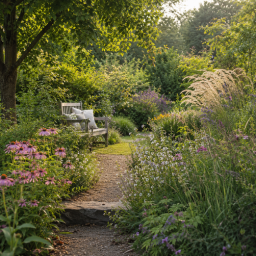
Perhaps the most surprising lesson native plants teach us is that healthy gardens don’t always require more.
Sometimes they require less.
Less fertilizer.
Less intervention.
Less effort spent trying to force plants into conditions they were never meant to grow in.
And more attention to the things that matter most:
Healthy soil.
Appropriate plant selection.
Patience.
Observation.
When we begin working with nature instead of constantly trying to improve upon it, gardening often becomes both simpler and more rewarding.
The next time you find yourself standing in front of a shelf full of fertilizers, pause for a moment and ask:
What is my garden really asking for?
The answer may surprise you.
Happy gardening,
Barbara
Michigan Garden Design