
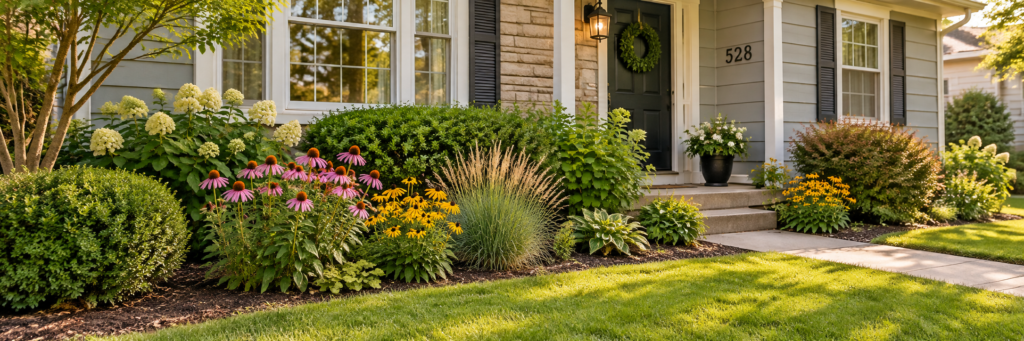
How to Add Native Plants Without Redesigning
A Moment Before We Begin
Perhaps you’ve been thinking about adding more native plants to your garden, but every time you look at your existing landscape, you wonder where they would go.
The shrubs are established. The flower beds are already filled with plants you’ve enjoyed for years. There may be a favorite rosebush, a row of hostas beneath the trees, or a foundation planting that has looked much the same since you moved into your home.
You like your garden. You simply want it to do a little more for nature.
And that’s where many Michigan homeowners find themselves. They’ve begun learning about the importance of native plants, pollinators, and backyard wildlife, but they’re not interested in tearing out a landscape they’ve spent years creating.
Here’s something worth remembering: You don’t have to redesign your entire garden to begin gardening with native plants.
Sometimes, the most meaningful changes begin with one thoughtfully chosen addition.
Your Existing Garden Is a Starting Point, Not an Obstacle
There’s a common misconception that creating a native garden means replacing everything already growing in your yard.
For some homeowners, a complete redesign may be appropriate. Perhaps they’re starting with a blank landscape, dealing with difficult maintenance problems, or hoping to transform a large lawn into a more diverse planting.
But for many others, a gradual approach makes far more sense.
An established landscape already has something valuable: structure.
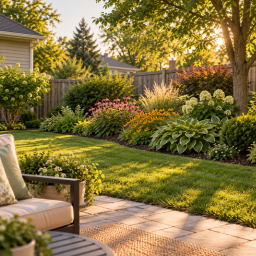
Mature trees provide shade. Shrubs create boundaries and privacy. Existing flower beds define the shape of the garden, while pathways and patios influence how people move through and enjoy the space.
Those features don’t necessarily need to change.
Instead, native plants can become another layer within the landscape you already love.
If you’ve read How to Add Native Shrubs to an Existing Landscape, you’re already familiar with the idea of working with established plantings rather than automatically replacing them.
The same thinking applies to native wildflowers, grasses, sedges, and other plants that can be incorporated into existing garden beds.
The goal isn’t to make every plant native overnight.
It’s to make thoughtful changes that gradually increase the ecological value of your landscape while preserving the qualities that make it feel like home.
Small Additions Can Serve a Larger Purpose
Imagine an established Michigan garden with ornamental shrubs, spring bulbs, and several familiar flowering perennials.
It’s attractive throughout much of the growing season, but by late summer, relatively few flowers remain.
Rather than redesigning the entire bed, the homeowner might introduce a small grouping of appropriately sized, late-blooming Michigan native flowers.
That addition could provide another source of nectar and pollen during a period when fewer existing plants are blooming.
Or perhaps a garden has plenty of summer flowers but very little structure once autumn arrives. A carefully placed native grass might introduce movement, texture, and seasonal interest without disturbing the surrounding plants.
These are relatively modest changes, but each addresses a particular opportunity.
And that’s an important distinction.
Adding native plants isn’t simply about finding an empty spot. It’s about understanding what your garden could benefit from.
A landscape with abundant flowers may still have limited nesting or shelter opportunities for wildlife. A shady bed might benefit from a different planting approach than a sunny border. An area that stays moist after rain may support plants that would struggle elsewhere in the yard.
Before deciding what to add, it helps to understand what is already happening.
That’s the same principle explored in How to Read Your Garden Before You Change It.
When we begin with observation rather than a shopping list, our plant choices become more purposeful.
A Garden Doesn’t Have to Change All at Once
One of the advantages of introducing native plants gradually is the opportunity to learn as you go.
You can observe how a new planting responds to the light, moisture, and competition in its surroundings. You can notice which insects visit its flowers, how its foliage changes through the seasons, and whether its mature size works comfortably with neighboring plants.
This is particularly helpful in Michigan, where growing conditions can vary considerably from one property to another.
A sandy, sun-exposed garden near Lake Michigan presents different challenges than a shaded landscape with heavy clay soil farther inland.
Even within one yard, conditions may change dramatically from the front foundation to the back garden.
Starting small gives you time to discover which plants belong in each setting before making additional changes.
It also allows the landscape to evolve naturally rather than forcing an immediate transformation.
As we explored in Learning How to Trust Your Native Garden, giving plants time to establish and observing how they develop can be just as important as the decisions we make when planting them.
And perhaps that’s one of the most encouraging things about adding native plants to an existing landscape.
You don’t have to abandon the garden you’ve created to begin building a healthier relationship with nature.
You can simply begin where you are.
Begin with the Spaces You Already Have
Before purchasing plants or removing anything from your garden, take a walk around your property with a different question in mind.
Instead of asking, Where can I create a native garden? ask, Where could a native plant make my existing garden better?
You may discover opportunities that require very little change.
Perhaps there’s a narrow opening between two established perennials. Maybe the edge of a shrub border looks a little bare, or a sunny garden bed loses its color earlier than you’d like.
These spaces can become natural starting points for introducing Michigan native plants.
The important consideration is whether those openings will remain available as neighboring plants mature. A space that looks empty in April may be completely filled by July.
And remember, you aren’t limited to existing flower beds. A small area of lawn beside a walkway or patio might become a new planting pocket without changing the overall landscape design.
Four Ways to Introduce Native Plants Naturally
1. Tuck Native Flowers into Existing Borders
One of the simplest approaches is incorporating native wildflowers among the plants already growing in your garden.
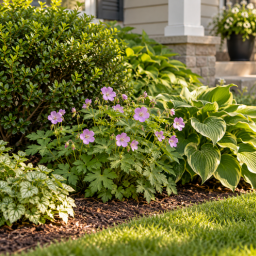
For a partly shaded border with reasonably moist, well-drained soil, consider wild geranium (Geranium maculatum). Its soft pink-purple spring flowers complement many established woodland-style plantings.
Wild columbine (Aquilegia canadensis) is another possibility for a partially shaded setting. Its delicate red-and-yellow flowers bring a different shape and texture to the garden.
Both are Michigan native species that can work in residential landscapes when their growing conditions are suitable.
Rather than scattering individual plants throughout a large bed, try introducing a small grouping of one species.
This creates a more intentional appearance and makes the new planting easier to appreciate.
2. Fill a Seasonal Gap
Look for a time of year when your existing landscape offers relatively little color or interest.
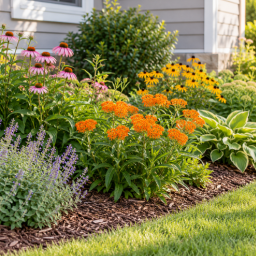
If spring is beautiful but summer feels quiet, you might add butterfly weed (Asclepias tuberosa) to a sunny, well-drained location.
Its brilliant orange flowers create a striking contrast with traditional ornamental plantings, while its flowers provide resources for visiting insects. Butterfly weed is especially appropriate where the soil is relatively dry and drainage is good.
The goal isn’t to squeeze another flowering plant into an already crowded bed.
It’s to extend the garden’s seasonal usefulness.
You may find that adding just a few carefully chosen plants helps connect one flowering season to the next.
3. Introduce Native Grasses for Texture and Movement
Not every garden improvement needs to involve flowers.
Native grasses can be particularly useful when an established landscape has plenty of blooms but lacks contrasting foliage or seasonal structure.
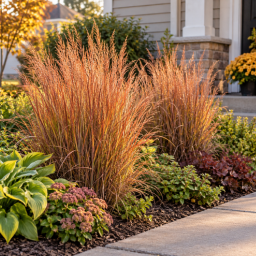
Little bluestem (Schizachyrium scoparium) is one Michigan native grass worth considering for a sunny location with well-drained soil.
Its upright growth and fine foliage provide contrast with broader-leaved perennials. As the seasons change, its foliage develops warmer tones and its seed-bearing stems add visual interest.
Consider using it near the edge of a sunny planting, where its shape can be appreciated without crowding neighboring plants.
As we’ve explored in How to Create Garden Rooms with Native Plants, grasses can also help give a landscape a greater sense of structure without requiring walls or fences.
4. Soften the Edges of Established Plantings
Sometimes the best place for a native plant isn’t in the center of a garden bed.
It’s along the edge.
The transition between lawn and garden, beneath an established shrub, or beside a garden path may offer an opportunity to create a softer, more natural appearance.
Low-growing native plants can help connect taller plantings to the surrounding landscape.
However, pay attention to their growth habits. Some native groundcovers spread gradually, while others may expand more vigorously than expected.
Choose plants whose mature size and spreading behavior suit the space you’re offering them.
A softer garden edge should still be manageable and welcoming.
Choose the Right Plant Before Choosing the Perfect Spot
There is one principle that matters more than any particular plant recommendation: match the plant to the conditions already present.
Before adding a native plant, consider three things:
- Sunlight: Does the location receive full sun, partial shade, or substantial shade?
- Moisture: Does the soil dry quickly, remain consistently moist, or occasionally hold water?
- Mature size: Will the plant have enough room to develop without overwhelming its neighbors?
Michigan State University Extension provides helpful regional native plant recommendations that consider growing conditions and plant characteristics. These are especially useful when selecting plants for an established landscape.
A native plant isn’t automatically the right choice for every Michigan garden.
But when its natural preferences align with the conditions in your yard, you’re giving it a much better opportunity to become a lasting part of the landscape.
Make Room Without Disturbing What Already Works
One of the advantages of adding native plants to an established landscape is that you can make changes gradually. But it’s important to remember that your existing plants have already claimed their space, both above and below the ground.
Mature shrubs and trees often have extensive root systems, even where the soil surface appears open.
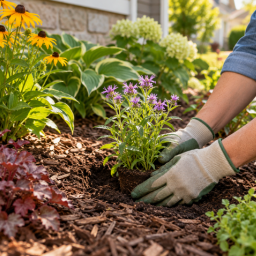
Before planting, carefully investigate the area with a hand trowel. If you encounter substantial roots, choose another location rather than cutting through them to make room.
New native plants also need enough space to establish their own roots without being overwhelmed by larger neighbors.
Sometimes, moving a proposed planting just a foot or two makes a meaningful difference.
Give Your New Plants Time to Settle In
Even when a native plant is well suited to Michigan’s climate, it still needs attention during establishment.
Monitor soil moisture, water when needed, and avoid assuming that a native plant can immediately thrive without supplemental care.
Mulching appropriately can help conserve moisture and reduce competition from weeds, but keep mulch away from plant crowns and stems.
Most importantly, resist the temptation to judge your new additions too quickly.
Some native perennials invest considerable energy in establishing roots before producing impressive growth above ground.
As we discussed in How to Let Your Native Garden Fill in Naturally, allowing plants time to develop can be an important part of creating a landscape that feels balanced and natural.
Your first planting doesn’t have to be your last, and it certainly doesn’t have to be perfect.
Let Your Garden Evolve One Addition at a Time
After introducing your first native plants, spend some time observing them before making more changes.
Notice how they complement neighboring flowers, whether they remain within their intended space, and how their appearance changes throughout the growing season.
You may discover that one addition suggests another.
A native wildflower might reveal an opportunity for a companion grass. A newly planted grass might inspire you to leave more seed heads standing through winter.
Over time, these small decisions can create a garden that feels increasingly connected to the natural world without losing its original character.
You don’t need a completely different garden. You may simply need to discover what your existing garden has room to become.
Barbara’s Observation
Having designed and planted gardens at many different homes over the years, I’ve learned that a landscape doesn’t have to remain exactly as we first imagined it.
Our understanding changes. Our priorities change. And sometimes, the things we value most about a garden become clearer with experience.
There was a time when much of my attention went toward how a garden looked. Today, I’m equally interested in what happens within it — the insects visiting flowers, the birds searching for seeds, and the quiet relationships unfolding among the plants.
What I appreciate about adding native plants to an established garden is that we don’t have to dismiss what came before.
We can honor the work we’ve already done while making room for what we’ve learned.
And I think there’s something rather beautiful about that.
Your Next Step In The Garden
You don’t need to redesign your entire landscape to begin welcoming native plants into your garden. Sometimes the most meaningful changes begin with a single plant, a small garden bed, or a fresh look at what is already growing.
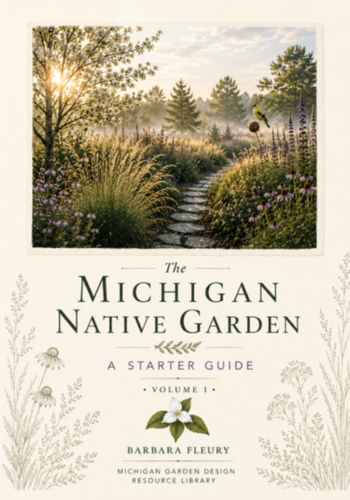
If you’re wondering which native plants might work in your Michigan garden, The Michigan Native Garden Starter Guide is a wonderful place to begin.
This complimentary guide will help you take those first steps with greater confidence while discovering how even small changes can create a garden that supports more life.
🌿 YOUR COMPLIMENTARY GARDENING RESOURCE 🌿
The Michigan Native Garden Starter Guide
A simple beginning for a garden that grows in harmony with nature.
↓ EXPLORE YOUR FREE STARTER GUIDE ↓
Keep Exploring
If you’re looking for more ways to work with your existing landscape, these Michigan Garden Design articles offer additional guidance:
- How to Read Your Garden Before You Change It — Learn to recognize the opportunities your garden may already be showing you.
- How to Add Native Shrubs to an Existing Landscape — Discover how shrubs can introduce structure and ecological value without a complete redesign.
- How to Let Your Native Garden Fill in Naturally — Understand why patience and careful observation are important as native plants establish.
- Learning How to Trust Your Native Garden — Explore the value of allowing a garden to develop rather than continually intervening.
What’s Next
Choose one established garden bed and look for a single opportunity to introduce a Michigan native plant.
You don’t need to purchase anything just yet.
Notice the available light, the existing plants, and the space they’ll occupy when fully grown. Consider whether a new plant could provide an additional flowering season, interesting foliage, or another resource for wildlife.
Sometimes the best garden improvement begins not with a shovel, but with a little curiosity.
Coming Next
The Best Native Plants for Fall and Winter Interest in Michigan
A Michigan garden doesn’t have to lose its beauty when the flowers fade.
In our next Michigan Garden article, we’ll explore native plants that bring texture, structure, movement, and seasonal interest to the landscape long after summer has ended.
From the warm colors of autumn to the quiet beauty of winter seed heads, we’ll discover how thoughtfully chosen plants can make a garden worth appreciating throughout the colder months.