
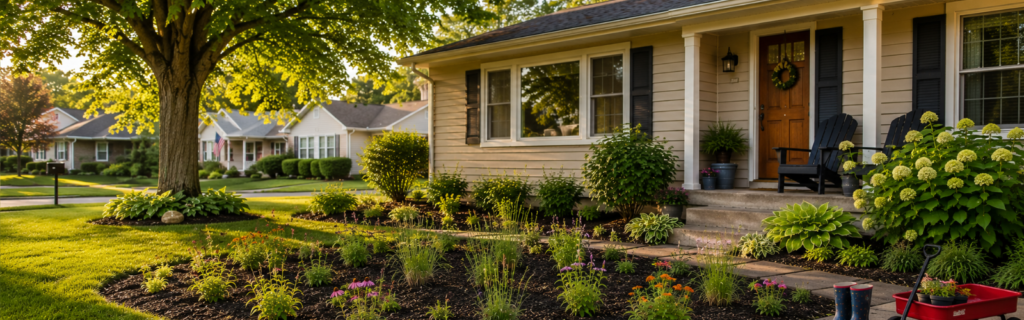
Common Native Garden Mistakes (and How to Avoid Them)
Learning to See Your Garden Differently
Native gardens have a way of surprising us.
Many homeowners begin planting native species expecting a garden that behaves like a traditional landscape—carefully shaped, always colorful, and fully established within a single growing season. When those expectations aren’t immediately met, it’s easy to wonder if something has gone wrong.
In reality, most native gardens are doing exactly what they should.
They are establishing deep root systems, attracting beneficial insects, adjusting to local conditions, and slowly becoming healthier and more resilient with each passing season.
If you’ve ever looked at your garden and thought, “I must be doing something wrong,” you’re certainly not alone. The encouraging news is that nearly every challenge new native gardeners encounter has a simple explanation—and an equally simple solution.
Let’s look at some of the most common mistakes and how small changes can make a tremendous difference.
Mistake #1: Expecting Instant Results
One of the biggest surprises for new native gardeners is how patient nature asks us to be.
Unlike many annual flowers or heavily cultivated ornamental plants, Michigan native perennials spend much of their first season building something you can’t even see.
Below the soil, roots are growing deeper than many people imagine. Those roots are what allow native plants to tolerate drought, support pollinators year after year, and return stronger with each season.
The first year may seem quiet.
The second year brings noticeable growth.
By the third year, many native gardens begin showing the beauty that inspired homeowners to plant them in the first place.
Rather than asking, “Why isn’t my garden bigger?” try asking, “What is my garden building beneath the surface?”
That shift in perspective changes everything.
Mistake #2: Planting Too Far Apart
We’ve all seen plant tags recommending spacing based on a mature plant’s width.
It seems logical to follow those recommendations exactly.
Unfortunately, that often leaves a new garden looking sparse for several years.
Nature doesn’t usually grow in straight lines with wide gaps between plants.
Native plants naturally form drifts and communities. Their leaves eventually overlap, their roots intermingle, and together they help shade the soil, reduce weeds, and conserve moisture.
While it’s important not to overcrowd plants, slightly tighter groupings often create a fuller, healthier-looking garden much sooner.
Instead of thinking about individual plants, begin thinking about how plants work together as a community.
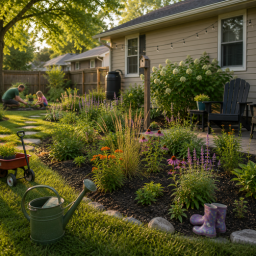
A Moment Before We Continue
One of my favorite things about native gardens is that they teach patience.
Not because they’re slow.
Because they’re alive.
Every week your garden is changing in ways that aren’t always obvious. Tiny roots are expanding. Bees are discovering new flowers. Birds are learning where to find seeds. Even when your garden seems quiet, remarkable things are happening just beneath the surface.
Sometimes the greatest mistake isn’t anything we planted.
It’s simply expecting nature to follow our schedule.
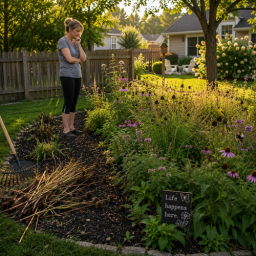
Mistake #3: Cleaning the Garden Too Soon
After a long Michigan winter, it’s understandable to want to tidy the garden as soon as the weather begins to warm.
But many of the stems, seed heads, and fallen leaves that appear “finished” are still providing shelter for native bees, butterflies, moths, and other beneficial insects that haven’t yet emerged.
Those hollow stems may be protecting solitary bees. Leaf litter can shelter overwintering butterflies and fireflies. Even standing seed heads continue providing food for goldfinches and other birds well into spring.
Rather than rushing outside with pruners and rakes, consider waiting until several consecutive warm days have arrived and daytime temperatures are consistently reaching about 50°F or higher. Giving wildlife a little more time can make a remarkable difference.
Your garden isn’t untidy.
It’s still serving an important purpose.
The Xerces Society offers excellent guidance on protecting overwintering pollinators and explains why delaying spring cleanup can have such a positive impact on native bees, butterflies, and other beneficial insects. Their recommendations are practical, science-based, and easy to apply in home gardens.
Mistake #4: Thinking Every Weed Should Be Removed Immediately
One of the hardest adjustments for new native gardeners is learning the difference between a true weed problem and a young garden simply finding its balance.
During the first couple of years, open soil invites opportunistic plants to appear. This doesn’t mean your garden is failing.
It simply means nature dislikes bare ground.
As native plants mature and begin filling in, they naturally shade the soil, reducing the number of weeds that are able to germinate.
Rather than trying to eliminate every unwanted plant the moment it appears, focus on removing invasive species while giving your desirable native plants room to expand.
Over time, you’ll likely find yourself spending less time weeding, not more.
Mistake #5: Choosing Plants Without Considering Their Natural Home
One of the most common reasons native plants struggle isn’t because they aren’t native.
It’s because they’re planted in the wrong conditions.
A woodland species may struggle in full afternoon sun.
A prairie plant may never thrive in constantly wet soil.
A wetland species can become stressed in dry, sandy ground.
Fortunately, Michigan offers an incredible diversity of native plants adapted to almost every growing condition. The key is matching the right plant to the right place.
When you work with nature instead of against it, your garden becomes healthier while requiring less maintenance.
The Lady Bird Johnson Wildflower Center offers an excellent introduction to how native plants establish deep root systems before putting on significant top growth. Their articles help explain why first-year native gardens often look quiet while important development is happening below the soil.
If you’re unsure which native plants fit your landscape, these guides may help:
- The Best Native Plants That Thrive in Clay Soil explores beautiful options for heavier soils commonly found throughout Michigan.
- The Best Native Plants for Wet Areas highlights species that naturally flourish in rain gardens, low spots, and consistently moist locations.
- The Best Plants for Dry Soil in Your Michigan Garden introduces resilient natives that perform beautifully in sunny, well-drained sites.
Each article explains why certain plants thrive in those conditions, making it easier to choose species that will succeed in your own garden.
Barbara’s Garden Observation
One of the most rewarding moments I’ve experienced as a gardener is realizing that I no longer expect every plant to succeed in every location.
Instead, I ask a different question:
“What is this place trying to tell me?”
Sometimes the answer is that the soil holds more moisture than I realized.
Sometimes it’s that the afternoon sun is stronger than I expected.
And sometimes it’s simply that another native plant belongs there instead.
When we begin listening to our gardens instead of trying to force them into a plan, they often become healthier, more beautiful, and far more enjoyable to care for.
Mistake #6: Thinking a Native Garden Is Ever Finished
Traditional landscapes often have a clear finish line.
The shrubs are planted.
The mulch is spread.
The flowers bloom.
The project is complete.
Native gardens are different.
Each season brings new discoveries. Plants slowly expand into open spaces. Birds begin visiting flowers they ignored the year before. Native bees establish nesting sites. Seedlings appear where butterflies or the wind carried them.
Rather than staying exactly the same, your garden becomes more connected to the natural world with each passing year.
That isn’t a flaw.
It’s one of its greatest gifts.
Instead of asking, “When will my garden be finished?”
You may eventually find yourself asking,
“I wonder what I’ll discover this year?”
Mistake #7: Comparing Your Garden to Everyone Else’s
Social media has introduced us to some extraordinary gardens.
Many are beautiful.
Many are inspiring.
But they can also make us feel like our own gardens don’t measure up.
The truth is, every native garden tells a different story.
Your soil is different.
Your sunlight is different.
Your wildlife is different.
Even two neighboring yards will change and mature in different ways.
The most meaningful garden isn’t the one that looks exactly like someone else’s.
It’s the one that becomes a healthy home for the plants and wildlife that belong where you live.
When you stop comparing your garden, you begin appreciating it.
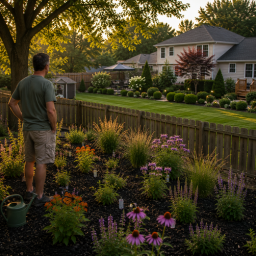
The Best Native Garden “Mistake” You Can Make
If you’ve recognized yourself somewhere in this article, don’t be discouraged.
Every experienced native gardener has planted something in the wrong place.
We’ve all pulled a plant that later would have been perfect somewhere else.
We’ve all wondered why a garden wasn’t growing fast enough.
We’ve all stood outside wondering if we were doing it right.
Those aren’t failures.
They’re part of learning to garden with nature instead of trying to control it.
Perhaps the greatest “mistake” you can make is waiting until you think you know everything before planting your first native garden.
Nature has always been our best teacher.
The sooner we begin listening, the sooner we begin learning.
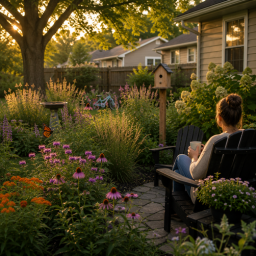
Barbara’s Gentle Reminder
One of the things I love most about native gardening is that it quietly changes us.
At first, we notice flowers.
Then we notice butterflies.
Soon we’re listening for birds we’ve never heard before.
We begin recognizing bees we never knew existed.
We slow down.
Somewhere along the way, we realize the garden wasn’t just growing around us.
It was changing us, too.
And to me, that’s one of the greatest rewards of planting native.
Happy Gardening,
Barbara 🌿
Michigan Garden Design
🌿 Continue Growing
If today’s article encouraged you to look at your garden a little differently, you may also enjoy these Michigan Garden Design guides:
How to Design a Simple Native Garden in Michigan (Step-by-Step)
If you’re just getting started, this guide walks through choosing the right location, layering plants naturally, and designing a garden that supports wildlife while remaining beautiful and manageable. It’s a wonderful companion for gardeners who are ready to put these ideas into practice.
The Best Native Plants for Summer Color
Looking for inspiration? This guide introduces dependable Michigan native plants that provide beautiful blooms throughout the growing season while supporting bees, butterflies, hummingbirds, and other wildlife.
🌿 Continue Exploring
If you’d like to continue learning about native gardening, these organizations offer reliable, research-based information:
Lady Bird Johnson Wildflower Center
The Wildflower Center provides outstanding articles explaining how native plants establish, grow, and support healthy ecosystems. Their plant database is an excellent resource for gardeners who enjoy learning more about individual species and their natural habitats.
Xerces Society
If you’re interested in helping pollinators thrive, the Xerces Society offers practical guidance on creating habitat for native bees, butterflies, moths, and other beneficial insects. Their resources complement many of the ideas explored throughout this article.
Wildflower Association of Michigan
For readers who would like to discover Michigan’s remarkable native flora, this organization shares educational resources, conservation efforts, and opportunities to explore native plants across the state.
Coming Next
The Best Reasons for Native Plants to Spread
Many homeowners worry when native plants begin appearing in unexpected places, but those new seedlings often tell an exciting story. In our next article, we’ll explore how Michigan native plants naturally spread, why that process strengthens your garden, and how to guide it without losing the relaxed beauty that makes native landscapes so special.