
How to Know If Your Native Plants Are Happy
Sometimes the healthiest native plants are the ones gardeners worry about most.
There’s a moment every gardener experiences.
You walk outside with your morning coffee, look over your newly planted native garden, and wonder, “Are my plants doing okay?”
Maybe a few leaves are drooping. One plant seems smaller than the others. Another hasn’t bloomed yet. It’s easy to assume something is wrong.
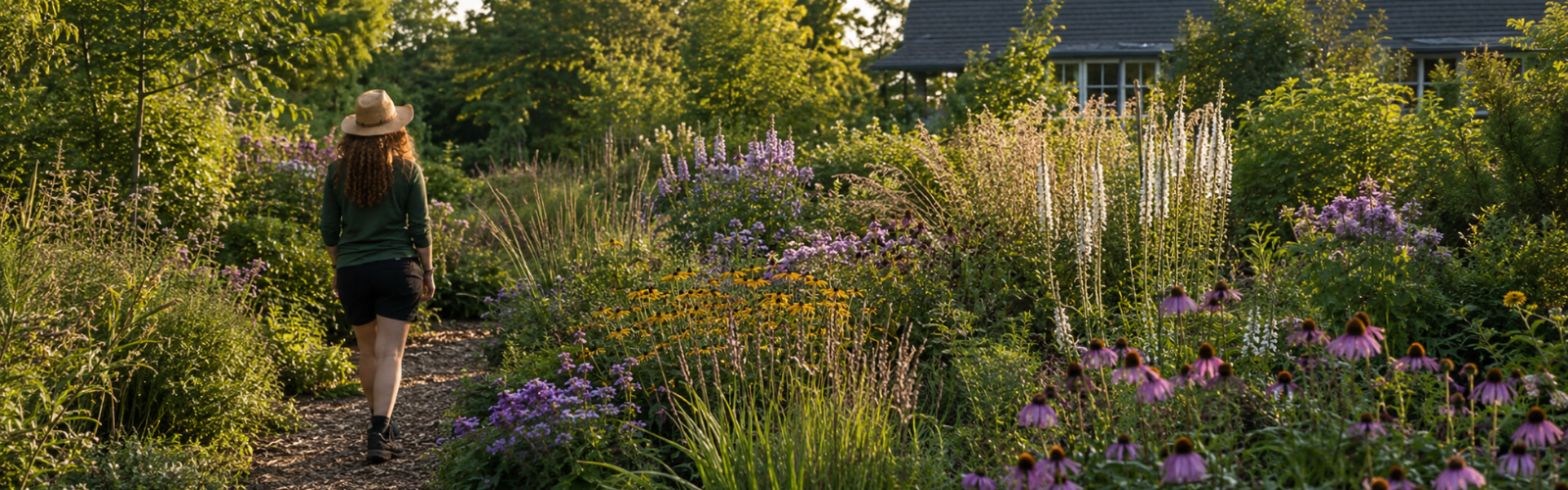
The truth is, native plants don’t always behave the way traditional landscape plants do. They’re busy doing something far more important than putting on a show above ground—they’re building the deep, resilient root systems that will support years of healthy growth.
Learning to recognize the signs of a happy native plant is one of the most valuable skills a gardener can develop. Once you understand what healthy growth really looks like, you’ll spend less time worrying and more time enjoying the remarkable process of watching your garden mature.
In this article, we’ll explore the subtle clues that tell you your native plants are thriving, what normal establishment looks like, and when it’s actually time to step in and help.
Healthy Native Plants Don’t Always Look Perfect
One of the biggest surprises for new native gardeners is that healthy plants don’t always look flawless.
A few insect-chewed leaves.
A flower that’s beginning to fade.
Leaves with small blemishes.
A stem leaning toward the sunlight.
These aren’t signs of failure—they’re signs that your garden is becoming part of a living ecosystem.
Unlike many ornamental landscapes that strive for perfection, native gardens are designed to support life. Butterflies lay eggs. Caterpillars feed. Native bees gather pollen. Birds search for insects to feed their young.
A garden that shows gentle signs of life is often a healthier garden than one that appears untouched.
If you’ve read our previous article, What Is the Best Formula for Watering Native Plants, you’ve already learned that successful native gardening is about working with nature rather than constantly trying to control it. The same principle applies here.
The First Year Is Mostly About Roots
One of the hardest lessons for gardeners is accepting that much of a native plant’s success happens where you can’t see it.
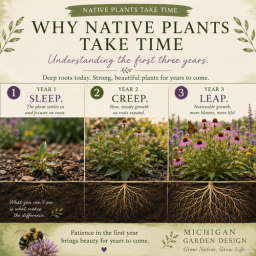
During the first growing season, many Michigan native plants invest far more energy below ground than above it. While the foliage may seem modest, the roots are extending deeper into the soil, searching for moisture and establishing the foundation that will support future growth.
This is one reason native plants often follow the familiar gardening phrase:
Sleep. Creep. Leap.
- Year One: Sleep. Plants settle in and establish roots.
- Year Two: Creep. Noticeable growth begins as the root system expands.
- Year Three: Leap. Mature growth, abundant blooms, and increased resilience become much more apparent.
Understanding this natural progression can save you from making one of the most common mistakes in native gardening—assuming a perfectly healthy plant has failed simply because it’s taking its time.
Patience is often the best care you can provide.
Five Encouraging Signs Your Native Plants Are Thriving
Even if your garden doesn’t yet look full and lush, there are several reliable signs that your plants are doing exactly what they should.
1. Fresh New Growth
Perhaps the clearest indicator of a happy plant is new growth.
Look for:
- Fresh leaves emerging near the tips of stems
- New shoots appearing from the base
- Gradual increases in height or width
- Healthy branching as the season progresses
Growth doesn’t need to be dramatic to be meaningful. Small, steady progress is exactly what you’d expect during the establishment phase.
2. Leaves Have Good Color
Healthy foliage should generally display rich, consistent color appropriate for that species.
Some plants naturally have bluish-green leaves.
Others are bright green.
Still others develop bronze, burgundy, or deep purple foliage.
Learning what is normal for each species is more helpful than comparing one plant to another.
If you’re ever unsure, the Lady Bird Johnson Wildflower Center Native Plant Database offers photographs and detailed plant profiles that can help you understand what healthy foliage should look like throughout the growing season.
3. Flowers Arrive—Even If There Aren’t Many
Many first-year native plants bloom sparingly.
That’s perfectly normal.
Rather than judging success by the number of flowers, celebrate each bloom as evidence that your plant is settling into its new home.
By the second and third seasons, flowering typically becomes much more abundant.
A few blossoms today often become dozens—or even hundreds—in the years ahead.
4. Pollinators Begin Visiting
Sometimes the happiest sign isn’t found on the plant itself.
It’s found in the visitors it attracts.
The first native bee exploring your Wild Bergamot.
A monarch butterfly stopping at Butterfly Weed.
A goldfinch perched on a Purple Coneflower.
These moments tell you your garden is already beginning to function as habitat.
If you’d like to learn more about creating landscapes that support pollinators throughout the growing season, the Michigan Pollinator Initiative offers excellent Michigan-specific guidance and planting resources.
5. Your Garden Changes a Little Every Week
Perhaps the most satisfying sign of all is gradual change.
One week a plant seems quiet.
The next week there are fresh leaves.
A few days later, flower buds appear.
Soon after, bees arrive.
Healthy native gardens are constantly changing.
Learning to notice those small weekly differences is one of the greatest joys of gardening.
They remind us that even when growth feels slow, nature is always at work.
When Healthy Plants Look Unhappy
One of the greatest challenges in native gardening is learning the difference between a plant that’s struggling and one that’s simply behaving naturally.
Many native plants change dramatically throughout the growing season.
Leaves may yellow as flowers finish blooming.
Some species naturally develop brown lower leaves as new growth appears above.
Others go dormant earlier than many traditional garden plants, quietly conserving energy until the following spring.
These changes can be surprising if you’re expecting every plant to remain lush and colorful from May through October.
Understanding what’s normal helps you avoid unnecessary worry—and unnecessary intervention.
Resist the Urge to “Fix” Everything
It’s natural to want every plant in your garden to look perfect every day.
But native gardens aren’t meant to behave like formal landscapes.
One of the greatest gifts you can give your garden is patience.
A plant that leans slightly toward the sun usually doesn’t need staking.
A few insect holes rarely require treatment.
Leaves with small imperfections often continue performing their job beautifully.
Sometimes the healthiest thing a gardener can do is simply observe.
Remember, your goal isn’t perfection.
Your goal is a healthy, functioning ecosystem.
A Little Insect Damage Is Good News
One of the biggest mindset shifts in native gardening is learning to celebrate a few chewed leaves.
It may sound strange at first.
After all, we’ve spent years being told that insects are something to eliminate.
But many insects are exactly why we planted native species in the first place.
Caterpillars feed birds.
Native bees gather pollen.
Beneficial insects help keep pest populations in balance.
A leaf with a few holes may be evidence that your garden is providing food for wildlife.
That’s not damage.
That’s purpose.
Of course, extensive defoliation or severe plant decline deserves closer attention, but occasional feeding is a healthy sign that your garden is supporting life.
Healthy Plants Recover
Another encouraging characteristic of native plants is their remarkable resilience.
Because they’ve evolved in Michigan’s changing climate, many native species are well equipped to recover from temporary challenges.
A brief dry spell.
Heavy summer rain.
Browsing by a rabbit or deer.
A broken stem after a thunderstorm.
Healthy, established native plants often bounce back surprisingly well.
Rather than reacting immediately, give your plants a little time.
You may be amazed at how quickly new growth appears.
Your Garden Is Becoming an Ecosystem
One of my favorite moments in a young native garden isn’t the first flower.
It’s the first time I realize the garden no longer belongs only to me.
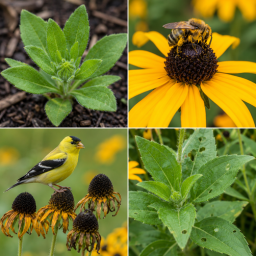
A native bee disappears into Wild Bergamot.
A goldfinch balances on Little Bluestem.
A spider quietly stretches its web between two stems.
A tree frog finds shelter beneath broad leaves.
Suddenly, the garden feels alive in an entirely different way.
Those visitors are often among the strongest indicators that your native plants are healthy.
Nature recognizes good habitat long before we learn to recognize it ourselves.
Trust the Process
Native gardens reward patience.
Some days you’ll notice dramatic growth.
Other days it may seem as though nothing has changed at all.
But beneath the surface, roots continue to deepen.
Soil organisms continue their quiet work.
Pollinators discover new flowers.
Birds learn where to find food.
Every week, your garden becomes a little stronger than it was before.
Learning to trust that process is one of the most rewarding parts of growing native plants.
The longer you garden with nature instead of against it, the more you’ll discover that healthy gardens aren’t measured by perfection.
They’re measured by life.
Every Garden Has Its Own Pace
It’s easy to compare your garden to photographs online or to the mature native landscapes you visit in parks and botanical gardens.
But every garden has its own story.
The amount of sunlight, the type of soil, the weather, and even the timing of spring rains all influence how plants grow from one year to the next.
A newly planted Butterfly Weed may spend its first season quietly developing an impressive taproot while another planted just a few miles away produces several blooms.
Neither plant is “doing better.”
They’re simply responding to their unique conditions.
One of the greatest joys of gardening is learning to appreciate your garden for what it is today while anticipating what it will become tomorrow.
Keep a Garden Journal
If you’ve ever felt like your garden isn’t changing very much, try keeping a simple journal.
You don’t need anything elaborate.
Once a week, jot down a few observations:
- Which plants have new leaves?
- Are flower buds beginning to form?
- What insects or birds did you notice?
- Has anything bloomed for the first time?
- Did you receive significant rainfall?
Even taking one photograph from the same location every week can reveal changes that are easy to overlook in daily life.
By the end of the growing season, you’ll have a wonderful record of your garden’s progress—and you’ll likely be surprised by just how much changed.
Celebrate the Small Victories
Not every success in a native garden comes with a spectacular display of flowers.
Sometimes success looks like:
A new shoot emerging after a week of rain.
A native bee visiting a flower for the first time.
A goldfinch gathering seeds.
A rabbit resting beneath the grasses.
Fresh leaves appearing after a hot, dry spell.
Each of these moments tells you your garden is becoming healthier, more resilient, and more connected to the natural world around it.
Those small victories are worth celebrating.
They are the quiet milestones that eventually lead to the vibrant, thriving gardens we all admire.
When Should You Be Concerned?
While patience solves many gardening worries, there are times when a closer look is appropriate.
You may want to investigate further if you notice:
- No new growth after an extended period during the growing season.
- Entire stems turning black or mushy.
- Severe wilting that doesn’t improve after proper watering.
- Extensive insect damage affecting most of the plant.
- Plants repeatedly declining despite being planted in appropriate growing conditions.
Even then, resist the temptation to assume the plant is beyond saving.
Many native species surprise gardeners with their ability to recover once the underlying issue is corrected.
When in doubt, Michigan State University Extension is an excellent source of Michigan-specific gardening advice and plant diagnostics.
Confidence Comes with Observation
The longer you garden with native plants, the more confident you’ll become.
You’ll begin to recognize the first signs of spring growth before flowers appear.
You’ll notice which plants naturally emerge later than others.
You’ll understand that one species may finish blooming while another is just beginning.
You’ll discover that every season brings something new to notice.
Before long, you’ll spend less time asking,
“Is something wrong?”
and more time smiling because you recognize exactly what your garden is doing.
That’s one of the greatest rewards of native gardening.
Not just growing beautiful plants…
but growing as an observer of nature.
Happy Gardening!
Healthy native gardens aren’t measured by perfection.
They’re measured by resilience, diversity, and the life they support.
Every new leaf, every visiting pollinator, every bird that pauses to feed is evidence that your garden is becoming something far greater than a collection of plants.
It is becoming habitat.
Trust the process.
Celebrate the small changes.
And remember that some of the healthiest growth is happening where you can’t yet see it.
Happy gardening,
Barbara Fleury
Michigan Garden Design
🌿 Continue Growing
Coming Next:
Native Plants That Thrive in Clay Soil
Clay soil is one of the most common gardening challenges in Michigan—but it doesn’t have to be a limitation. In our next article, Native Plants That Thrive In Clay Soil, we’ll explore beautiful native plants that naturally thrive in clay soils and learn how to work with your soil instead of constantly fighting it.
Continue Exploring
If you enjoyed this article, you may also like: