
The Best Compact Native Plants for Small Michigan Gardens
A Small Garden Can Make a Big Difference
Not every beautiful native garden needs a sprawling backyard, a large meadow, or acres of open space. Sometimes, the most inviting gardens are the smallest ones, a narrow planting bed beside a walkway, a sunny corner near the patio, or a modest patch of lawn transformed into something alive with color and movement.
If you have ever admired a native garden but wondered whether you have enough room to create one yourself, the answer may surprise you.
A small Michigan garden can offer beauty, seasonal interest, and meaningful wildlife habitat when the right plants are chosen for the space.
The secret isn’t necessarily planting fewer species. It’s understanding how plants grow, how they relate to one another, and how to make thoughtful choices that allow a garden to mature gracefully.
Michigan offers an appealing variety of native wildflowers, grasses, sedges, and smaller shrubs that can fit beautifully into residential landscapes. And while some native plants are known for their impressive height or vigorous spreading habits, others offer a more restrained presence without sacrificing their natural character.
The challenge is knowing which ones belong where.
What Does Compact Really Mean in a Native Garden?
When we hear the word compact, we often imagine something short. But height is only part of the story.
A plant that reaches just twelve inches tall may spread several feet across the ground. Another might grow two or three feet high while maintaining a relatively narrow, upright shape.
For a small garden, both height and width matter.
Equally important is understanding how a plant behaves as it matures. Some native plants remain in relatively tidy clumps, while others gradually expand through underground stems or self-seeding. Neither growth habit is inherently better, but they serve different purposes.
For example, a gently spreading groundcover may be exactly what you need beneath a shrub or along a shaded border. That same plant might become difficult to manage in a tiny bed shared with several other species.
This is why choosing compact native plants means looking beyond their appearance at the nursery.
As we discussed in How to Let Your Native Garden Fill in Naturally, a garden changes as its plants establish, mature, and begin interacting with one another.
Planning for that future growth is especially important when space is limited.
Small Spaces Still Need the Right Growing Conditions
One of the most common mistakes in small garden design is choosing plants primarily for their flowers.
It’s understandable. We fall in love with a particular bloom, imagine how beautiful it would look beside the front steps, and assume we can make it work.
But even the most beautiful native plant may struggle when its growing conditions don’t match the location.
Michigan gardens vary considerably. Some have sandy soil that drains quickly, while others contain heavy clay that holds moisture. A planting area beside the house may receive intense afternoon sunlight, while a nearby bed remains shaded for much of the day.
Those differences can exist within the same small yard.
Before selecting plants, consider three basic questions:
- Sunlight: Does the area receive full sun, partial shade, or mostly shade?
- Soil moisture: Does the ground tend to stay dry, retain moisture, or change considerably throughout the seasons?
- Available space: How much room will each plant have when it reaches maturity?
These are the same considerations explored in How to Choose Native Plants for Sun, Soil, and Moisture.
Matching plants to existing conditions, rather than continually trying to change those conditions, can make a small native garden easier to establish and maintain. Michigan State University Extension also emphasizes selecting native plants according to their sunlight, soil, and moisture requirements.
Think in Layers, Not Just Square Feet
A small native garden doesn’t need to look sparse or unfinished.
One effective approach is to think about the garden in layers.
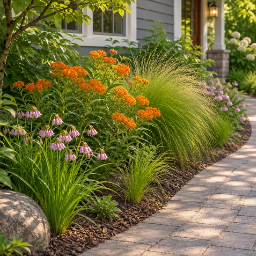
A few taller, upright plants can provide structure. Medium-height flowers contribute color and texture, while lower-growing species soften edges and help connect the planting.
Native grasses and sedges can add another dimension through their foliage, movement, and changing appearance throughout the seasons.
This approach creates visual interest without requiring an enormous collection of plants.
It also connects naturally with the principles we explored in How to Design a Low-Maintenance Native Garden, where thoughtful plant selection and placement help create a more manageable landscape.
And remember, a successful small garden doesn’t need every available inch filled immediately.
Giving plants room to develop allows their natural forms to emerge and makes it easier to understand how the space is changing.
Sometimes, choosing three compatible species and repeating them thoughtfully creates a more beautiful result than trying to squeeze in ten different plants.
The goal isn’t to make a small garden feel crowded with life.
It’s to make every plant feel as though it belongs.
Choosing Native Plants That Fit Your Space
One of the wonderful things about designing a small native garden is that every plant has an opportunity to shine. Individual flowers become more noticeable, subtle foliage textures stand out, and seasonal changes can be appreciated up close.
The following Michigan-native plants have been selected for their garden usefulness, relatively modest size, seasonal interest, and ecological value. These are naturally occurring species rather than cultivars bred specifically for compact growth.
Keep in mind that mature dimensions are approximate and may vary depending on sunlight, soil, moisture, and growing conditions.
Compact Native Plants for Sunny Gardens
Sunny planting beds offer wonderful opportunities to introduce color, texture, and pollinator activity, even within a limited footprint.
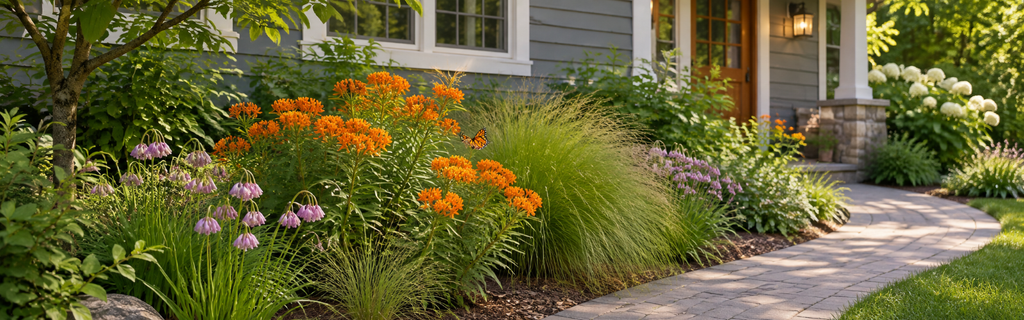
Butterfly Weed (Asclepias tuberosa)
- Height: 18–30 inches
- Spread: 12–18 inches
- Bloom: Summer
- Growing conditions: Full sun; dry to moderately moist, well-drained soil
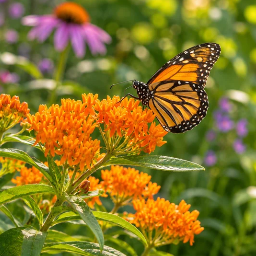
The brilliant orange flowers of Butterfly Weed bring warmth and energy to a small garden. Its generally clumping growth habit makes it a manageable alternative to the more vigorously spreading Common Milkweed, while still providing a host plant for monarch caterpillars.
Nodding Wild Onion (Allium cernuum)
- Height: 12–24 inches
- Spread: Approximately 12 inches per established clump
- Bloom: Summer
- Growing conditions: Full sun to partial shade; dry to moderately moist soil
Delicate, nodding clusters of pink flowers rise above slender foliage. Particularly attractive along walkways and garden edges, this plant adds visual interest without overwhelming its neighbors. It may gradually multiply and self-seed.
Prairie Dropseed (Sporobolus heterolepis)
- Height: 18–36 inches, including seed stalks
- Spread: 18–36 inches
- Bloom: Late summer
- Growing conditions: Full sun; dry to moderately moist soil
This graceful, mound-forming native grass provides soft texture, movement, and beautiful fall color. Although it needs room to develop its rounded form, a single specimen can become an attractive focal point in a modest planting bed.
Compact Native Plants for Partial Shade and Shade
Shaded gardens offer opportunities to appreciate delicate flowers, interesting foliage, and quieter combinations of color and texture.
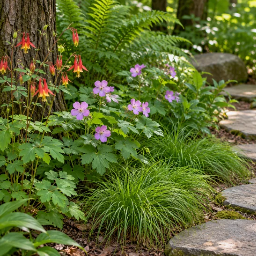
Wild Columbine (Aquilegia canadensis)
- Height: 12–36 inches
- Spread: 12–18 inches
- Bloom: Spring to early summer
- Growing conditions: Partial shade to sun; well-drained soil
Its distinctive red and yellow flowers provide nectar for visiting hummingbirds. Wild Columbine has an airy growth habit that allows it to mingle beautifully with neighboring plants, although seedlings may appear in unexpected places.
Wild Geranium (Geranium maculatum)
- Height: 12–24 inches
- Spread: 12–18 inches
- Bloom: Spring to early summer
- Growing conditions: Partial shade; moderately moist, well-drained soil
Soft pinkish-purple flowers and deeply divided leaves make Wild Geranium an appealing woodland garden plant. Its foliage provides texture beyond the flowering season, and established plants may gradually expand or self-seed.
Pennsylvania Sedge (Carex pensylvanica)
- Height: 6–12 inches
- Spread: Gradually forms colonies
- Bloom: Spring; inconspicuous flowers
- Growing conditions: Partial to full shade; dry to moderately moist soil
This low-growing sedge creates a soft, grasslike ground layer. Although compact in height, it spreads through underground stems, making it particularly useful where a continuous groundcover is desired rather than an isolated specimen.
Compact Native Plants for Moist Garden Areas
A small garden that naturally retains moisture can be an excellent setting for native plants that appreciate cooler, damp soil.
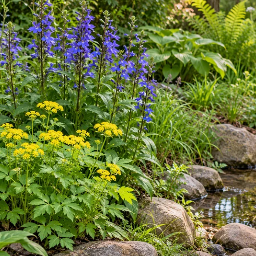
Golden Alexanders (Zizia aurea)
- Height: 18–36 inches
- Spread: 12–24 inches
- Bloom: Spring to early summer
- Growing conditions: Full sun to partial shade; moderately moist to moist soil
Clusters of golden-yellow flowers provide early-season resources for pollinators. Golden Alexanders also serves as a host plant for Black Swallowtail caterpillars. Watch for self-seeding as the planting matures.
Great Blue Lobelia (Lobelia siphilitica)
- Height: 24–36 inches, sometimes taller
- Spread: 12–18 inches
- Bloom: Late summer into early fall
- Growing conditions: Full sun to partial shade; moist soil
Its upright spikes of blue flowers offer late-season color and attract bumblebees. Its relatively narrow form makes it especially useful where horizontal space is limited.
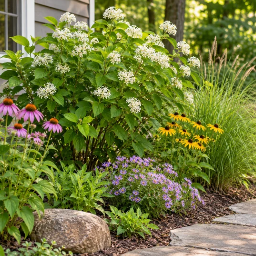
A Smaller Native Shrub Worth Considering
Compact gardens can benefit from woody plants that provide structure throughout the year.
New Jersey Tea (Ceanothus americanus)
- Height: 2–3 feet, occasionally taller
- Spread: 3–5 feet
- Bloom: Early summer
- Growing conditions: Full sun to partial shade; dry to moderately moist, well-drained soil
With rounded foliage and delicate clusters of white flowers, New Jersey Tea offers an attractive alternative to many larger ornamental shrubs. Consider using one as an anchor plant where sufficient width is available.
Choose for the Entire Growing Season
When selecting plants, think beyond what will be blooming when you first bring them home.
Combining spring flowers, summer blooms, late-season color, and persistent grasses creates a garden that continues to change throughout Michigan’s four seasons.
As we explored in How to Plan Your Native Garden During Winter, considering the entire year can help us make more thoughtful planting decisions.
A small garden designed with seasonal continuity in mind can offer something new to discover nearly every time you step outside.
Bringing Your Small Native Garden Together
Now that you’ve discovered several compact native plants suitable for Michigan gardens, the next step is deciding how to bring them together.
Rather than selecting one of everything, consider creating a smaller plant palette with complementary heights, textures, bloom periods, and growing requirements.
Here are three combinations to inspire your design:
- Sunny garden border: Butterfly Weed, Nodding Wild Onion, and Prairie Dropseed.
- Shaded woodland retreat: Wild Columbine, Wild Geranium, and Pennsylvania Sedge.
- Moist garden corner: Golden Alexanders and Great Blue Lobelia, providing color at different times throughout the growing season.
Allow enough room for each plant to mature, and pay particular attention to species that naturally spread or self-seed.
A thoughtfully designed small garden should become more beautiful as it matures, not more difficult to manage.
Beauty Beyond the Blooms
Remember to consider what each plant contributes when it isn’t flowering.
The delicate foliage of Wild Columbine, the graceful movement of Prairie Dropseed, and the soft texture of Pennsylvania Sedge all contribute to the garden’s character beyond their flowering periods.
During Michigan’s colder months, retained grasses, seed heads, and woody branches can provide additional visual interest.
A garden designed for four seasons is far more than a collection of flowers.
Barbara’s Observation
There is something particularly intimate about a small garden. Its size invites us to notice things we might otherwise overlook, the gentle curve of a stem, a tiny bee visiting a flower, or the emergence of new growth after a long Michigan winter.
I believe small gardens remind us that gardening isn’t measured in square feet, but in the relationships we nurture between plants, wildlife, and ourselves.
You don’t need a large piece of land to create a meaningful connection with nature.
Sometimes, a little corner of the world is enough.
Discover How Your Small Garden Grows
As your native garden matures, take time to record which plants maintain their shape, which gradually spread, and which attract the most wildlife.
Photographing the same small planting area throughout the year can also reveal seasonal changes you might not otherwise notice.
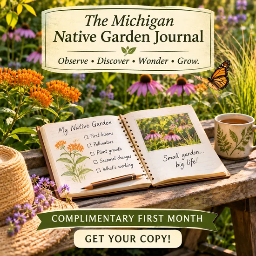
COMPLIMENTARY FIRST MONTH
The Michigan Native Garden Journal
A beautiful way to document your garden’s growth, discover its natural rhythms, and become a more observant gardener.
↓ GET YOUR COPY ↓
Observe • Discover • Wonder • Grow
Keep Exploring
Continue discovering ways to create a beautiful, manageable Michigan native garden:
- How to Design a Low-Maintenance Native Garden
- How to Choose Native Plants for Sun, Soil, and Moisture
- How to Plan Your Native Garden During Winter
- How to Create a Backyard Habitat with Native Plants
Trusted resources for further plant exploration:
What’s Next
Choose one small area of your yard that you would like to transform.
Measure the available planting space, observe its sunlight and soil moisture, and identify three compatible Michigan native plants that could grow comfortably together.
Start small. Observe how the plants respond, and allow your garden to develop naturally over time.
Coming Next
How to Create a Native Garden Around an Existing Tree
The space beneath an established tree is often one of the most overlooked opportunities in a Michigan landscape. Yet gardening in this environment requires special consideration.
In our next Michigan Garden article, we’ll explore how to work with existing tree roots, navigate shade and moisture competition, and select native plants that can complement a mature tree without compromising its health.
Rather than working against the tree, we’ll discover how to design a garden in harmony with it.